Est. 1806 · French Quarter Historic District · War of 1812 Negotiations · Origin of the Absinthe Frappe · New Orleans Cocktail History
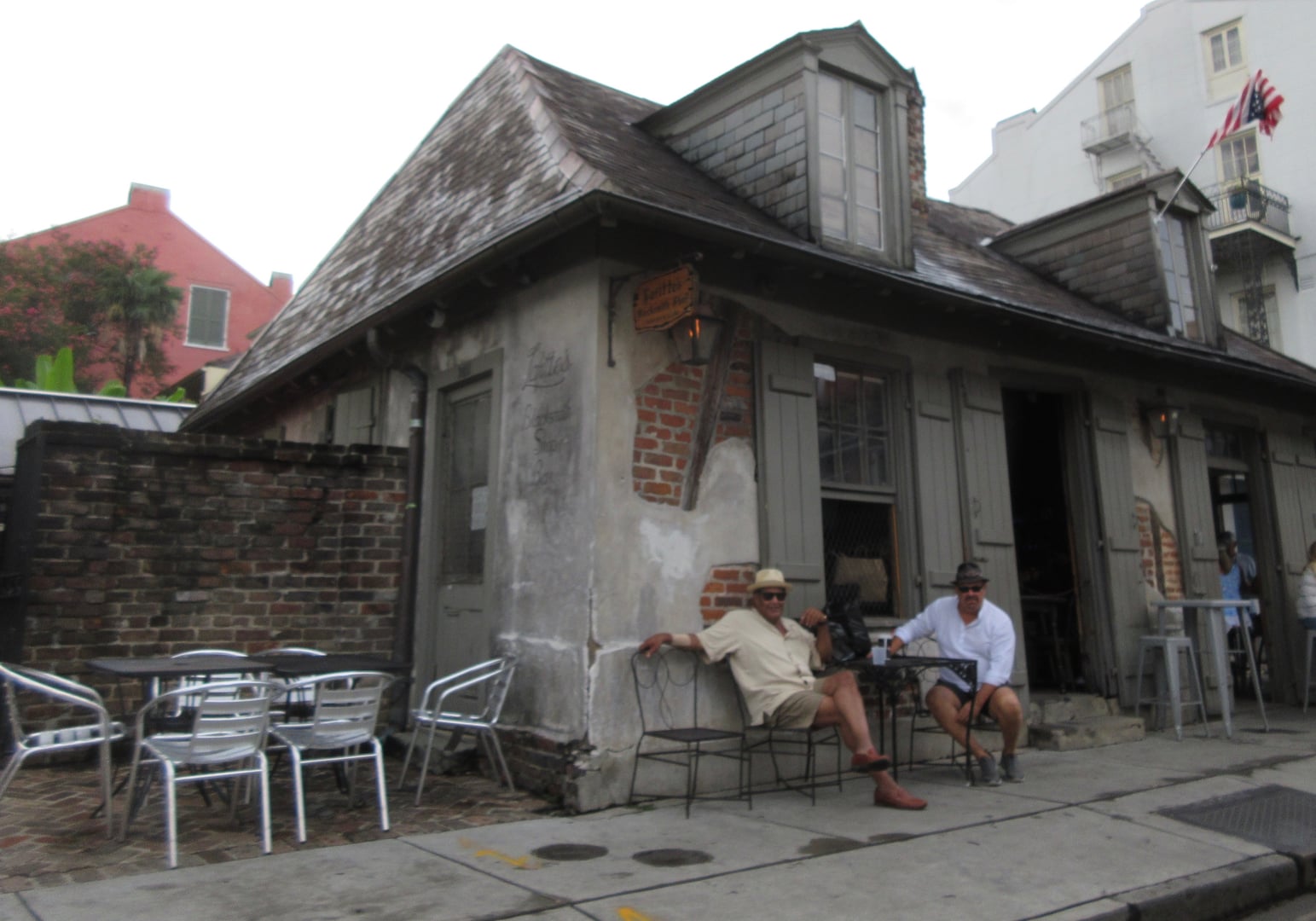
The building at the corner of Bourbon and Bienville streets was completed in 1806 as an importing-and-commission house. The original tenants, the Catalan firm of Pedro Font and Francisco Juncadella, traded Spanish liquors, tobacco, and cotton through the port of New Orleans. The building's first liquor license was acquired in 1835, and Aleix's Coffee House operated on the ground floor for the next several decades.
Local tradition associates the upstairs room with a meeting between General Andrew Jackson, Governor William C. C. Claiborne, and the French-Creole privateer Jean Lafitte during the lead-up to the January 1815 Battle of New Orleans. Lafitte's pirates and privateers had recently been defeated in their Barataria base by the United States Navy and were pursuing a pardon in exchange for service against the British. The Old Absinthe House meeting was the alleged venue for that negotiation. Contemporary documentation is limited, and the meeting's specific location is disputed by historians, but the tradition is recorded in New Orleans guidebook material dating to the late nineteenth century.
In 1874, Cayetano Ferrer, a mixologist tending bar at what was by then called the Absinthe Room, created the Absinthe House Frappe by combining absinthe, water, mint, and sugar over crushed ice. The drink became one of the city's signature cocktails. Marie Laveau, the New Orleans Voudou practitioner, was a regular customer according to oral tradition.
Prohibition forced the property's principal drink off the menu and produced a near-demolition threat. The building survived with reduced licensing and reopened as the Old Absinthe House Restaurant after Repeal. The current operation is part of Rue Bourbon, a Bourbon Street hospitality group.
Sources
- https://en.wikipedia.org/wiki/Old_Absinthe_House
- https://www.atlasobscura.com/places/jean-lafitte-s-old-absinthe-house
- https://neworleanshistorical.org/items/show/619
- https://theparanormalplayground.co/old-absinthe-house-new-orleans/
- https://www.thehorrordome.com/blogs/news/historical-charm-and-haunting-encounters-the-old-absinthe-house-of-new-orleans
- https://ghostcitytours.com/new-orleans/haunted-new-orleans/absinthe-house/
ApparitionsPhantom footstepsObject movementShadow figures
The Old Absinthe House's paranormal lore is woven through its core historical narrative. Local tradition identifies three principal figures: Jean Lafitte, observed near the upstairs staircase or at the corner of the main bar; General Andrew Jackson, occasionally reported seated at one of the upstairs tables; and the Voudou practitioner Marie Laveau, traditionally associated with the back service area.
Staff at the bar have reported the sound of footsteps in the upper rooms when those rooms are closed to patrons, the inexplicable movement of empty glasses along the bar top, and the sensation of a passing presence behind the bartender during late-night shifts. Patrons have produced photographs that include shapes interpreted as figures in early-nineteenth-century clothing, particularly near the staircase and in the back corner where the original commission-house records were kept.
A second strand of reports concerns business cards and personal artifacts left by patrons across more than a century. The bar's distinctive interior covering of pinned cards, helmets, and assorted memorabilia is occasionally reported to shift between visits, with items relocating between sections of the wall. Staff treat this as bar-folklore rather than as paranormal investigation.
Ghost-tour operators in the French Quarter routinely include the property in their evening walking routes. The Old Absinthe House does not actively market itself as a haunted destination, and the staff treat the supernatural narrative as part of the venue's three-hundred-year working character rather than as a marketing focus.
Notable Entities
Jean LafitteAndrew JacksonMarie Laveau