Est. 1989 · Pontiac's Rebellion · Ottawa Nation History · Wayne County Parks · Environmental Remediation
Council Point Park sits at one of the more historically significant pieces of land in Wayne County. In April 1763, the Ottawa leader Chief Pontiac assembled representatives from the Wyandot, Detroit Ottawa, and Potawatomi peoples along the Ecorse River here, calling the gathered tribes to action against British forces occupying the former French territories. His plan was a direct assault on Fort Detroit. The fort held, but Pontiac's subsequent six-month siege became a landmark event in the history of the Great Lakes region and colonial America.
The land itself has a more recent industrial chapter. Before becoming a park, the site included small farm fields and woods owned by the Levy Company. When Lincoln Park purchased the property in the late 1980s, the Michigan Department of Natural Resources was brought in to remediate a toxic waste spill — heavy metals associated with steel manufacturing had contaminated portions of the site before it could be opened for public use. A 1915 farmhouse still stands at the park's western edge.
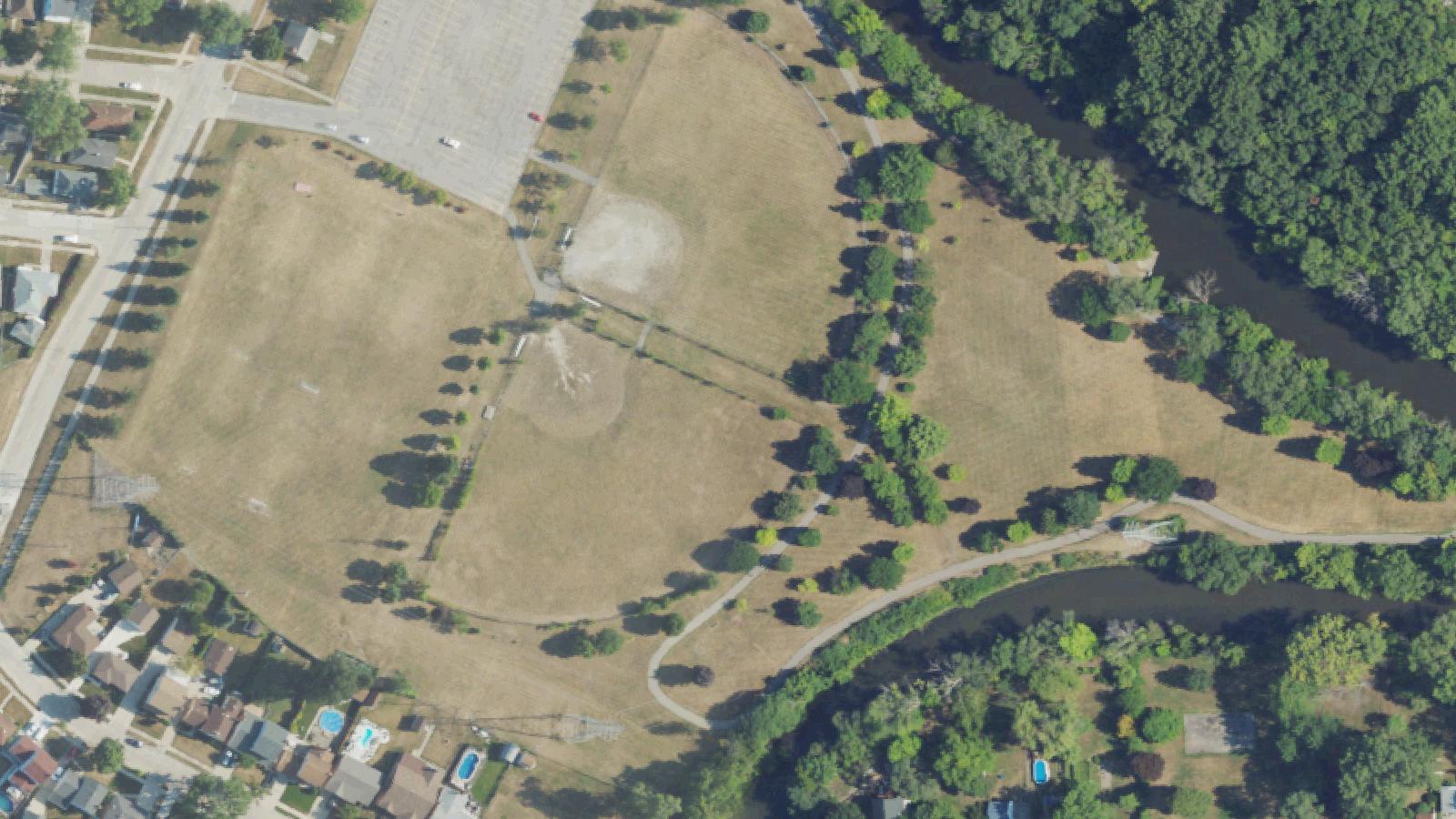
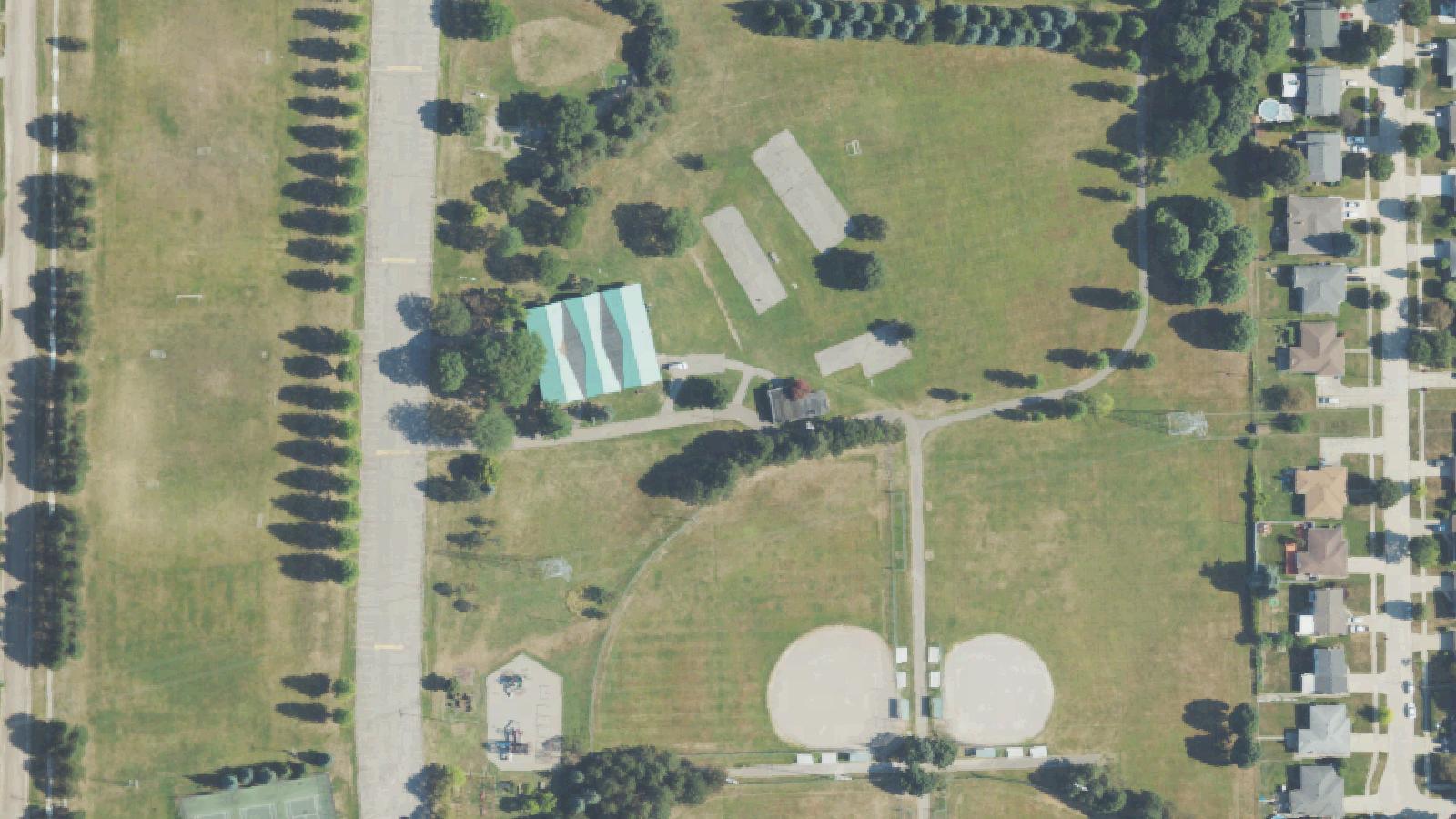
Today the 27-acre park features a 1.9-mile jogging track, two baseball and softball diamonds, two soccer fields, an inline hockey arena, a picnic pavilion, and children's playground. The Lincoln Park Relay for Life and an annual Pow Wow organized by the American Indian Movement of Michigan both take place here — the latter commemorating Pontiac's historic council with dance, games, and cultural education.
Sources
- https://en.wikipedia.org/wiki/Council_Point_Park
- https://www.lphistorical.org/events-exhibits/250th-anniversary-pontiac-council-commemorations
- https://www.hmdb.org/m.asp?m=88492
ApparitionsResidual haunting
The paranormal account attached to Council Point Park is not a story of the distant past. The reported drowning happened within living memory, under circumstances that make it the kind of incident a community doesn't easily set aside. According to the account, a group of teenagers encountered a visibly intoxicated man near the concrete retaining wall along the water. The teenagers began taunting the man, eventually directing him toward the wall. One of them bumped him. He fell into the river and drowned.
The time noted in the account is specific: 10:30 PM. Subsequent visitors to the park have reported seeing a figure walking along the concrete wall at that hour — not interacting with anyone present, just walking, as if completing a route. The figure and the moment have become fixed in the local legend.
What makes the account distinct from generalized ghost stories is the precision of the reported hour. Residual phenomena of this type — a figure replaying an action at the same time it originally occurred — are among the more commonly documented in paranormal investigation literature. Whether the figure is a product of environmental memory, psychological projection, or something else entirely is not resolved by the existing accounts.