Est. 1871 · 19th-Century Asylum History · Psychiatric Treatment History · Patient Burial Reform
Fort Steilacoom was a U.S. Army post operating from 1849 to 1868 in what is now Lakewood, in Pierce County, Washington. After the Army departed, the Washington Territorial government converted the former army buildings into the Insane Asylum of Washington Territory, which opened in 1871 with fifteen male and six female patients. It was the territory's first dedicated psychiatric institution.
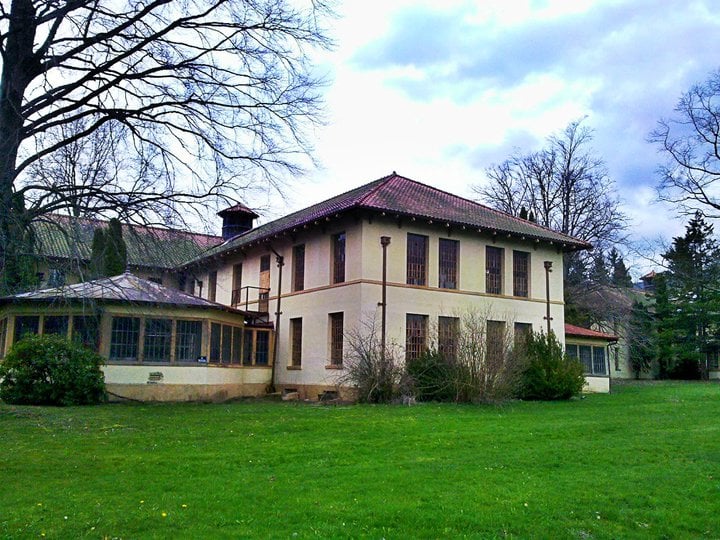
In 1875, after public reports of patient neglect, brutal abuse, and poor living conditions, the territorial government took over administration of the facility from a private contractor. The original asylum building was demolished in 1886 and replaced by a larger structure designed by John G. Proctor, completed in 1887 and renamed Western Washington Hospital for the Insane. The facility was renamed Western State Hospital in 1915.
In the mid-twentieth century, the hospital adopted a series of experimental psychiatric treatments common in U.S. asylums of the period: hydrotherapy with alternating hot and cold baths, fever therapy intended to combat presumed bacterial causes of psychosis, and insulin-coma therapy. Dr. Walter Freeman, the popularizer of the transorbital lobotomy, performed lobotomies at Western State as part of a tour that included approximately 2,500 patients across 23 states during the 1940s and 1950s.
The hospital cemetery interred over 3,200 patients between 1876 and 1953. State law of the period barred psychiatric hospitals from placing patient names on grave markers, and patients were instead identified by patient number. The volunteer-run Grave Concerns Association persuaded the Washington Legislature to lift that restriction in the early 2000s and has been progressively replacing the numbered markers with named headstones.
The ruins of the older facility now sit inside Fort Steilacoom Park in Lakewood. The active Western State Hospital is a separate 806-bed psychiatric institution administered by the Washington Department of Social and Health Services and is not open to visitors.
Sources
- https://en.wikipedia.org/wiki/Western_State_Hospital_(Washington)
- https://www.dshs.wa.gov/bha/division-state-hospitals/history-western-state-hospital
- https://www.historylink.org/file/21395
- https://www.spokesman.com/stories/2009/apr/26/patients-graves-get-markers/
- https://www.cityartsmagazine.com/issues-tacoma-2009-07-0-commemorating-history-violence/
- https://www.spreaker.com/episode/46-whispers-in-the-walls-the-dark-history-of-western-state-hospital--62070203
- https://www.southsoundtalk.com/2014/10/14/historic-haunted-places-around-tacoma/
- https://seattleterrors.com/western-state-hospital/
- https://encyclopediastrange.com/2024/10/14/278/
ApparitionsPhantom voicesCold spotsShadow figuresOrbsResidual haunting
Fort Steilacoom Park's asylum-ruins and cemetery memorial draw a steady flow of paranormal investigators, particularly in the hours just before the park closes. Visitors have reported apparitions, disembodied voices, an oppressive sense of being watched, and figures glimpsed at the edges of the cemetery's long, partially restored rows of markers.
Local Washington paranormal coverage describes consistent reports near the cemetery, where the prior numbering system left thousands of patients in functionally anonymous graves until the Grave Concerns Association's recent restoration work began returning names. The patient-naming process is itself a documented, ongoing project rather than folklore — the Spokesman-Review and other Washington papers have covered the renaming.
The Shadowlands narrative includes a specific account of blood spelling "JOE" on a wall, a handprint, and a long blood-streak appearance. This particular account does not appear in any of the named local-paper, state-archive, or DSHS sources reviewed for this entry. Without independent corroboration, the detail is treated here as folklore rather than as documented finding.
The ruins area itself is a public park and is appropriate for daytime visiting. After-hours investigation requires park-rules compliance — Fort Steilacoom Park does have closing hours, and the active Western State Hospital nearby is a working medical facility off-limits to visitors.