Est. 1907 · Alfred Packer · Colorado History · 19th-Century Crime · Civil War Veterans
Alfred Packer was born in 1842 and served in the Union Army during the Civil War. In November 1873, he signed on as a guide for a party of 21 prospectors heading into the Colorado Rockies in search of gold. The winter conditions proved catastrophic. Packer set out from a camp with five remaining men in early February 1874. He emerged alone months later, appearing well-fed and carrying the wallets of the five men he'd left with.
His arrest and trials established the basic facts — five men were dead, Packer had eaten from their bodies — but the question of whether the killings were murder or self-preservation in extremis was never fully resolved. Packer was convicted and sentenced to death; the Colorado Supreme Court overturned the sentence on a procedural technicality. He was retried in 1886 and sentenced to forty years.
In January 1901, newspaper muckraker Polly Pry campaigned for his release in the Denver Post, and Governor Charles S. Thomas granted conditional parole. Packer was prohibited from leaving Colorado and spent his final years in Deer Creek, Jefferson County, reportedly as a vegetarian.
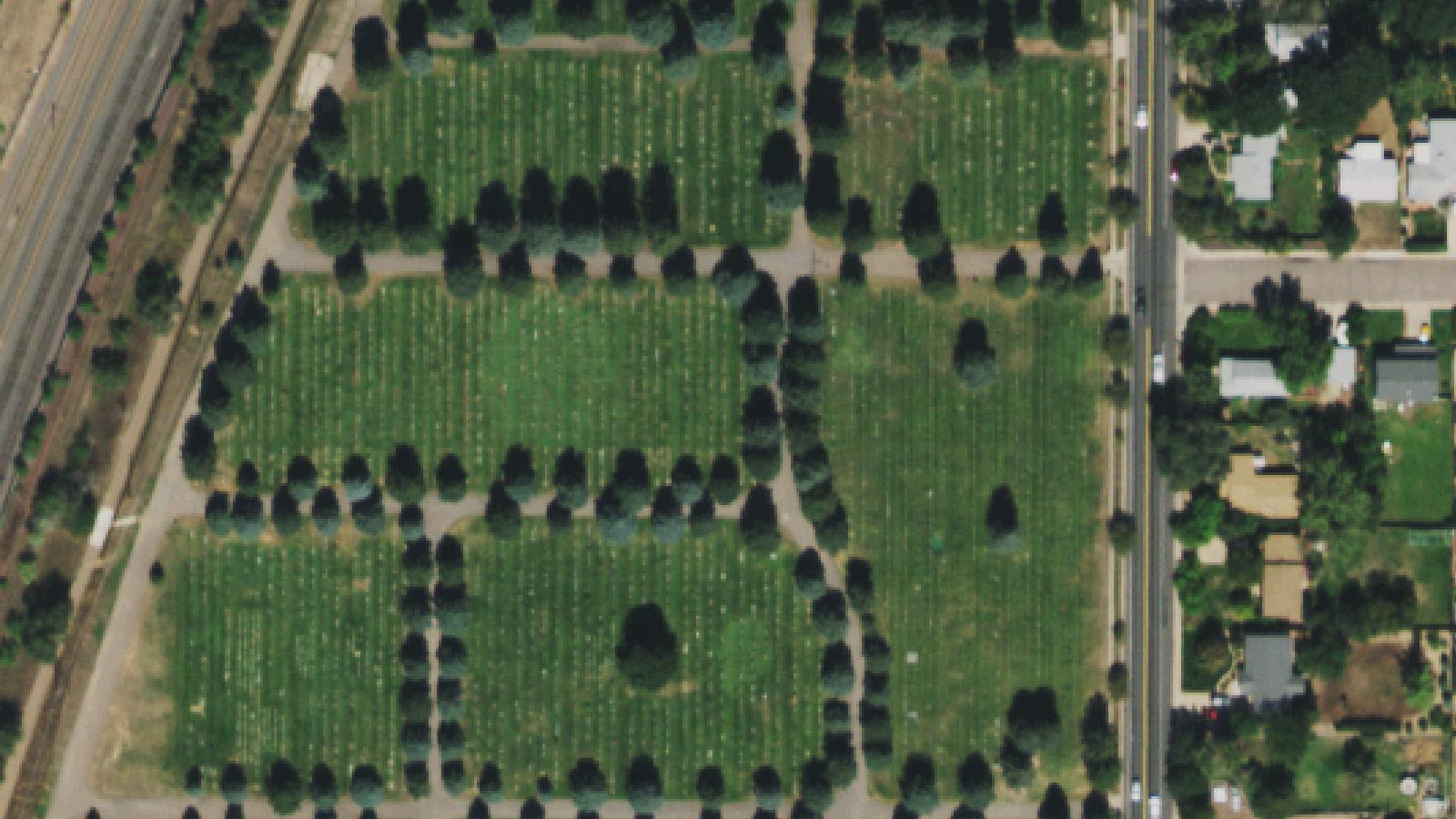
He died on April 23, 1907 — a Civil War veteran entitled to military burial — and was interred in the Littleton Cemetery. His grave is located near the second row from the right of the cemetery gate, in the closest row to the road, marked by a bench and a wolfstone.
Halloween grave theft became a recurring problem in the 1960s and 1970s: teenagers would remove Packer's headstone, and it would turn up days later on someone's doorstep. The cemetery eventually had the grave and marker permanently cemented down.
The Littleton Museum maintains a research file on Packer and his historical significance to the Colorado legal and cultural record.
Sources
- https://www.atlasobscura.com/places/alfred-packers-grave
- https://www.museum.littletonco.gov/Research/Littleton-History/Biographies/Packer
- https://www.roadsideamerica.com/story/2525
- https://kool1079.com/ixp/510/p/colorado-cemetery-home-to-cannibal/
Apparitions
The haunting attributed to Littleton Cemetery is deliberately eccentric. Alfred Packer himself is described — with some evident dryness in the original source — as resting peacefully. The active entity is Angelica, a goat.
The claim, as it circulates, is that Angelica served as Packer's spirit medium and that her ghost now haunts the cemetery in his service. This is not a claim that has been corroborated by any historical or paranormal documentation beyond its appearance in folklore aggregators. It reads as invented — possibly by Packer's own posthumous admirers, who have treated his memory with a mix of dark humor and genuine historical fascination for over a century.
What is documented: Packer's grave became a Halloween target. From the 1960s through the 1970s, people would steal his headstone on or around October 31. It reliably appeared somewhere within days — on a doorstep, at a public location — and was returned. The cycle repeated often enough that the cemetery association eventually had the grave, marker, and bench cemented permanently into the ground. The wolfstone over the grave cannot be moved.
Atlas Obscura has documented the grave as a destination attraction. Roadside America covers it. The Littleton Museum has biographical records on Packer. This is one of the few graves in the suburban Denver area that draws deliberate dark tourism visits, and the cemetery's easy daytime access at 8am-6pm makes it genuinely visitable.
Notable Entities
Angelica the goat (spirit medium)