Est. 1958 · Presbyterian Heritage · Arkansas Historic Site · Masonic Orphanage History · 1872 College Founding
Arkansas College opened in September 1872, chartered by Arkansas Presbyterians under Governor Ozra Amander Hadley. It was the first institution of its kind in the state to survive — others had been chartered and failed — and it maintained an unbroken operating record that would eventually span more than 150 years. The founding president, Isaac J. Long, established the college on a downtown Batesville block that now holds the First Presbyterian Church.
The institution spent its first eight decades at various Batesville locations. In the early 1950s, it was operating across three separate small campuses spread over a mile, an arrangement that had become administratively untenable. Under President Paul M. McCain, the college consolidated onto the Masonic Home property at the eastern edge of town — a 100-acre site with three large brick buildings that the college had been renting as dormitories since shortly after World War II.
The Masonic Home for Orphans had occupied that bluff for years before the college assumed ownership. By the time the college moved there formally in 1954, the orphanage operation had wound down. The brick buildings the orphanage left behind became the early infrastructure of the new campus.
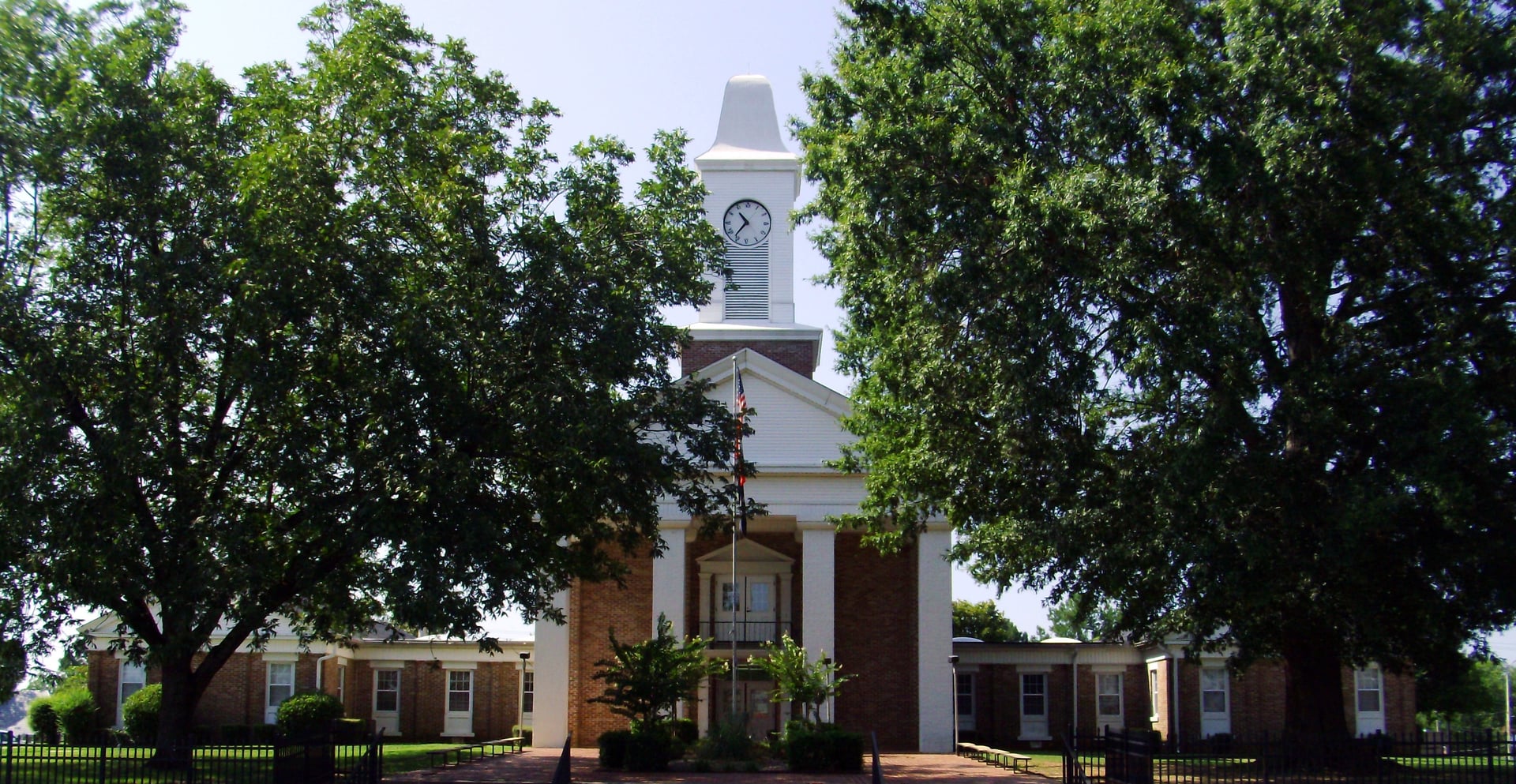
Brown Chapel was built in 1958 as the first purpose-built academic structure on the consolidated campus. Funded in part by a gift from the Brown family — whose support of the institution extended across generations — the limestone chapel became the visual and ceremonial center of campus life. It has hosted commencements, concerts, and weekly rehearsals by musicians and performance groups for nearly seven decades.
In 1994, the institution adopted the name Lyon College to honor the Lyon family's sustained contributions. The campus grew to 136 acres, and the college was later designated an Arkansas Historic Site in recognition of its architectural and educational heritage.
Sources
- https://encyclopediaofarkansas.net/entries/lyon-college-3580/
- https://www.lyon.edu/our-history
- https://en.wikipedia.org/wiki/Lyon_College
- https://www.kait8.com/2023/10/24/hidden-haunts-lyon-college/
- https://www.arkansas.com/natural-state/articles/things-do-batesville-or-without-ghosts
- https://sebournparanormalinvestigations.blogspot.com/2010/12/
ApparitionsPhantom soundsObject movementDisembodied laughter
The folklore of Brown Chapel centers on one image: children in the steeple at dusk, circling in a game of Ring Around the Rosy as the campus lights come on below them.
Dr. David Hutchison, Lyon College's vice president for advancement, described the account in a 2023 report by Jonesboro station KAIT-8: at twilight, figures that resemble children have been observed in the illuminated crown of the chapel steeple. Hutchison rehearses with a music group in Brown Chapel weekly, and he reported his own unexplained experiences — hearing an unidentified voice, or something being dragged across the floor, with no one present to account for it.
Senior Aiden McGeown told the same reporter that the hairs on his arms and legs stood up while passing the chapel at night.
Students have developed a specific legend around a ghost they call Michael — described as a boy associated with the stage area inside the chapel. The reported phenomenon is a ball placed on the stage that rolls independently. Investigators have not produced documented evidence of this under controlled conditions.
The broader context is the site's history. Before Lyon College occupied this bluff, the Masonic Home for Orphans operated here. The college began renting its buildings after World War II and took full possession in 1954. Whether any children who lived at the orphanage died on the property is not established by available historical records. Arkansas.com and the Encyclopedia of Arkansas both note the legend of buried children but acknowledge no documentary confirmation.
Choral and theatrical rehearsals in the building have been interrupted by sounds that participants could not attribute to mechanical or structural causes. Whether those reports reflect the building's age and acoustics or something less explicable depends on who you ask.
Notable Entities
Michael (the stage ghost)