Drive-By
Exterior Castle View
View the 1929 Tudor Revival 'castle' residence hall from Stadium Rim Way. Bowles Hall is an active residential college; respect resident privacy.
- Duration:
- 20 min
HauntBound archive · catalog record
Reported phenomena, as catalogued
California's first state-supported residence hall — a 1929 hillside 'castle' at UC Berkeley nicknamed 'the Cursed Castle' for its student folklore and annual Halloween haunted house.
1928 Stadium Rim Way, Berkeley, CA 94720
Research updated September 2026
Age
All Ages
Cost
Free
Active residence hall — exterior viewable from public roads. Annual student-run Halloween haunted house is typically free or low-cost to attendees.
Access
Limited Access
Hillside campus paths with steep grades; the building has multiple floors and limited elevator access
Equipment
Photos OK
Est. 1929 · First state-supported residence hall in California · George W. Kelham Tudor Revival 'castle' architecture · Funded by Mary McNear Bowles bequest · 2015-2016 major restoration · Bowles Hall Residential College since 2016
Bowles Hall opened in 1929 on a hillside lot above California Memorial Stadium as the first state-supported residence hall in California. The building was funded by a bequest from Mary McNear Bowles, the widow of regent Philip E. Bowles, who had served on the UC Board of Regents from 1899 until his death in 1922. Architect George W. Kelham designed the building in a Tudor Revival 'castle' style, giving it the crenellated rooflines and stone-and-stucco exterior that earned it its nickname.
For most of its history Bowles was an all-male residence whose community traditions, jacket culture, and shared meals gave the hall a distinctive identity within UC Berkeley student life. In 2005 the hall transitioned to co-educational use. By the early 2010s the building required substantial seismic and systems work; a major restoration was completed in 2015-2016 in partnership with Bowles Hall alumni, and the building reopened in 2016 as Bowles Hall Residential College, a four-year living-learning community.
The annual Halloween haunted house staged by residents has become a recurring campus tradition, documented on the Bowles Hall social media accounts and in Daily Californian campus ghost coverage. Past themes have included 'The Cursed Castle' (2021) and 'Cult Castle' (2024).
Sources
According to Daily Californian campus ghost coverage and Bowles Hall residents' own social media, the hall is haunted by a 'vengeful spirit of unknown identity' that students blame for missing personal possessions and abruptly cold shower water. The most often-retold story concerns a summer in which the spirit reportedly 'shattered every form of glass in the entire building' after residents had moved out for the break.
No named entity, dated incident, or specific witness account anchors the lore in the published sources we reviewed; it functions as classic residence-hall folk tradition, of a piece with the building's castle architecture and decades of all-male class-house culture. Bowles residents have taken the 'Cursed Castle' label as identity, building it into the annual student-run haunted house staged on the upper floors at Halloween. Recent themes include 'The Cursed Castle' (2021) and 'Cult Castle' (2024); residents promote the event via the Bowles Hall TikTok and Facebook event pages.
We present the Bowles lore as a living campus tradition rather than as documented paranormal claim. The haunted house itself is the most reliably scheduled 'haunting' on the UC Berkeley calendar.
Notable Entities
Media Appearances
View the 1929 Tudor Revival 'castle' residence hall from Stadium Rim Way. Bowles Hall is an active residential college; respect resident privacy.
Each October, Bowles Hall residents stage a student-run haunted house on the upper floors. Past themes have included 'The Cursed Castle' and 'Cult Castle.' Check the Bowles Hall TikTok or Facebook event listings each fall for current dates, times, and ticketing.
Some links on this page may earn HauntBound a small commission when you book, at no extra cost to you. Our editorial picks are independent. Full disclosure
Every HauntBound history is researched from documented sources. We clearly separate verified historical fact from paranormal folklore.
Free Guide
10 verified stops, rated for families, mapped in order. Free.
One email to confirm, then the guide link. Unsubscribe anytime.
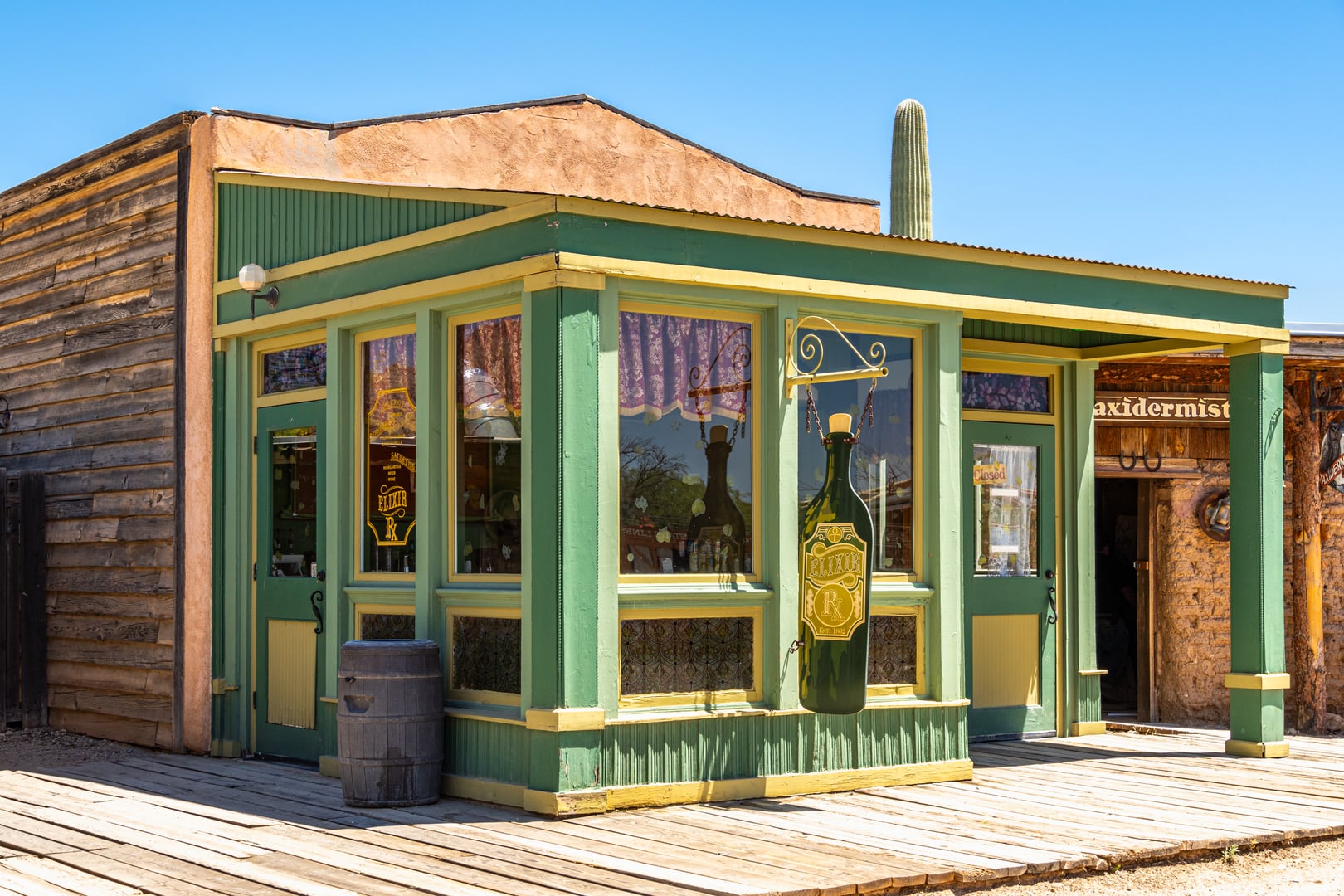
Tucson, AZ
Old Tucson was constructed in 40 days in 1939 by Columbia Pictures for the film Arizona, then opened to the public as a tourist attraction in 1960. It has been used in over 300 film and television productions. On April 24, 1995, an arson fire destroyed nearly 40 percent of the studio, causing $10 million in damage; the park reopened after nearly two years of reconstruction.
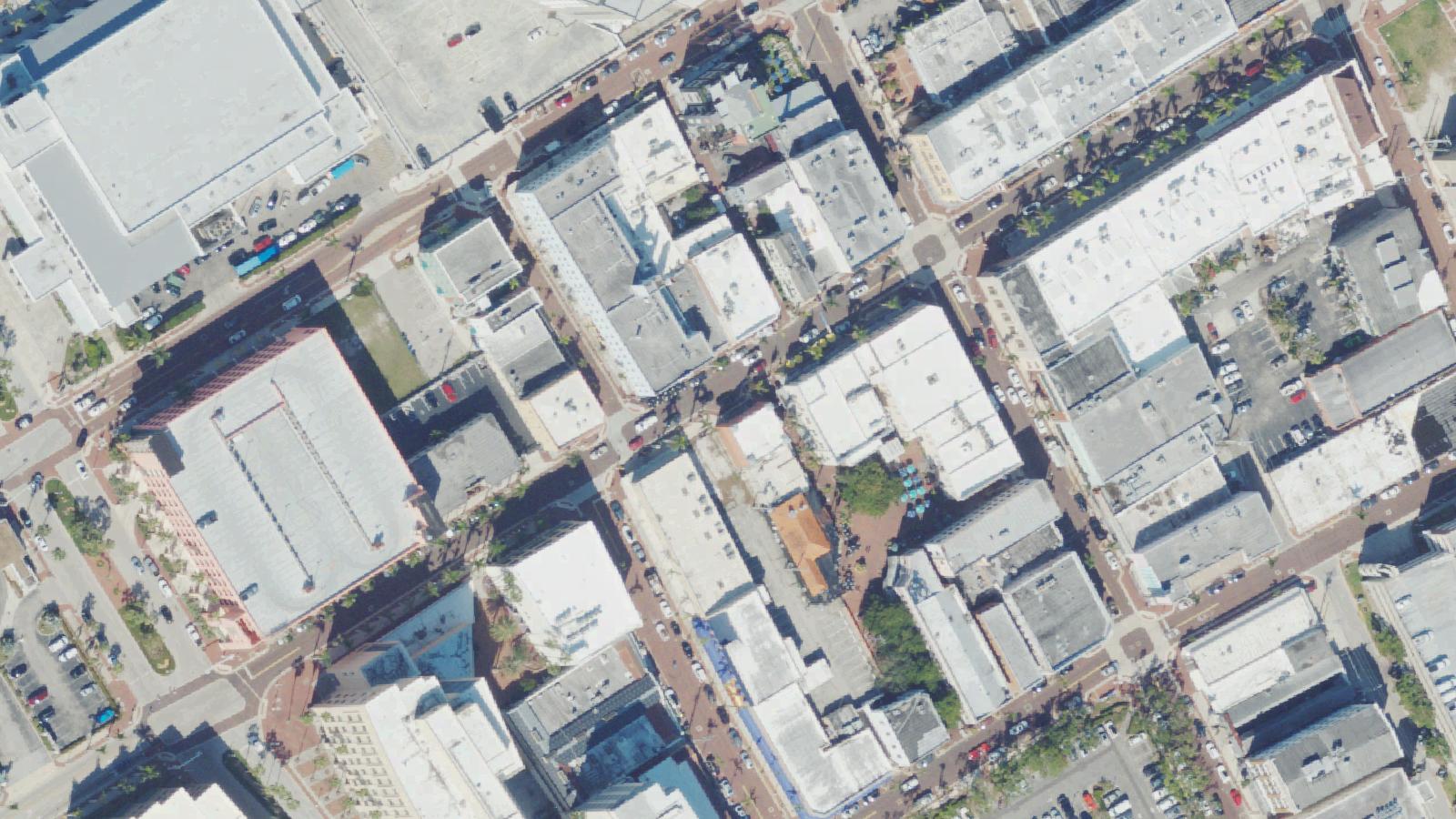 Aerial survey · USDA NAIP
Fort Myers, FL
Walter G. Langford, president of the First National Bank of Fort Myers, commissioned this bank building at the corner of First and Hendry Streets. Construction began around 1913 and the neoclassical building, with Ionic columns and a marble banking hall, was completed in 1914. It anchored the downtown commercial district through the Florida land boom and now houses professional offices in the Fort Myers River District.
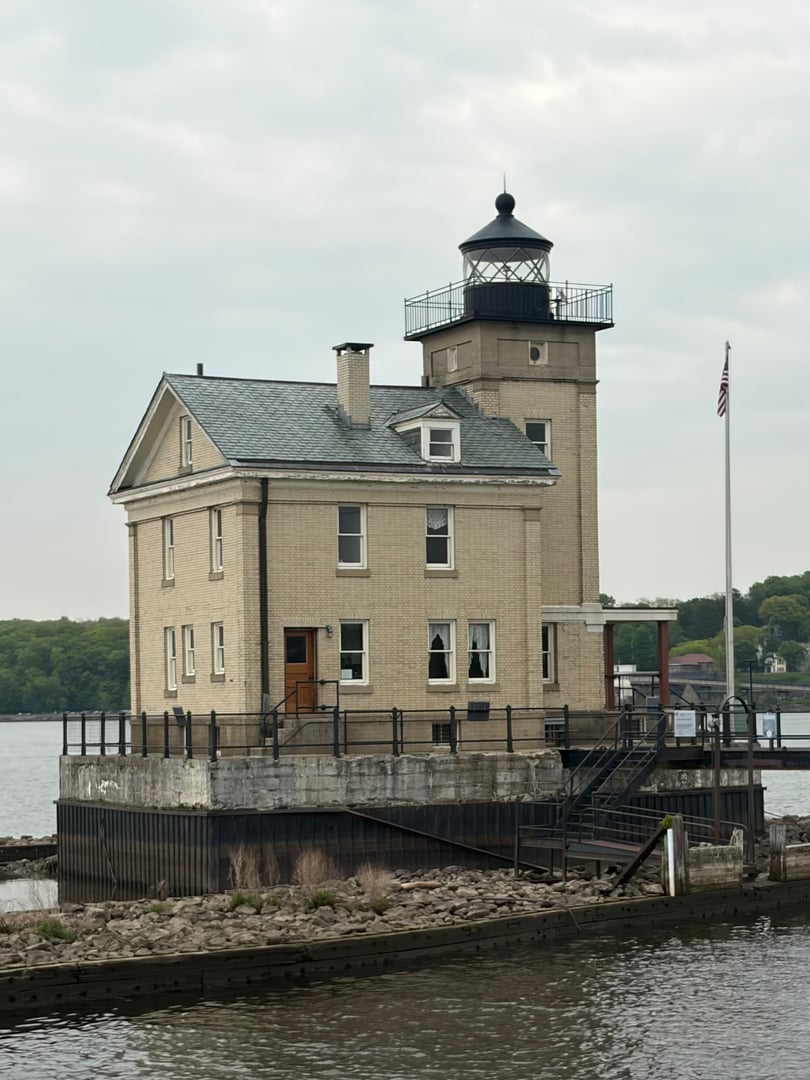
Kingston, NY
Three successive lighthouses have marked the mouth of Rondout Creek on the Hudson River since 1837. The current yellow-brick structure dates to 1915 and remains an active navigational light. Its most consequential chapter began in 1856, when keeper George W. Murdock drowned returning from a supply run — and his wife Catherine took over, ultimately serving 51 years without interruption.