Est. 1660 · Freedom Trail Site · Burial Place of Founding Fathers · Boston National Historical Park
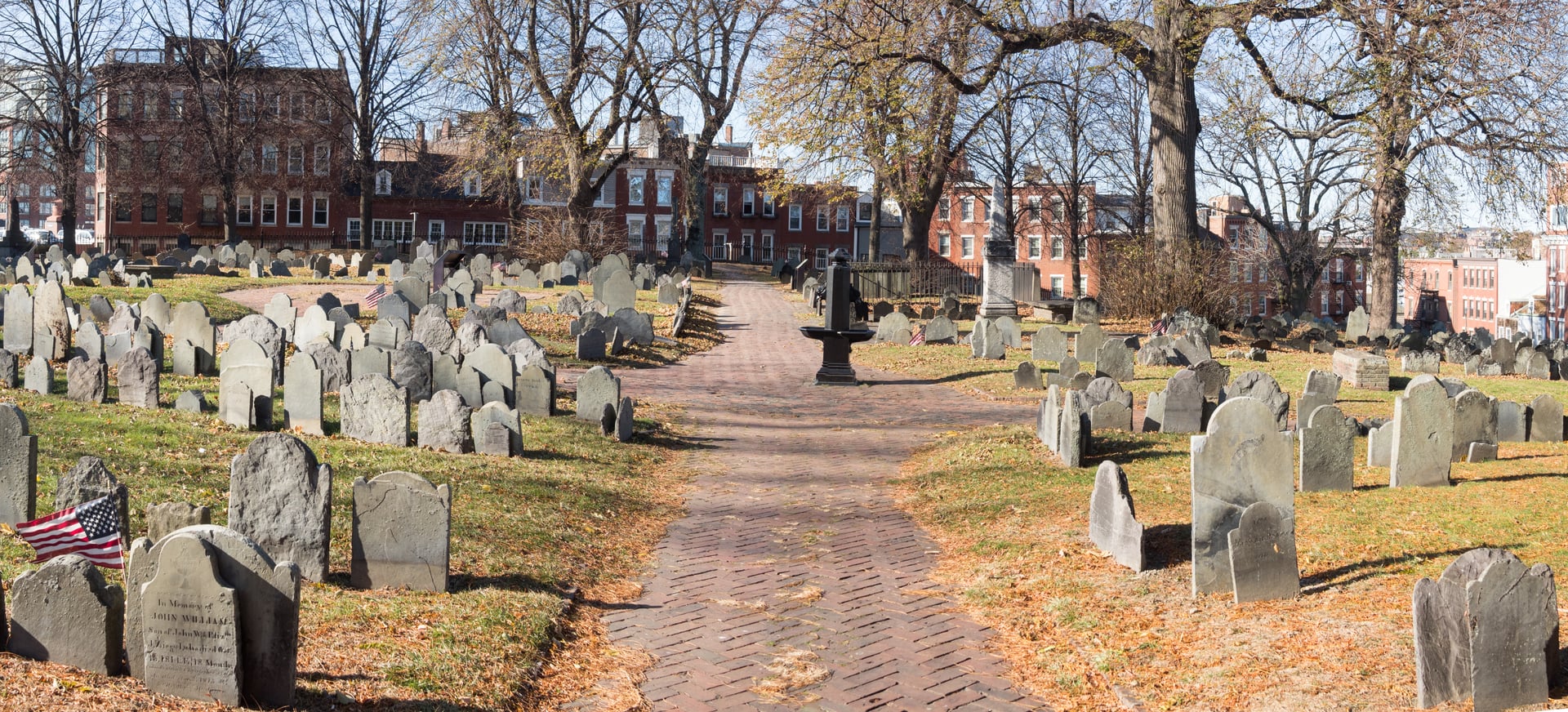
The Granary Burying Ground was established in 1660 as the South Burying Ground when Boston's first cemetery proved insufficient for the growing town. The two-acre site occupies a portion of Tremont Street next to what would later become Park Street Church. The grounds took the name Granary Burying Ground in 1737 from the public granary that stood at the cemetery's northern edge before the church was built in 1809.
Estimates place the actual number of interments at more than 5,000, far exceeding the roughly 2,345 surviving stones — a result of stones being moved for landscaping in the nineteenth century, reuse of plots, and the practice of family-name markers covering multiple burials. The Granary became Boston's most architecturally significant Revolutionary-era cemetery because of who was buried there: three signers of the Declaration of Independence (John Hancock, Samuel Adams, Robert Treat Paine), Paul Revere, the five victims of the 1770 Boston Massacre (Crispus Attucks, Samuel Gray, James Caldwell, Patrick Carr, and Samuel Maverick), James Otis, Peter Faneuil, Boston's first mayor John Phillips, and the parents of Benjamin Franklin.
The cemetery sits on the Freedom Trail, the 2.5-mile heritage route established in 1951, and is one of seventeen sites on the trail. It is part of Boston National Historical Park and is administered by the City of Boston. With more than one million visitors annually, the Granary is among the most-visited historic cemeteries in the country.
Sources
- https://en.wikipedia.org/wiki/Granary_Burying_Ground
- https://www.boston.gov/cemeteries/granary-burying-ground
- https://www.nps.gov/places/granary-burying-ground.htm
- https://www.thefreedomtrail.org/trail-sites/granary-burying-ground
Cold spotsBattery drainApparitionsShadow figures
The Granary does not have a single named resident ghost in the tradition of Boston's Boylston Street or USS Constitution stories. Instead, the cemetery functions as an atmospheric stop on the city's ghost-tour circuit, where guides discuss the violent end of several of its more famous inhabitants — Crispus Attucks shot at the Boston Massacre, James Otis killed by lightning, Samuel Gray dying within hours of the Massacre — and reports collected from visitors describe the standard repertoire of urban-cemetery experiences: cold spots near the Massacre victims' monument, sudden battery drain in cameras and phones near specific tombs, and figures in colonial dress glimpsed among the older slate stones at dusk.
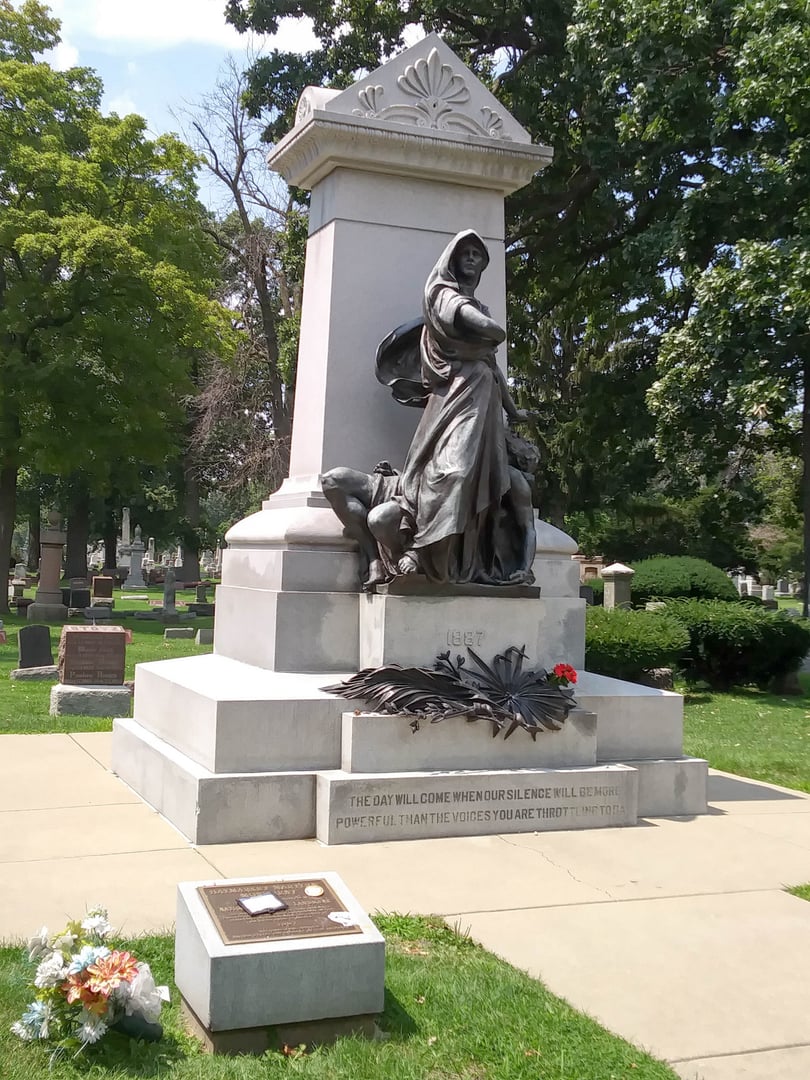
The central column erected in the 1860s to honor the Franklin family is a frequent focus of these reports, as is the Boston Massacre monument added in 1888. Local tradition holds that the slate stones themselves — many bearing the death's-head, soul-effigy, and willow-and-urn motifs that mark eighteenth-century Boston carving traditions — contribute to the cemetery's atmospheric reputation independent of any specific account.