Est. 1817 · New Orleans History · French Quarter · African American History · Sisters of the Holy Family · Quadroon Balls · Henry Latrobe Architecture
The Orleans Theatre opened in 1817 following delays caused by the War of 1812 and a fire in 1816 that destroyed an earlier structure on the site. Entrepreneur John Davis rebuilt and added the Orleans Ballroom, commissioning Henry Latrobe — the same British-born architect responsible for elements of the U.S. Capitol — to design the space. The ballroom became one of the most celebrated social venues in antebellum New Orleans.
The Orleans Ballroom hosted Quadroon Balls, formal events where Creole men arranged placage arrangements — a system of concubinage — with women of mixed African descent. These balls were a sanctioned institution in New Orleans society, reflecting the city's particular racial and social hierarchies. The women who attended held a complex status: neither enslaved nor fully free in the social sense, they navigated a world defined by negotiations made on their behalf at these very events.
In 1842, Henriette DeLille formalized the Sisters of the Holy Family, one of the earliest African American religious congregations in the United States, co-founding the order with Juliette Gaudin and Josephine Charles. The congregation grew to more than 150 nuns by the end of the 19th century. In 1881, the Sisters acquired the Orleans Theatre and Ballroom property, converting the theatrical and social spaces to a motherhouse, school for African American girls called St. Mary's Academy, and orphanage. They operated the complex for 83 years.
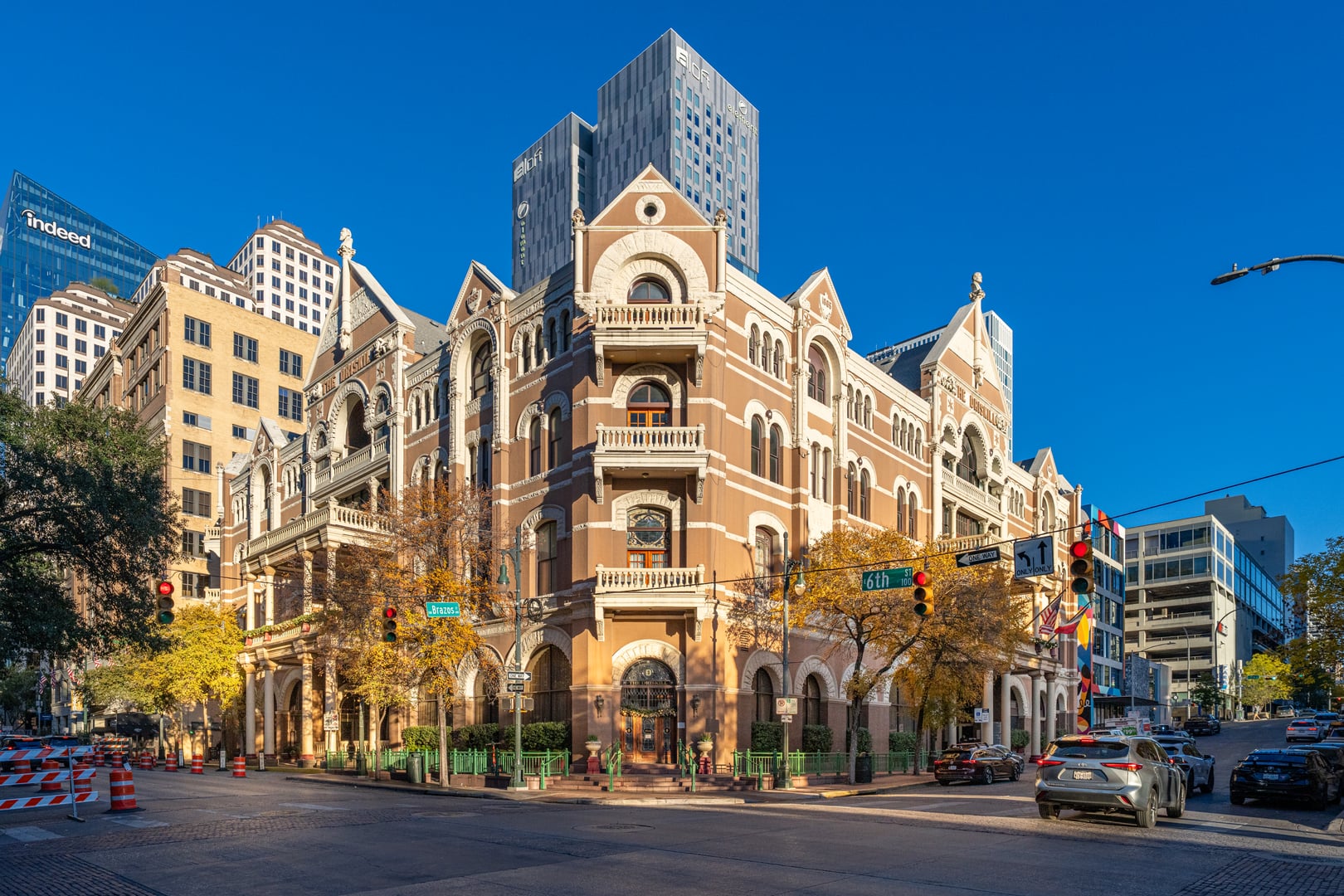
In 1964, the Sisters sold the property to the Bourbon Kings Hotel Corporation. Developers preserved the historic Orleans Ballroom building while constructing the modern 220-room hotel around it. The ballroom remains intact as the hotel's most historically significant physical space.
Sources
- https://www.bourbonorleans.com/our-story/our-history/
- https://ghostcitytours.com/new-orleans/haunted-new-orleans/haunted-hotels/bourbon-orleans-hotel/
- https://usghostadventures.com/haunted-cities/new-orleans-most-haunted/whos-haunting-the-luxurious-bourbon-orleans-hotel/
ApparitionsPhantom voicesDisembodied screamingCold spotsShadow figuresPhantom sounds
The Bourbon Orleans has accumulated paranormal accounts across multiple eras of its use, creating a layered reputation that reflects each chapter of the building's history.
Room 644 is the property's most frequently-requested room and the focus of the hotel's haunted reputation. Guests and staff have reported a female apparition appearing before sleep, and the room is associated with the Sisters of the Holy Family era — though no documentary record from the order confirms a specific death in the room. The screaming and apparition accounts are guest-reported and circulate widely in tour-company and travel media; treat them as folklore inherited from the convent and orphanage period rather than documented fact.
The Orleans Ballroom, the 1817 space designed by Henry Latrobe, hosts its own category of reported phenomena. A woman in period dress has been seen dancing under the chandeliers and behind the large draperies. She is commonly associated with the Quadroon Ball era — a woman whose connection to the ballroom was one of the few social currencies available to her.
The Yellow Fever epidemics that struck New Orleans repeatedly through the 19th century are part of the documented history of the site. Children's voices have been reported in unoccupied upper-floor rooms, associated with orphans who lived and died at St. Mary's Academy and St. John Berchman's Asylum during the Sisters' tenure.
A Confederate soldier has been reported in the ballroom, distinct from the dancing woman, associated with the Civil War-era occupation of New Orleans. Ghost Hunters investigated the property.
Notable Entities
The Dancing WomanConfederate SoldierRoom 644 Spirit