Est. 1786 · Early American Frontier History · Fayette County Heritage · Monongahela River Commerce
Jacob Bowman built the original trading post at 136 Front Street in Brownsville in 1786 — a strategic commercial location in southwestern Pennsylvania during the early national period, positioned along the Monongahela River.
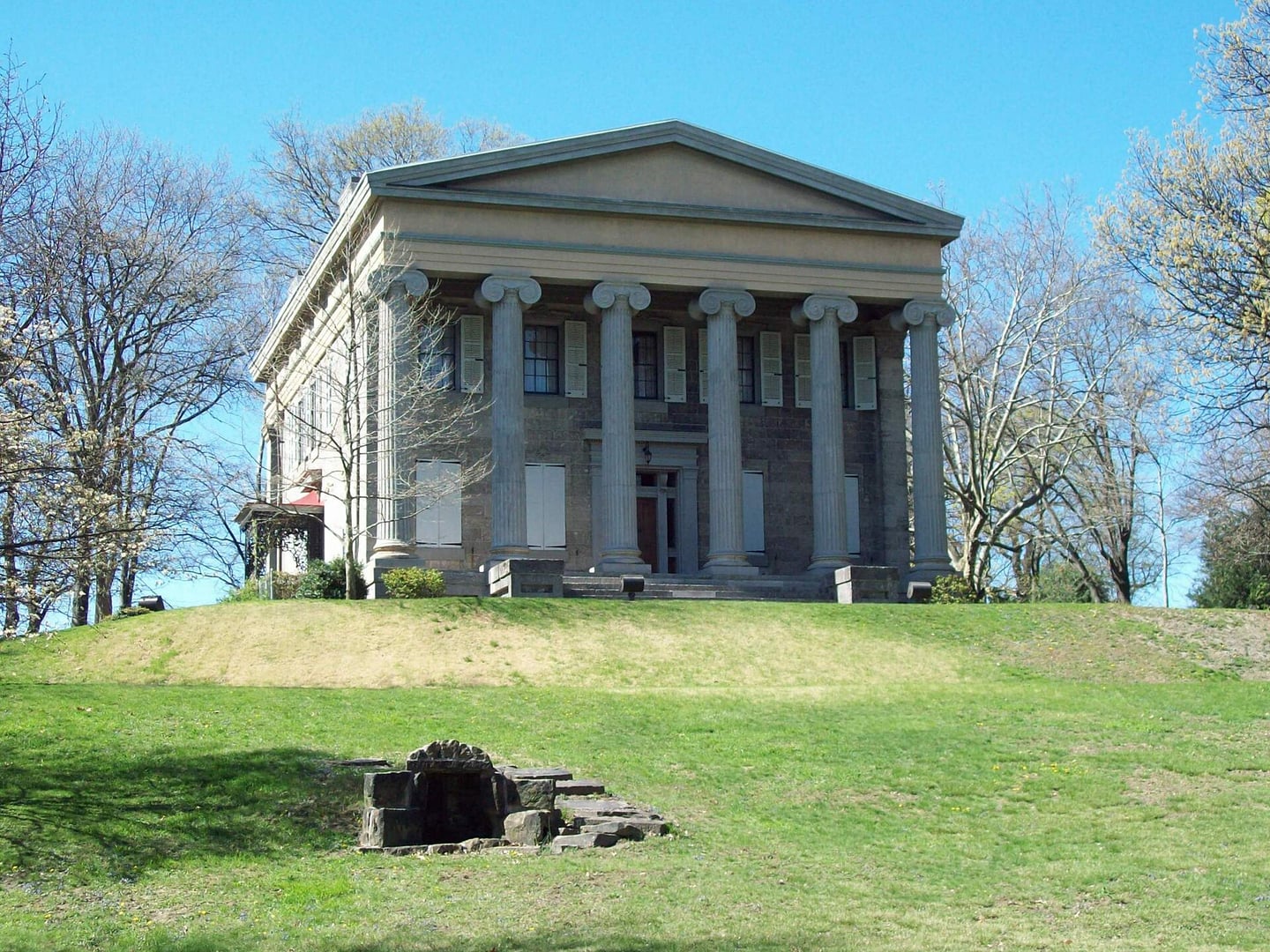
What began as a practical frontier trading operation was expanded by successive generations of the Bowman family into a substantial residential structure. The architectural accretion over the 19th century, with Gothic and Romanesque elements added to the original Federal core, produced the castle-like appearance that now characterizes the property.
Claims that it is the third-oldest castle in the United States appear in regional tourism materials, though the ranking depends on how 'castle' is defined in an American context where true defensive fortifications were rare.
The Brownsville Historical Society now manages the property as a museum and historic attraction. The castle's seasonal ghost tours, running September through October, have become one of Fayette County's more distinctive dark tourism offerings. Tours are explicitly non-theatrical — the Society emphasizes that no costumed characters or staged scares are included.
Sources
- https://www.nemacolincastle.net/
- https://hauntedus.com/pennsylvania/nemacolin-castle-haunted/
- https://www.eventbrite.com/e/nemacolin-castle-ghost-tours-2025-tickets-1543040970079
ApparitionsPhantom footstepsShadow figures
Paranormal research into Nemacolin Castle has compiled as many as ten reported presences, though the count varies by source and methodology.
Jacob Bowman, who built the property in 1786, is the most consistently described. Visitors claim to see him lingering near the home's library — the room most associated with study and intellectual life in the Victorian-era castle. His presence is described as visual rather than auditory.
A woman in a flowing white dress is a separate and recurrent report. Staff and visitors have independently described her passing through hallways and disappearing into rooms. The identity attached to this figure varies by account.
Heavy footsteps — described by multiple accounts as stomping rather than walking — have been heard at odd hours in rooms that are unoccupied. The sound is consistent enough across independent reports to recur in multiple sources.
The Brownsville Historical Society's ghost tours present these accounts without staging or theatrical enhancement. The organization is explicit on this point in its promotional materials: there are no costumed characters, no jump scares, only the building's own documented stories.
Notable Entities
Jacob BowmanThe Woman in White