Est. 1974 · Site of Forts Duquesne, Pitt, and Prince George · Central location in George Washington's early military career · National Historic Landmark district (Fort Pitt)
Point State Park preserves the western tip of downtown Pittsburgh, at the confluence of the Allegheny and Monongahela Rivers that forms the Ohio River. In December 1753 Lieutenant George Washington of the Virginia militia passed through this land while traveling to negotiate with French forces in the Ohio Valley. He recorded in his journal that the land was 'extremely well situated for a Fort, as it has the absolute Command of both Rivers.'
The site became a focal point of the French and Indian War. In 1754 a force of Virginians built an outpost (Fort Prince George) at the Point, which was almost immediately captured by French forces. Washington led British forces back toward the Point but was forced to surrender at Fort Necessity, 50 miles to the south. The French built Fort Duquesne at the Forks, controlling the Ohio Valley until British forces under General John Forbes approached in late 1758. The French burned and abandoned Fort Duquesne on November 24, 1758, two days before Forbes' arrival.
The British built a temporary stockade (Mercer's Fort) and then began construction of the much larger Fort Pitt in 1759. Fort Pitt was a key British strongpoint during Pontiac's War (1763) and remained in service through the end of the colonial period. The fort was decommissioned in the 1790s.
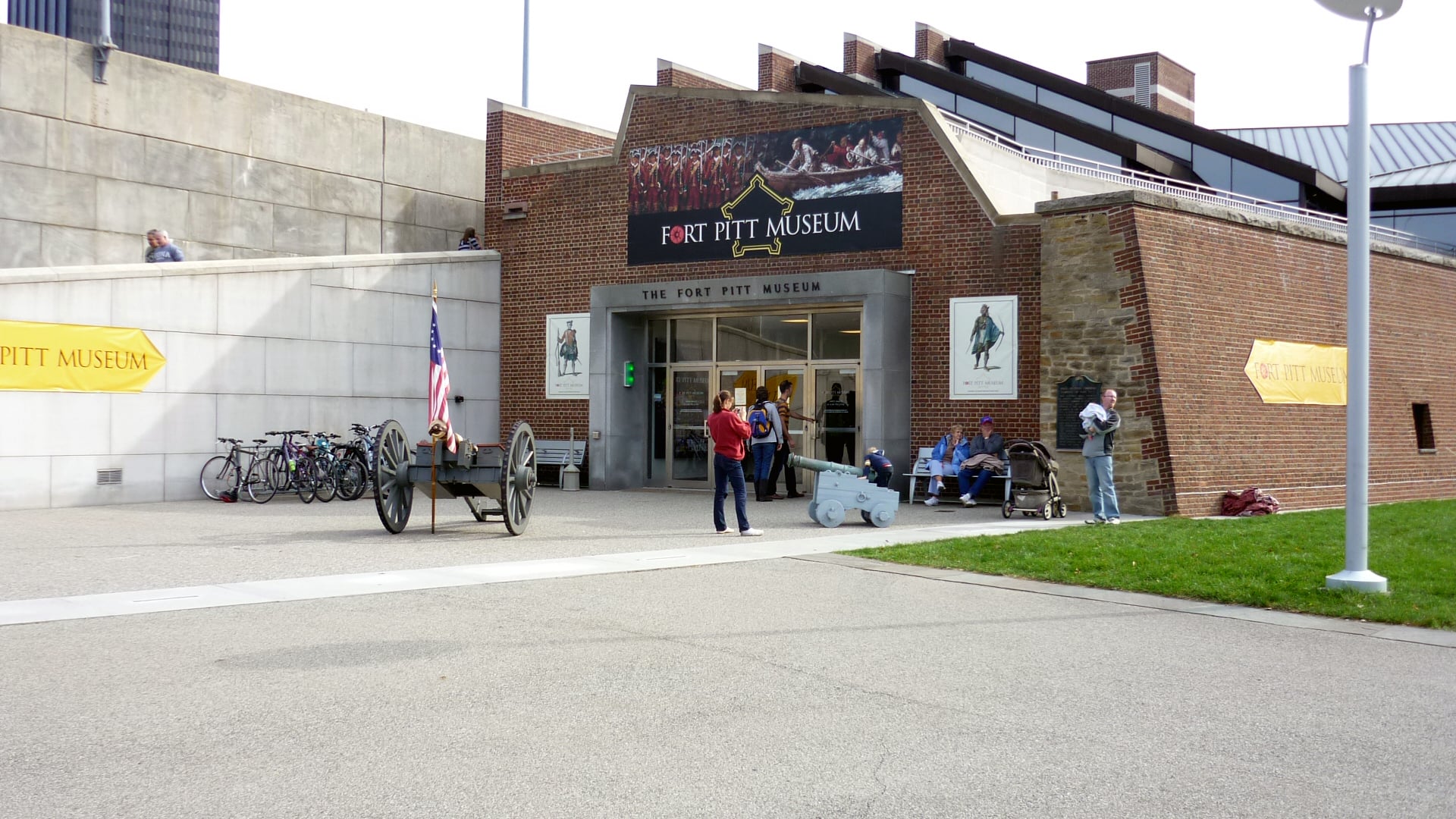
Development of the state park was authorized in 1945, the first parcel of the 36-acre property was acquired in 1946, and the park was completed and dedicated in 1974. The park preserves the visible outlines and surviving fragments of both Fort Duquesne and Fort Pitt, and includes the Fort Pitt Museum operated by the Heinz History Center.
Sources
- https://en.wikipedia.org/wiki/Point_State_Park
- https://www.pa.gov/agencies/dcnr/recreation/where-to-go/state-parks/find-a-park/point-state-park/history
- https://en.wikipedia.org/wiki/Fort_Duquesne
- https://www.wesa.fm/arts-sports-culture/2020-12-10/the-road-that-helped-make-pittsburgh-possible
Mist apparitions over the river edgeFigures in colonial-era frontiersman clothingFigures in Indigenous period dressApparition resembling a colonial officer
Point State Park's haunted lore is rooted in its 18th-century military history. Reports collected from Pittsburgh police on night patrol, from people who have spent time at the Point during off-hours, and from regional ghost-tour operators describe a recurring set of phenomena: shapeless mist apparitions over the river edge, figures in colonial-era frontiersman clothing, sightings of Indigenous fighters in period dress, and occasional sightings of a tall colonial officer in 18th-century military attire that local lore connects to George Washington's documented presence at the site.
The park's official interpretive program focuses on documented history rather than on the ghost lore. The Fort Pitt Museum presents the layered Indigenous, French, and British history of the Forks with serious archaeological grounding. Visitors interested in the ghost stories should treat them as part of Pittsburgh's oral tradition rather than as part of the official program.
It is worth noting that the Forks were a significant Indigenous gathering place for centuries before European arrival, and contemporary interpretation should recognize that history, including the cultural significance of the rivers' confluence for the Lenape, Shawnee, Seneca, and other nations of the Ohio Valley.