Est. 1862 · National Historic Landmark · Utopian Community · 19th-Century Religious Movement
The Oneida Community was founded in 1848 by John Humphrey Noyes as a religious and social experiment that practiced cooperative living, communal property, gender equality in labor, and a system Noyes called complex marriage. At its peak, roughly three hundred adults and children shared the Mansion House under a single roof.
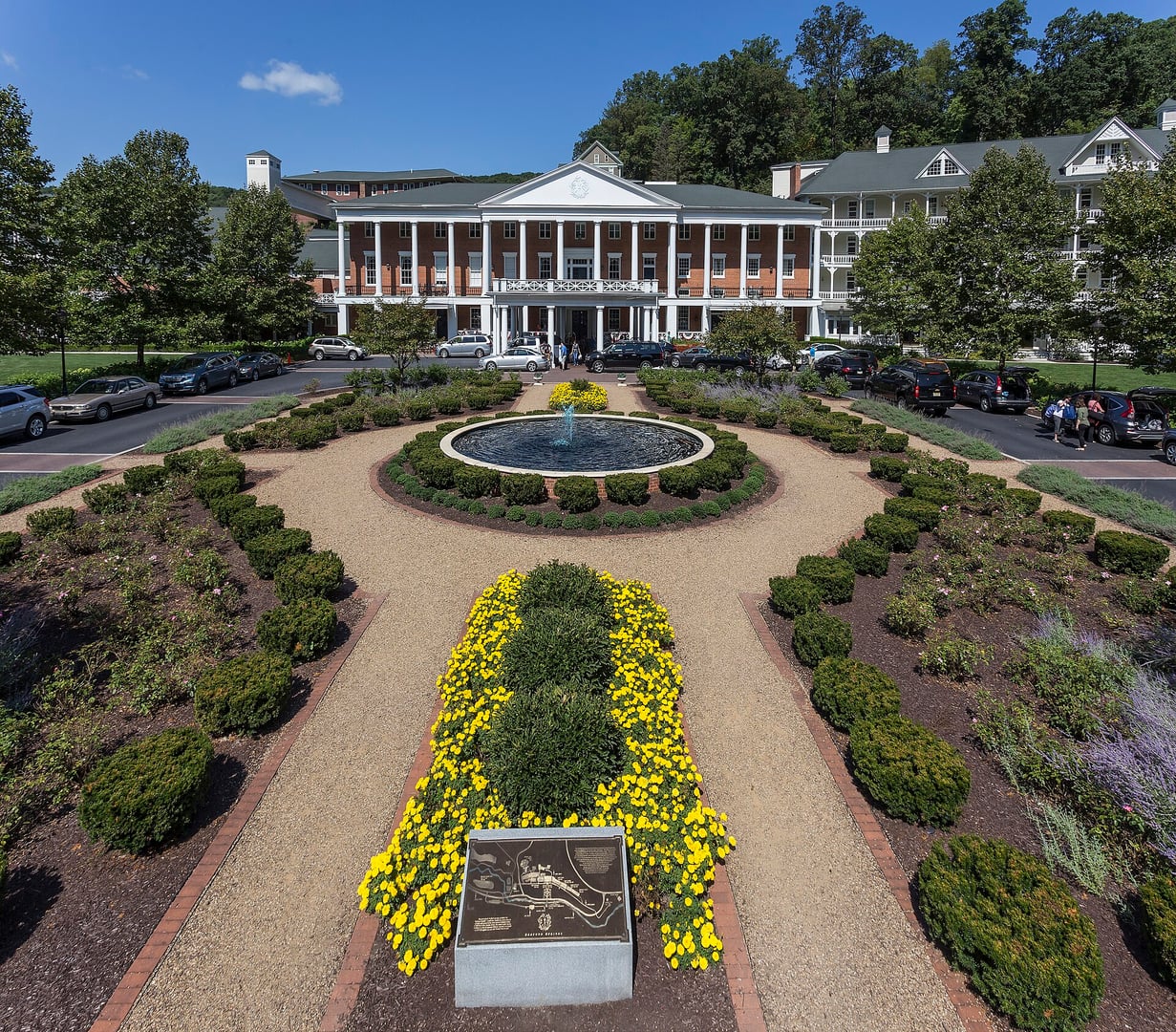
The brick structure visitors see today was built in stages between 1862 and 1914. Architect Erastus Hamilton designed the original wing; subsequent additions accommodated the community as it grew, eventually creating an interconnected complex of dwelling spaces, a printing office, a Big Hall theater, a Children's House, and shared dining rooms. The community generated income through trap manufacturing, silk thread, and silverware, the last of which became Oneida Limited, the famed flatware company that survived the dissolution of the religious community itself.
In 1880, internal disputes and external pressure from local clergy ended the communal experiment. The community reorganized as a joint-stock company, and the Mansion House transitioned into apartments for descendants and former members. It remained in active residential use throughout the twentieth century. Today, the Mansion House Foundation operates the property as a museum, offering 14 overnight guest rooms, public tours, and an extensive archive used by scholars of nineteenth-century communitarianism.
The house was designated a National Historic Landmark in 1965 in recognition of its architectural significance and its central role in American utopian history.
Sources
- https://en.wikipedia.org/wiki/Oneida_Community_Mansion_House
- https://www.oneidacommunity.org/
- https://www.romesentinel.com/news/oneida-community-mansion-house-history/article_1efaa8bb-fbd0-464e-a62e-bb54edb3452a.html
- https://nyheritage.org/organizations/oneida-community-mansion-house
Phantom footstepsPhantom voices
The Mansion House does not promote itself as a haunted destination. The Foundation's guides and printed materials focus on the social, religious, and architectural history of the Oneida Community. Paranormal references appear primarily in informal sources and aggregator listings rather than in interviews with current staff or in published investigations.
The building's scale alone produces atmosphere. Long shared corridors, transitional spaces between residential and museum use, and the closed lower-floor sections that were once communal dining and workspaces give the house an unusually layered acoustic profile. Guests staying overnight occasionally describe footsteps, distant voices, and the sounds of an unseen household at rest, observations consistent with a 162-year-old wood-and-plaster structure that still hosts active programming during the day.
The Mansion House offers an after-dark tour that explores the people and rooms of the original Oneida Community, framed as social history rather than as a paranormal experience. Visitors interested in the boundary between communal living and the buildings that housed it find it the most intellectually engaging way to encounter the property after sundown.