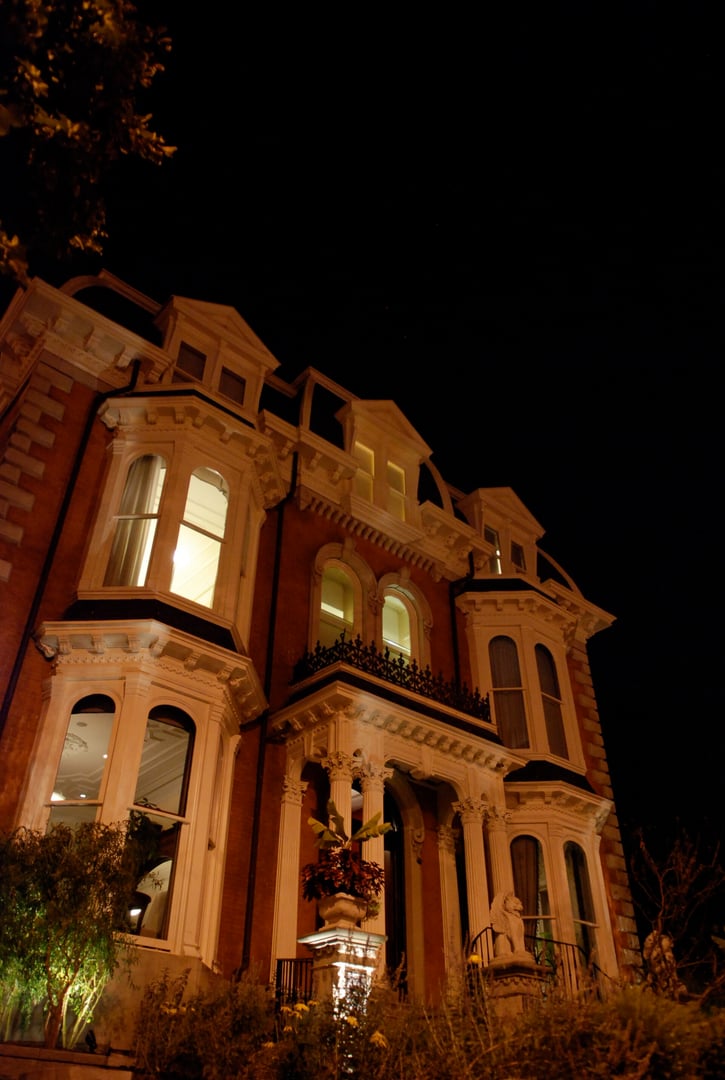
Est. 1884 · NYC Landmark · Victorian Gothic / Queen Anne Revival Architecture · 20th Century American Literary and Music History · Nancy Spungen Case (1978)
The Hotel Chelsea was built in 1884 at 222 West 23rd Street, in Manhattan's Chelsea neighborhood, as a cooperative apartment building designed in a mix of Victorian Gothic and Queen Anne Revival styles. Marketed initially as a residence for artists, writers, and musicians, it became one of the most documented creative residences in American 20th-century cultural history. Long-term residents have included Mark Twain, Dylan Thomas, Arthur Miller, Patti Smith, Leonard Cohen, and many others.
In October 1978, Nancy Spungen — partner of Sex Pistols bassist Sid Vicious — was found dead in Room 100 of a stab wound. Vicious was charged with her murder, and the case remains one of the most-discussed in the building's history; he died of a heroin overdose before trial. The Chelsea's owner Stanley Bard subsequently split Room 100 into two rooms, now numbered 1E and 1F, to avoid creating a shrine.
After years of ownership disputes and partial closure beginning in 2011, the hotel underwent a major restoration and reopened in 2022 as a boutique hotel. A documentary about the tension between the building's past and its restoration, Dreaming Walls, was released in 2022. The Hotel Chelsea remains a New York City Landmark.
Sources
- https://en.wikipedia.org/wiki/Hotel_Chelsea
- https://www.fastcompany.com/3023355/a-photographic-tour-of-the-notorious-hotel-chelsea
- https://www.habitat2art.com/2024/05/07/the-chelsea-hotel-an-iconic-landmark-restored-reinvented-and-veiled-in-mystery-by-laura-wagner/
- https://nyghosts.com/the-haunted-hotel-chelsea/
- https://chelseacommunitynews.com/2020/10/23/ghostly-guests-of-the-chelsea-hotel/
Raised voices in corridorsCold drafts in sealed roomsShadow figuresDoors and drawers openingItems moved between visits
The Hotel Chelsea's haunted reputation tracks closely with its broader cultural history. The most-cited single set of stories involves Room 100 — the room where Nancy Spungen died in October 1978 — and the two rooms (1E and 1F) into which Stanley Bard later subdivided it. Guest reports collected by US Ghost Adventures and other writers describe raised voices interpreted as recreations of the couple's documented arguments, cold drafts in otherwise sealed rooms, and shadow figures in the corridor.
Other stories include reports tied to former long-term residents, with guest accounts describing footsteps in empty corridors, doors and drawers opening unprompted, and items moved between visits to a room. The building's century-plus history of mortality among its residents has built a layered tradition rather than a single dominant haunting narrative; the documentary Dreaming Walls (2022) frames much of the building's mythology as community memory rather than supernatural claim.
Notable Entities
Nancy SpungenSid Vicious