Est. 1898 · Klondike Gold Rush · Skagway Historic District · National Historic Landmark
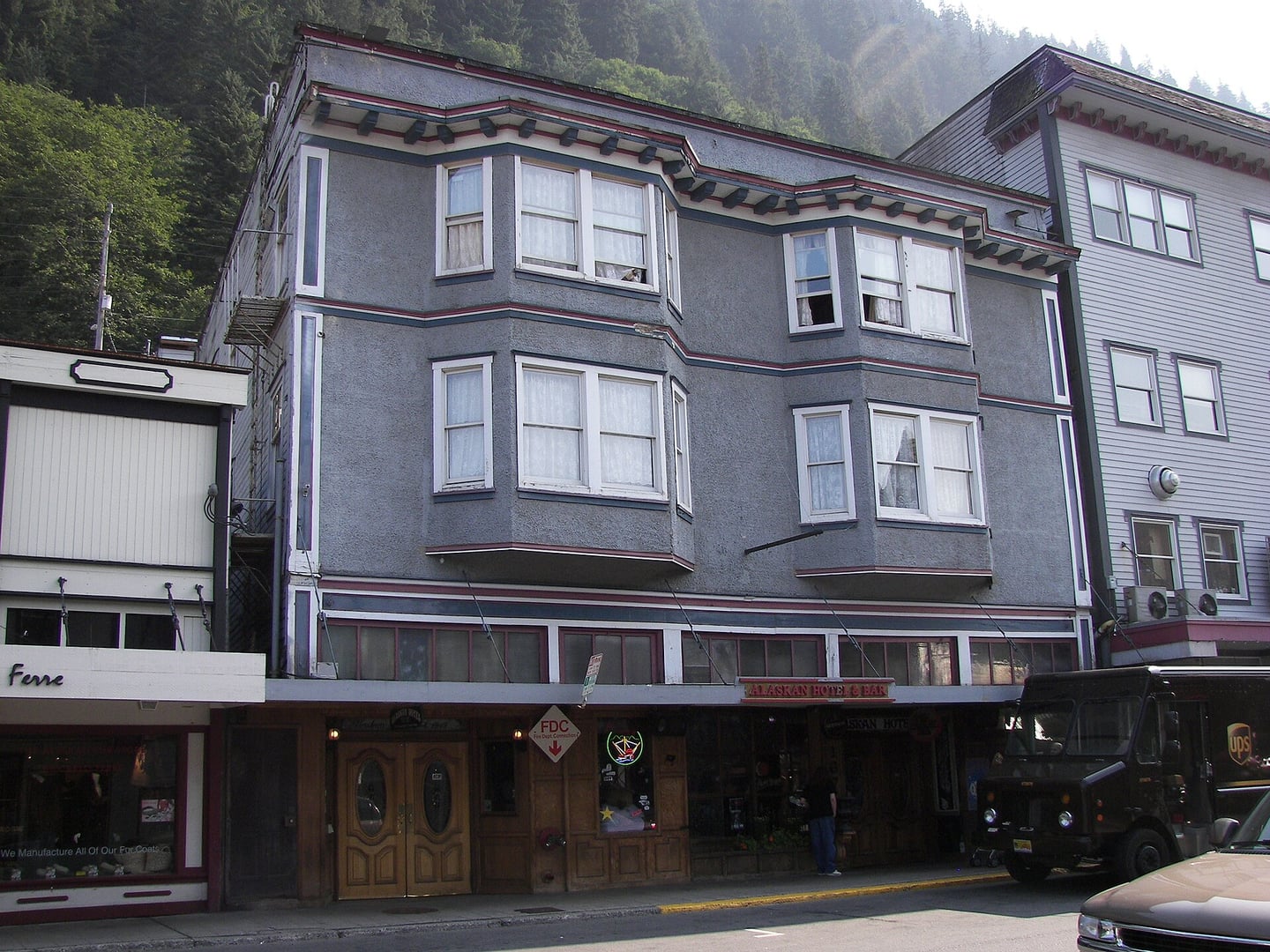
The Golden North Hotel opened in 1898 at the corner of Third Avenue and Broadway in Skagway, Alaska, the staging port for stampeders heading to the Klondike gold fields via the White Pass. Skagway exploded from a tidewater encampment to a town of more than 10,000 in less than two years, and the Golden North was among the more permanent expressions of that boom. The building is a frame structure with a distinctive domed corner cupola that has been repainted and rebuilt several times.
Use of the building changed repeatedly across the 20th century as Skagway's economy contracted with the end of the gold rush and reoriented around tourism and the White Pass and Yukon Route Railway. The hotel closed in 2002. The structure has since been restored to its turn-of-the-century exterior and operates as retail and office space on the ground floor.
The Golden North sits within the Skagway and White Pass District, a National Historic Landmark managed in cooperation with Klondike Gold Rush National Historical Park. The district preserves much of the boomtown street grid and false-fronted commercial architecture that survived the post-rush decline. The hotel is one of the most-photographed buildings on Broadway and appears in essentially every visitor itinerary, even now that it cannot be entered as a guest.
Sources
- https://www.atlasobscura.com/places/the-golden-north-hotel-skagway-alaska
- https://voyij.com/blog/the-truth-about-the-ghost-at-the-golden-north-hotel
ApparitionsPhantom sounds
Mary's story is one of the cleanest documented cases of a haunted-hotel legend with a traceable origin. The narrative as told by tourists and aggregator sites runs as follows: a prospector sometimes called Klondike Ike traveled to Skagway with his fiancée Mary at the height of the gold rush, took up residence in the Golden North, and left for the 500-mile trek to the Klondike. Mary stayed behind in Room 23, contracted pneumonia, and died waiting. Reports across the 20th century attributed apparitions, a sensation of being choked, and unexplained presences in Room 23 to her spirit. A second ghost, sometimes named Scary Mary, was occasionally identified with the same room.
The Voyij blog, which collects gold-rush-era oral histories, traced the legend to its likely source. According to Skagway local Jeff Brady, then-owner Ruth Apgar invented the story for marketing purposes in the late 1960s. Apgar reportedly borrowed a wedding dress and arranged staged photographs of the apparition. Brady's quoted summary is precise: the building was not a hotel during the gold rush, did not have a third floor, and the legend's central facts do not match the historical record.
The legend has since outlived its origin. Tour guides still tell it. Travel writers still reproduce it. The Golden North's haunting reputation persists primarily because the building itself is so visibly atmospheric: the corner cupola, the period exterior, and the closure all give the legend a stage it did not entirely earn.