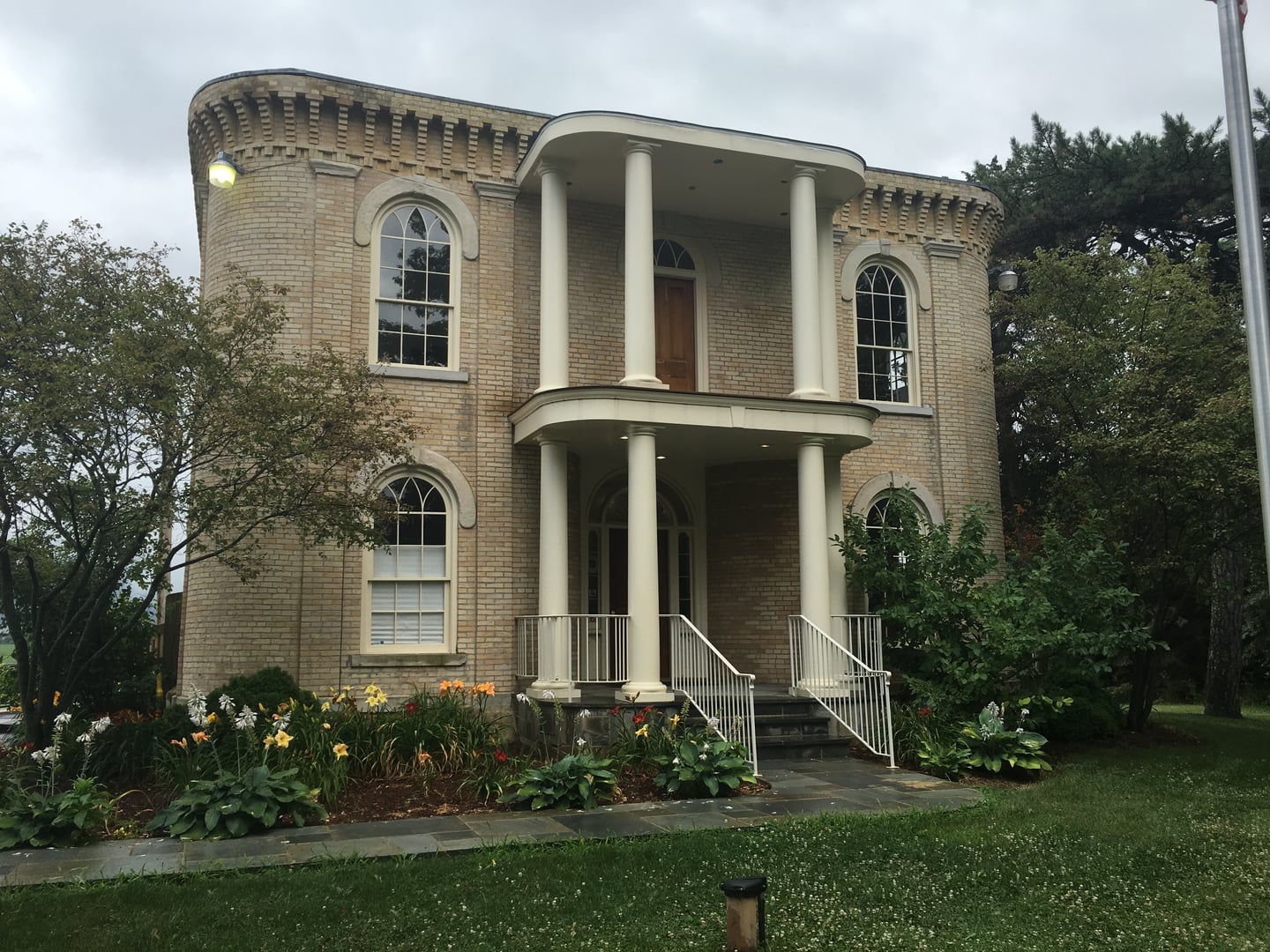
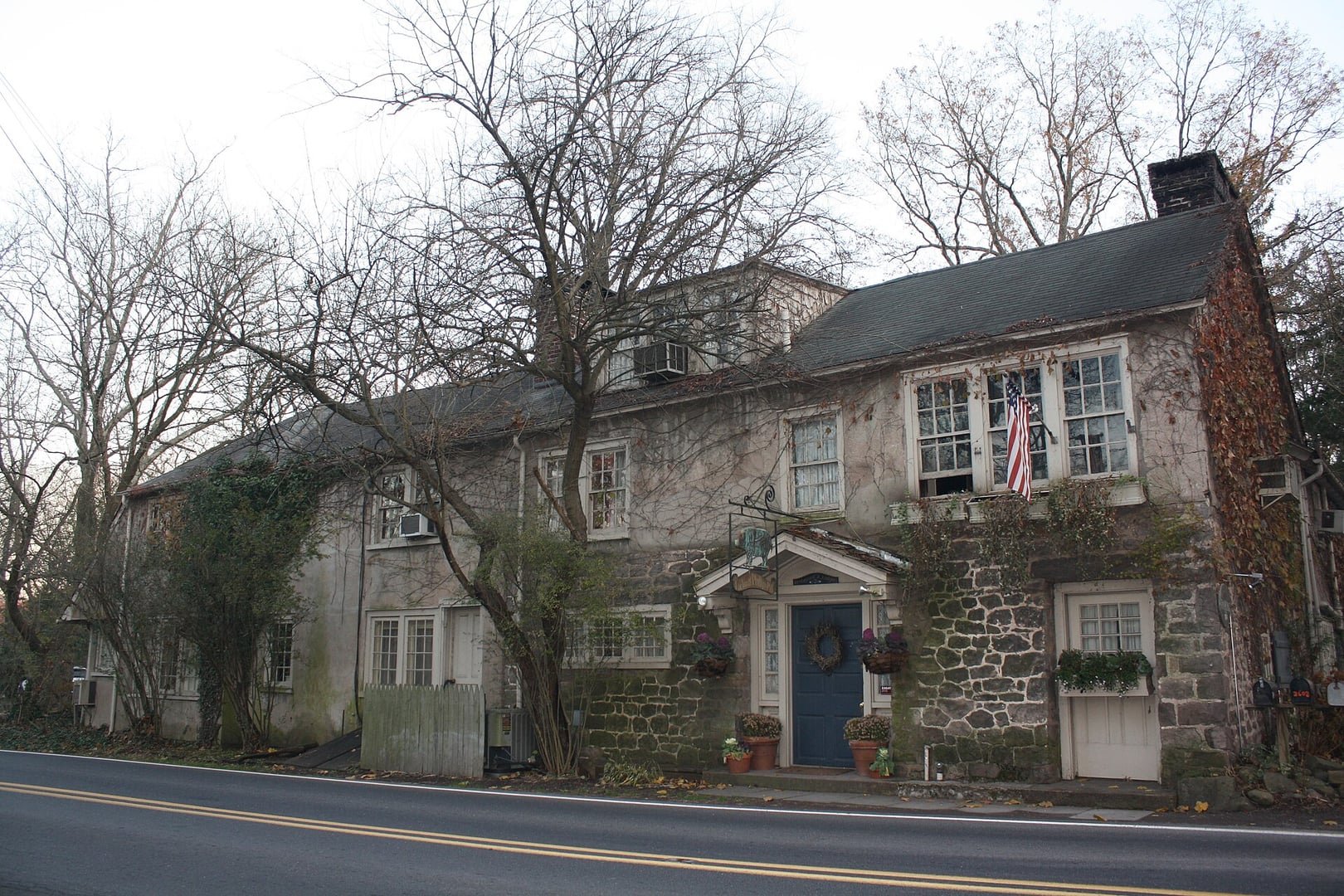
Est. 1763 · National Register of Historic Places · Royal Province of New Hampshire · Colonial New England Architecture
The Georgian mansion at 346 Pleasant Street in Portsmouth was built around 1763 by Mark Hunking Wentworth, a prosperous colonial merchant, as a gift for one of his daughters. John Wentworth — Mark's son, who was appointed Royal Governor of New Hampshire in 1767 — made the house his home until 1775, when the onset of the Revolutionary War forced the last Royal Governor of the province to depart.
The building is recognized on the National Register of Historic Places and is considered one of the finest surviving examples of 18th-century domestic architecture in New England. A surviving detail in the parlor is particularly evocative: red-flocked wallpaper with a papier-mache border imported by Governor Wentworth in 1774, the year before he fled — it remains in place more than 250 years later.
In 1911, 16th-generation Wentworth descendants Charles and Susan Wentworth established the Mark H. Wentworth Home for the Chronically Invalid on the property, providing care for the chronically ill. The institution expanded over the following century: the Manor was added in 1927, and the Wentworth Building in 1987. All three were renovated in 2007.
In 2016, the organization changed its name to Wentworth Senior Living, reflecting a shift in institutional philosophy from long-term nursing care toward a broader assisted living and memory care model. The facility remains a private senior community and is not open to general public visitors.
Sources
- https://wentworthseniorliving.org/about-us/history/
- https://en.wikipedia.org/wiki/Mark_Wentworth_House
ApparitionsObject movementDoors opening/closingPhantom footstepsPhantom voicesResidual hauntingIntelligent haunting
The paranormal reputation of the Wentworth building is staff-sourced and specific in its geography: reports cluster in the oldest section of the structure, the 1763 mansion, and diminish in the newer additions. Night-shift caregivers working alone in that section have been the most consistent source of accounts.
The phenomena described are varied. Full-body apparitions that appear to speak — not merely silent shapes but figures that seem to communicate — are the most striking claim, and the one most frequently cited by former employees. Object displacement is common: items moved from where they were left to somewhere else, without any observable cause. Doors in the older wing open on their own; others refuse to open at all and then release without apparent reason.
Footsteps in empty corridors are the most frequently mentioned experience. One former 11pm-7am worker described hearing voices and the sound of doors closing in areas confirmed to be empty. The sensation of not being alone in a room — described without drama, as a practical occupational fact — appears in multiple independent accounts.
The building's history is an honest explanation for the density of reported phenomena: a facility that has housed people in the final stages of illness and aging since 1911, in a building that was already 150 years old when it was first repurposed for that function. As one former employee put it simply: a lot of people have died there. Some seem to have stayed.