Est. 1756 · Colonial Period Architecture · Phillips Mill Historic District · National Register of Historic Places · Bucks County Heritage
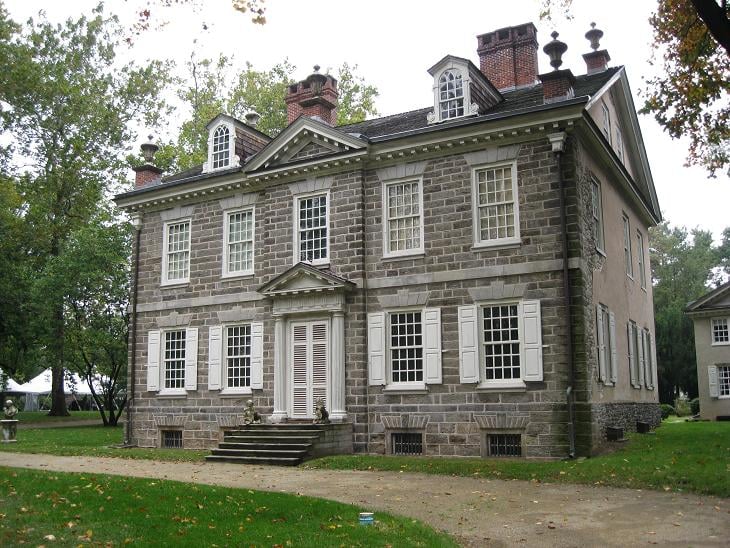
Aaron Phillips built the structure at what is now 2590 River Road around 1756 — a stone barn in the Colonial tradition of Bucks County construction, using local field stone to create walls that have endured nearly 270 years. The building eventually became part of the Phillips Mill Historic District, listed on the National Register of Historic Places.
The structure was converted into a French restaurant and country inn in the early 1970s and operated in that capacity for several decades, building a regional reputation for elegant dining in a historic setting. The inn has since closed permanently. As of 2025–2026, the property is listed for sale and redevelopment; the building remains standing but is no longer open to overnight guests or diners.
New Hope, Pennsylvania, sits along the Delaware River in Bucks County and has long attracted artists, writers, and travelers drawn to its combination of Colonial architecture and bohemian culture. The concentration of 18th-century structures along River Road — many dating to the same period as Phillips Mill — gives the corridor a distinctive character that the inn exemplifies, even as its operation has ended.
Sources
- https://explorepahistory.com/attraction.php?id=1-B-1A4E.html
ApparitionsCold spotsPhantom soundsTouching/pushing
The apparition at the Inn at Phillips Mill is unusually consistent across accounts from the decades when the inn was open. She appears in what is variously described as late Victorian or early 20th-century women's dress: a high-necked white blouse, a black skirt to the floor, sturdy leather boots, and hair pinned on top of her head. Guests reported her in the second-floor hallway and seated in a rocking chair on the second floor — the sound of the chair's motion sometimes preceding the visual.
The staircase accounts involve physical sensation: a cool, dense mass brushing past guests on the stairs, gently but definitively moving them aside. Those who experienced it described it as purposeful — as if someone needed to get through.
Identifying the figure has not been accomplished through public historical records. The building's long history and multiple ownership changes made attribution speculative even while the inn was operating.
With the inn now closed and the property listed for redevelopment, the building can be viewed only from River Road. Future ownership may or may not preserve the structure's interior. The accounts above describe the property during its operating years and should be read as a record of what guests reported, not a current visitor experience.