Est. 1857 · One of Michigan's earliest and most intact examples of the Romantic 'rural cemetery' movement · Designed by Colonel J.L. Glenn (Niles, MI), surveyor of Lansing and the Michigan State Capitol · Gothic Revival gatehouse and sexton's residence by architect Gordon W. Lloyd (1866) · Burial place of Ann Arbor's co-founders, multiple University of Michigan presidents, and coaches Fielding Yost and Bo Schembechler · Records preserved at the Bentley Historical Library, University of Michigan
Forest Hill Cemetery sits on 65 acres at 415 S Observatory Street, just east of the University of Michigan's central campus. The site was selected in 1856 by an Ann Arbor cemetery company organized to replace the original burial ground (now Felch Park), which by mid-century had become cramped and difficult to maintain. The new cemetery was formally dedicated on May 19, 1859. Dr. Benajah Ticknor, a U.S. Navy surgeon who built Cobblestone Farm in Ann Arbor, became the first permanent burial there.
The cemetery's design was the work of Colonel J.L. Glenn of Niles, Michigan, a civil engineer who had surveyed Lansing and overseen Michigan State Capitol construction. James Morwick served as builder. Glenn's plan reflects the Romantic 'rural cemetery' movement that had begun with Mount Auburn Cemetery in Boston (1831): winding paths, natural topography, and a park-like feel that emphasized contemplation over the gridded utility of older churchyards. Forest Hill's pathways carry floral names like verbena, myrtle, and snowdrop.
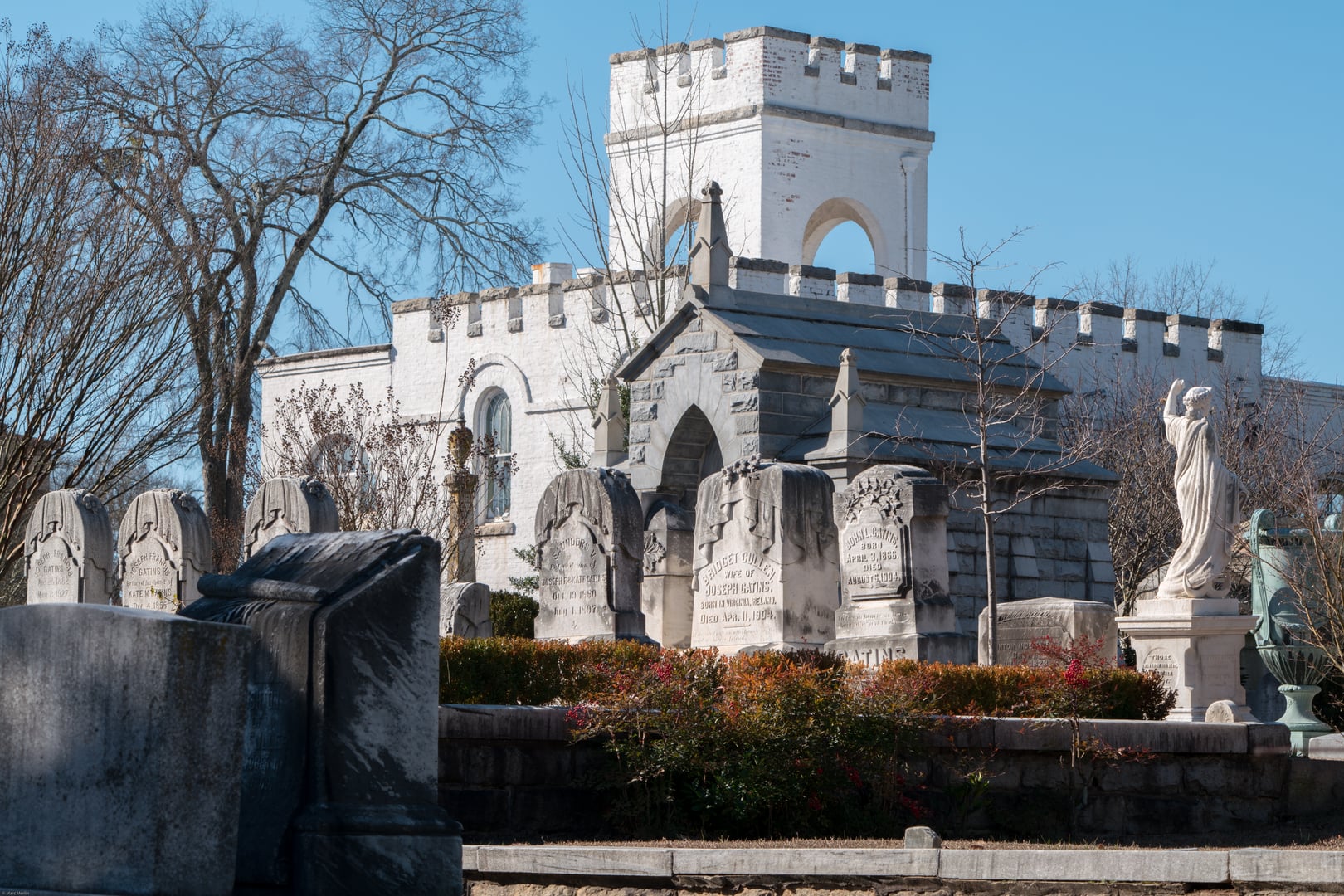
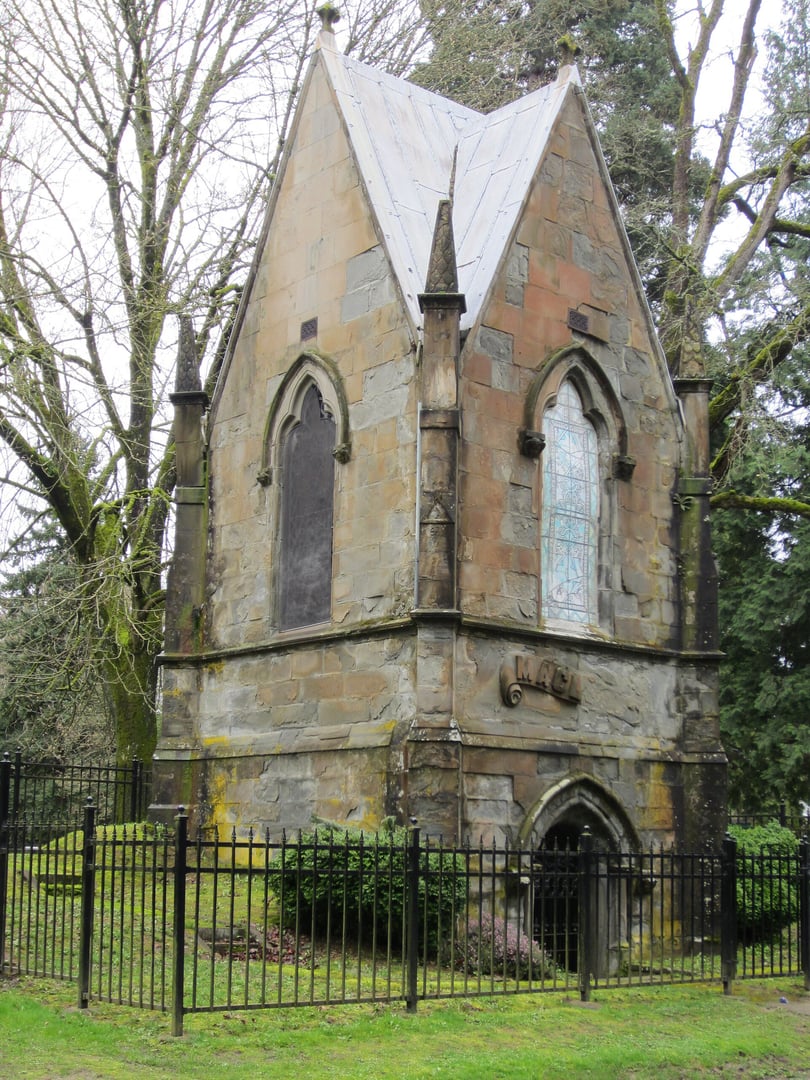
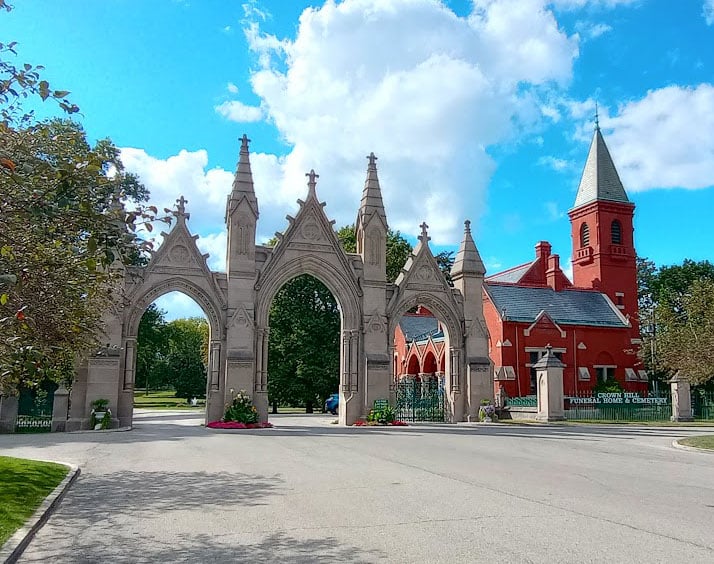
The Gothic Revival gatehouse, caretaker's residence, and office were designed by prominent Detroit architect Gordon W. Lloyd and completed in 1866, featuring lancet windows, slate roofs with decorative patterns, and a copper-topped belfry. James Morwick is credited with the original gate. The site had previously hosted what is generally cited as the nation's first fraternity building, a Chi Psi hunting lodge built in 1849.
More than 17,000 people are interred at Forest Hill across its more than 165-year history. Notable burials include Ann Arbor co-founders John Allen and Elisha Walker Rumsey; University of Michigan presidents James Burrill Angell, Marion LeRoy Burton, Henry Simmons Frieze, Harry Burns Hutchins, and Alexander Grant Ruthven; and University of Michigan football icons Fielding H. Yost and Bo Schembechler. The cemetery's records from 1857 to 2000 are preserved at the University of Michigan's Bentley Historical Library.
Sources
- https://en.wikipedia.org/wiki/Forest_Hill_Cemetery_(Ann_Arbor,_Michigan)
- https://aadl.org/buildings_415observatory
- https://foresthillcemeteryaa.org/
- https://findingaids.lib.umich.edu/catalog/umich-bhl-0117
- https://www.findagrave.com/cemetery/534/forest-hill-cemetery
Ghostly figuresMysterious lightsEerie sounds among the tombstonesGlowing 'weeping woman' statue (local legend)
Forest Hill Cemetery's role in Ann Arbor's haunted reputation rests largely on its atmosphere: 65 acres of mature trees, winding Romantic-era paths, and a Gothic Revival gatehouse that has been silhouetted against Michigan twilights since 1866. Local roundups of Ann Arbor's most haunted sites describe 'ghostly figures, mysterious lights, and eerie sounds that echo among the tombstones,' typically reported by night-time visitors and passersby on Observatory Street.
The most specific lore attached to Forest Hill is the so-called 'weeping woman' statue, which according to local legend is said to glow in the dark. The story is repeated in Ann Arbor real-estate-blog haunted roundups and informal local ghost-lore but has not been corroborated by named witnesses or by primary sources at the cemetery itself. The cemetery's official organization makes no paranormal claims, and the Bentley Historical Library's finding aid for the cemetery's records (1857-2000) catalogs administrative records and burial data, not folklore.
With more than 17,000 burials, including major figures in Michigan history, the resonant-site emotional weight of Forest Hill is substantial even without specific apparition stories. The cemetery is best understood as a Romantic-era memorial landscape whose mood, more than any single ghost story, has fueled its haunted reputation.
Media Appearances
- The Michigan Daily - 'A Haunting in Ann Arbor' feature
- Local Ann Arbor haunted-history blog roundups