Drive-By
Exterior viewing from Urbana Pike
View the Landon House exterior from Urbana Pike and read the Historical Marker Database marker that describes the 1862 Sabers and Roses Ball and the building's Civil War hospital use.
- Duration:
- 15 min
HauntBound archive · catalog record
Reported phenomena, as catalogued
An 1754 Virginia-built residence barged to Urbana, Maryland in 1846; site of J.E.B. Stuart's 1862 Sabers and Roses Ball and a Civil War field hospital where visitors report phantom screams and soldier apparitions.
3401 Urbana Pike, Urbana, MD 21704
Research updated September 2026
Age
All Ages
Cost
Free
Private property; not open for self-guided public visits. Exterior viewable from Urbana Pike. Historical marker is publicly accessible.
Access
Accessibility not stated
Private historic residence set back from Urbana Pike; viewable from the roadway.
Equipment
Photos OK
Est. 1754 · Built 1754 in Virginia as a silk mill near the Rappahannock River · Dismantled and barged to Urbana, Maryland in 1846 · Operated as the Landon Female Seminary and briefly as a boys' military institute · Site of J.E.B. Stuart's Sabers and Roses Ball on September 8, 1862 · Used as a Civil War field hospital for Confederate and Union wounded after South Mountain and Antietam
The Landon House was originally constructed in 1754 on the banks of the Rappahannock River near Fredericksburg, Virginia. According to Clio and Wikipedia, the building served as a silk mill at its original Virginia site until 1846, when it was dismantled, moved by barge to Georgetown, and then up the Potomac to Point of Rocks before being reconstructed at its current location on Urbana Pike in Urbana, Maryland.
After reconstruction, the building served as the Landon Female Seminary, a school for young girls, until about 1850. It then briefly housed a military institute for young boys before reverting to a girls' seminary by the end of the 1850s.
On September 8, 1862, Confederate Major General J.E.B. Stuart — riding through Urbana ahead of the Army of Northern Virginia's Maryland Campaign — discovered Landon House (then operating as the Landon Female Academy) and decided to hold a ball that night to give his cavalry officers a break. Stuart's ball, decorated with flags and roses and with music provided by the 18th Mississippi Cavalry's regimental band, became famous as the Sabers and Roses Ball.
The ball is one of the most romanticized incidents of the Maryland Campaign, but its tone changed dramatically the following day when the Battle of South Mountain produced waves of wounded. According to the Landon House historical marker and the Clio entry, the academy was rapidly converted to a field hospital — first for Confederate wounded, then for Union wounded as Federal forces moved through Urbana — and continued in that role through the Antietam aftermath.
In 2013 the property was purchased for $850,000 by Dr. Praveen Bolarum, Dr. Rohit Khirbat, and Chakri Katepalli, who announced plans to restore the building and operate it as an event center with a bed and breakfast. Per a Frederick News-Post follow-up, those plans have been only partially realized, and the property's operating status as a regular public venue has been uncertain in recent years. The Landon House is publicly addressed as 'Frederick, MD 21704' in mailing addresses, but it is geographically located in Urbana, Maryland, an unincorporated community south of the city of Frederick.
Sources
According to the Haunted Places directory entry for the property and WFRE-FM's 2016 video coverage, the most consistently reported phenomena at Landon House are auditory: phantom screams, cries, and prayers, and what witnesses describe as the sounds of wounded soldiers begging for help. The reports cluster particularly around the rooms used as the wartime field hospital after the Sabers and Roses Ball.
Guests have also reported cold spots, tapping sounds from the basement, and apparitional sightings of soldiers in Union and Confederate uniforms throughout the house and grounds. In October 2016, Frederick-area radio station WFRE-FM published a video segment titled 'Scary Noise Captured On Video At Landon House,' presenting recorded audio of an unexplained noise from inside the building during a paranormal investigation.
The combination of high-archival history (J.E.B. Stuart's documented presence, the field-hospital conversion) and a well-attested radio-station media artifact makes Landon House one of the better-documented paranormal sites in the Frederick County area. Reports skew toward residual auditory phenomena tied to mass-casualty trauma rather than intelligent or interactive apparitions, which is consistent with the field-hospital framing.
Independent corroboration: The What-When-How haunted-places encyclopedia entry, Haunted Salem, PANICd's paranormal-database profile, and Occult World each independently record the Civil War soldier apparitions at Landon House, with the front-door / staircase / dissipation sequence first reported by a worker in 2003 cited consistently across sources. WFRE-FM published a 2016 video of an unexplained sound recorded inside the house, providing a separate media artifact. Western Michigan Ghost Hunters Society conducted a weekend investigation in 2004 documented across these aggregators.
Notable Entities
Media Appearances
View the Landon House exterior from Urbana Pike and read the Historical Marker Database marker that describes the 1862 Sabers and Roses Ball and the building's Civil War hospital use.
Some links on this page may earn HauntBound a small commission when you book, at no extra cost to you. Our editorial picks are independent. Full disclosure
Every HauntBound history is researched from documented sources. We clearly separate verified historical fact from paranormal folklore.
Free Guide
9 verified stops, rated for families, mapped in order. Free.
One email to confirm, then the guide link. Unsubscribe anytime.
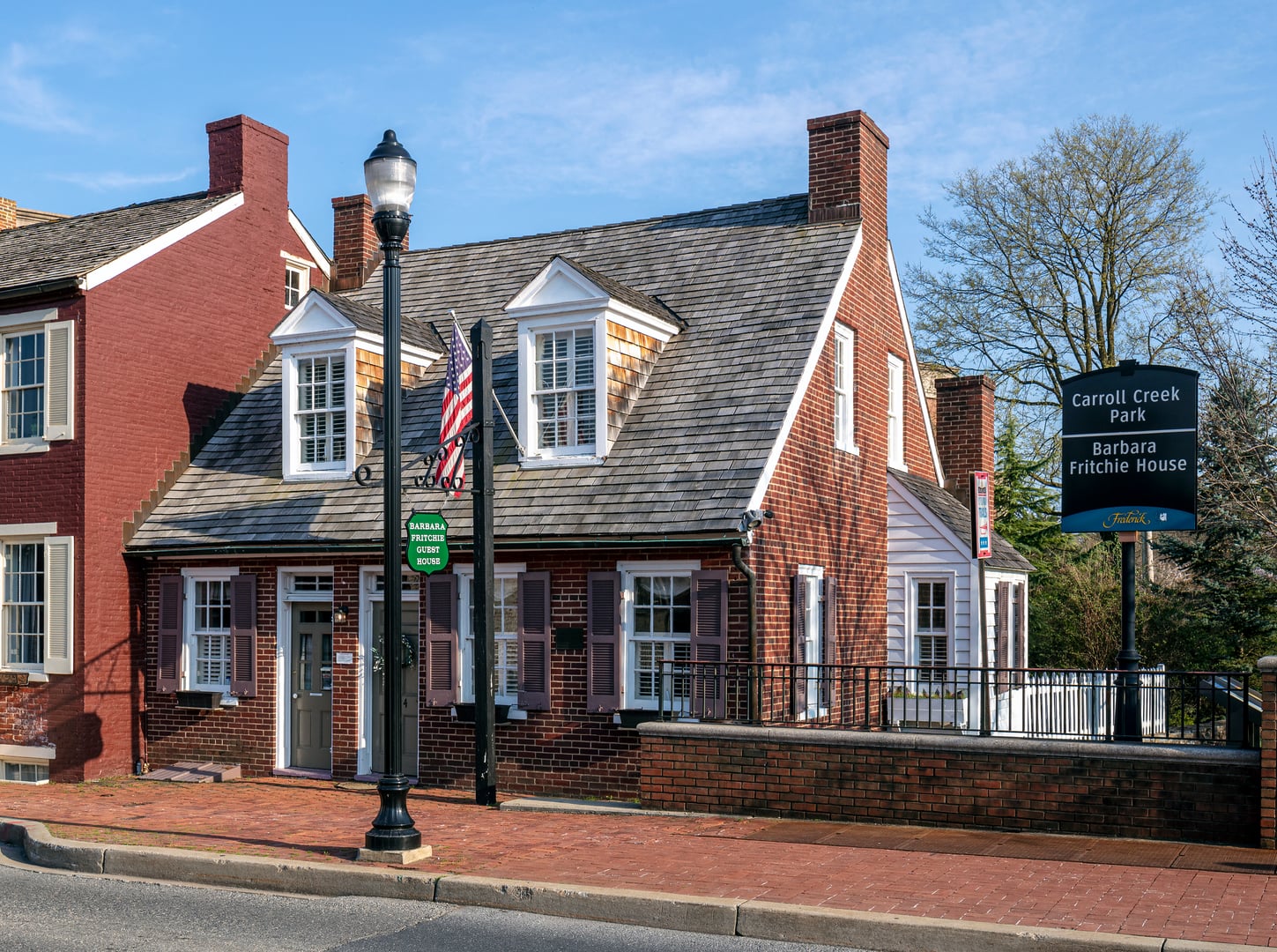
Frederick, MD
The current building at 154 West Patrick Street is a 1927 reconstruction of the home of Barbara Fritchie (1766-1862), the elderly Frederick woman immortalized in John Greenleaf Whittier's 1864 ballad for allegedly waving a Union flag at Stonewall Jackson's troops as they marched through town. The original home was destroyed by flooding; the reconstruction was built using surviving materials from the original. It was sold to private owners in 2018 and converted to a period-style rental.
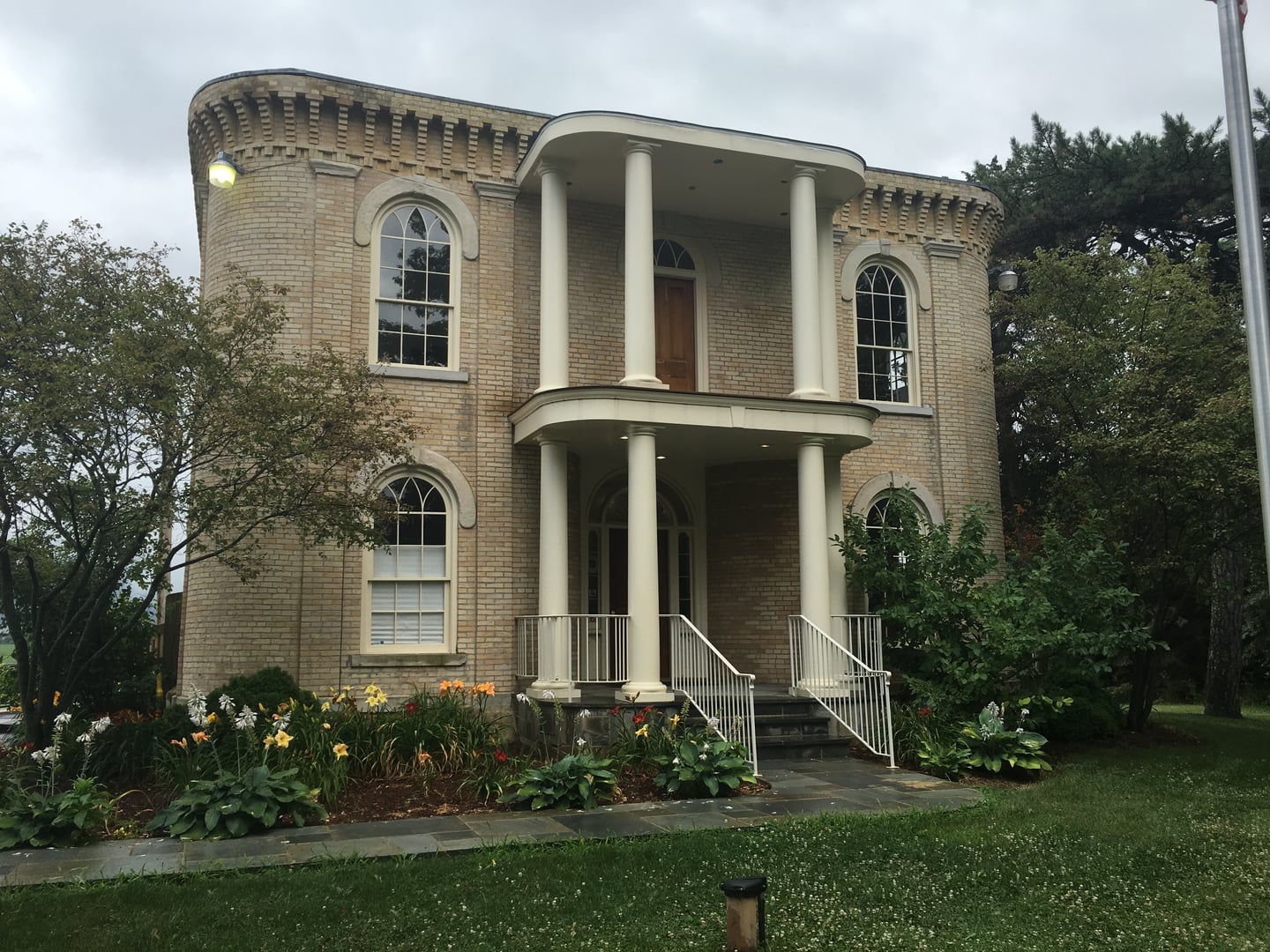
Bull Valley, IL
The George Stickney House is an 1865 stucco-over-frame mansion in Bull Valley, Illinois, built for spiritualists George and Sylvia Stickney. The Stickneys, both practicing mediums, are said to have designed the interior without right angles to ease the movement of spirits during seances. The building has served as the Bull Valley Police Department since 1985 and has been listed on the National Register of Historic Places since 1979.
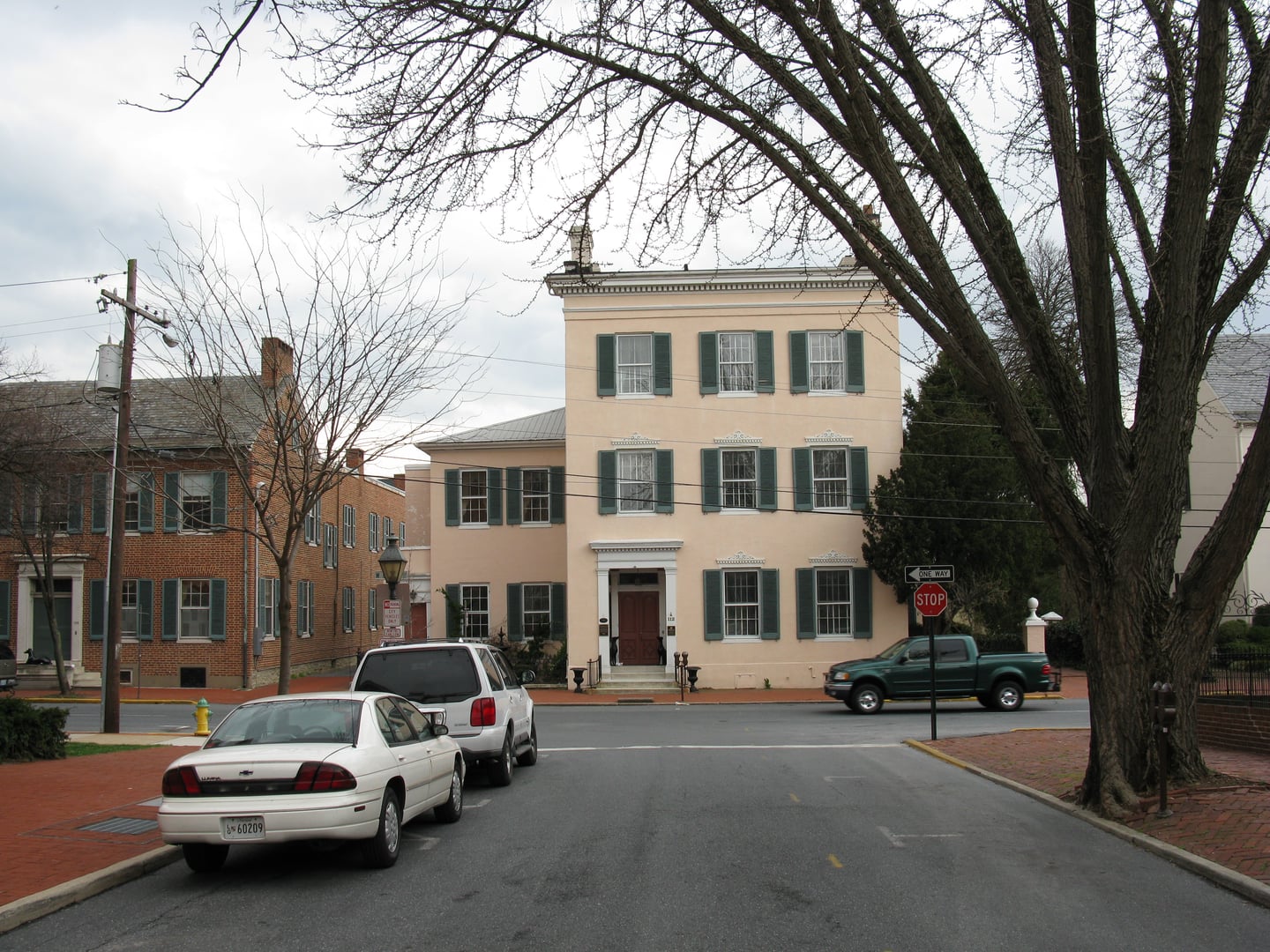
Frederick, MD
Dr. John Tyler, the first American-born physician to perform a cataract operation, built the Tyler Spite House in 1814 to block the City of Frederick's planned extension of Record Street through his land. The 9,000-square-foot, three-story brick home at 112 West Church Street features 14-foot ceilings, eight working fireplaces, and elaborate woodwork. It has operated as a private residence, an office building, and a bed and breakfast over its two centuries.