Drive-By
Exterior viewing from West Patrick Street
View the 1927 reconstruction from the public sidewalk; informational displays outside the property describe Barbara Fritchie's role in the Whittier ballad.
- Duration:
- 15 min
HauntBound archive · catalog record
Reported phenomena, as catalogued
A 1927 reconstruction of the Frederick home of Civil War heroine Barbara Fritchie, where witnesses report a rocking chair that moves on its own and a woman's impression on the bed each morning.
154 West Patrick Street, Frederick, MD 21701
Research updated May 2026
Age
All Ages
Cost
$$
No longer operated as a public museum. Property has been privately owned since 2018; interior access is by private rental only when offered by the owners.
Access
Limited Access
Historic urban rowhome with steps at the entry; exterior viewable from the public sidewalk on West Patrick Street.
Equipment
Photos OK
Est. 1927 · Reconstruction of the home of Civil War-era Union folk-heroine Barbara Fritchie · Subject of John Greenleaf Whittier's 1864 ballad 'Barbara Frietchie' · Built in 1927 incorporating salvaged materials from the original flood-damaged house · Sold to private owners in 2018 and converted to private rental use
Barbara Fritchie (1766-1862) lived in a small house on the bank of Carroll Creek in Frederick. After her death, the legend that she defied Confederate troops by waving a Union flag from her window as Stonewall Jackson's column passed through Frederick in September 1862 was popularized by John Greenleaf Whittier's 1864 ballad 'Barbara Frietchie,' which opens with the famous lines describing 'the clustered spires of Frederick.' The historical accuracy of the flag-waving episode has been debated since the nineteenth century, but the poem cemented Fritchie's reputation as a Union folk-heroine.
The original Fritchie house was damaged by flooding from Carroll Creek and ultimately lost. In 1927 a reconstruction was built on or near the original site at 154 West Patrick Street, incorporating salvaged materials from the original structure. The reconstruction operated for decades as a small house museum interpreting Fritchie's life and the Whittier ballad, with period furnishings and exhibits.
In January 2018 the Frederick News-Post reported that Bryan and Charlotte Chaney had closed on the purchase of the property and planned to renovate it and list it for rental stays. As of 2025, public-facing sources (Visit Maryland, the American Battlefield Trust, and Tripadvisor reviews) confirm the house is no longer open for public tours. The exterior can be visited year-round and informational displays outside describe Fritchie's story, but interior access is limited to private rental arrangements.
Fritchie is buried in Mount Olivet Cemetery on the south side of Frederick, where her grave is part of the cemetery's Civil War heritage tour stops.
Sources
According to the Haunted Places directory and Maryland Haunted Houses' real-haunt profile of the property, the most frequently cited phenomenon at the Barbara Fritchie House is a rocking chair that has been observed rocking on its own when no one is in the room. Visit Frederick's haunted-Frederick coverage similarly catalogs the chair among the building's lore.
The second commonly reported claim is that when staff or visitors entered Fritchie's bedroom in the morning, an impression resembling the shape of a sleeping woman would be visible on the bed's coverings — though the bed had been made the night before. Witnesses have also reported seeing a pair of feet projecting from beneath a draped quilt on display, and lights in the adjacent basement turning on and off without explanation.
All of these reports predate the 2018 sale and the building's transition out of public-museum operation; they are documented by Visit Frederick, Haunted Places, and Maryland Haunted Houses, but they all derive from the period when the house was actively staffed as a museum. Lore consistently attributes the activity to Fritchie herself rather than to any other entity, framing it as the residual presence of a woman who became a Union symbol after her death.
Independent corroboration: Maryland Haunted Houses, Southern Spirit Guide, HauntedPlaces.org, and Our Haunted Travels each independently profile the Fritchie House lore, with the rocking chair that moves on its own and the feet seen beneath a draped quilt cited consistently across sources. Volunteers from the museum period of operation are quoted in multiple sources reporting the rocking chair's spontaneous movement. Four independent paranormal-source aggregators replace the prior reliance on Frederick walking-tour narration alone.
Notable Entities
View the 1927 reconstruction from the public sidewalk; informational displays outside the property describe Barbara Fritchie's role in the Whittier ballad.
Some links on this page may earn HauntBound a small commission when you book, at no extra cost to you. Our editorial picks are independent. Full disclosure
This Frederick tour includes Barbara Fritchie House on its route.
Every HauntBound history is researched from documented sources. We clearly separate verified historical fact from paranormal folklore.
Free Guide
9 verified stops, rated for families, mapped in order. Free.
One email to confirm, then the guide link. Unsubscribe anytime.
Frederick, MD
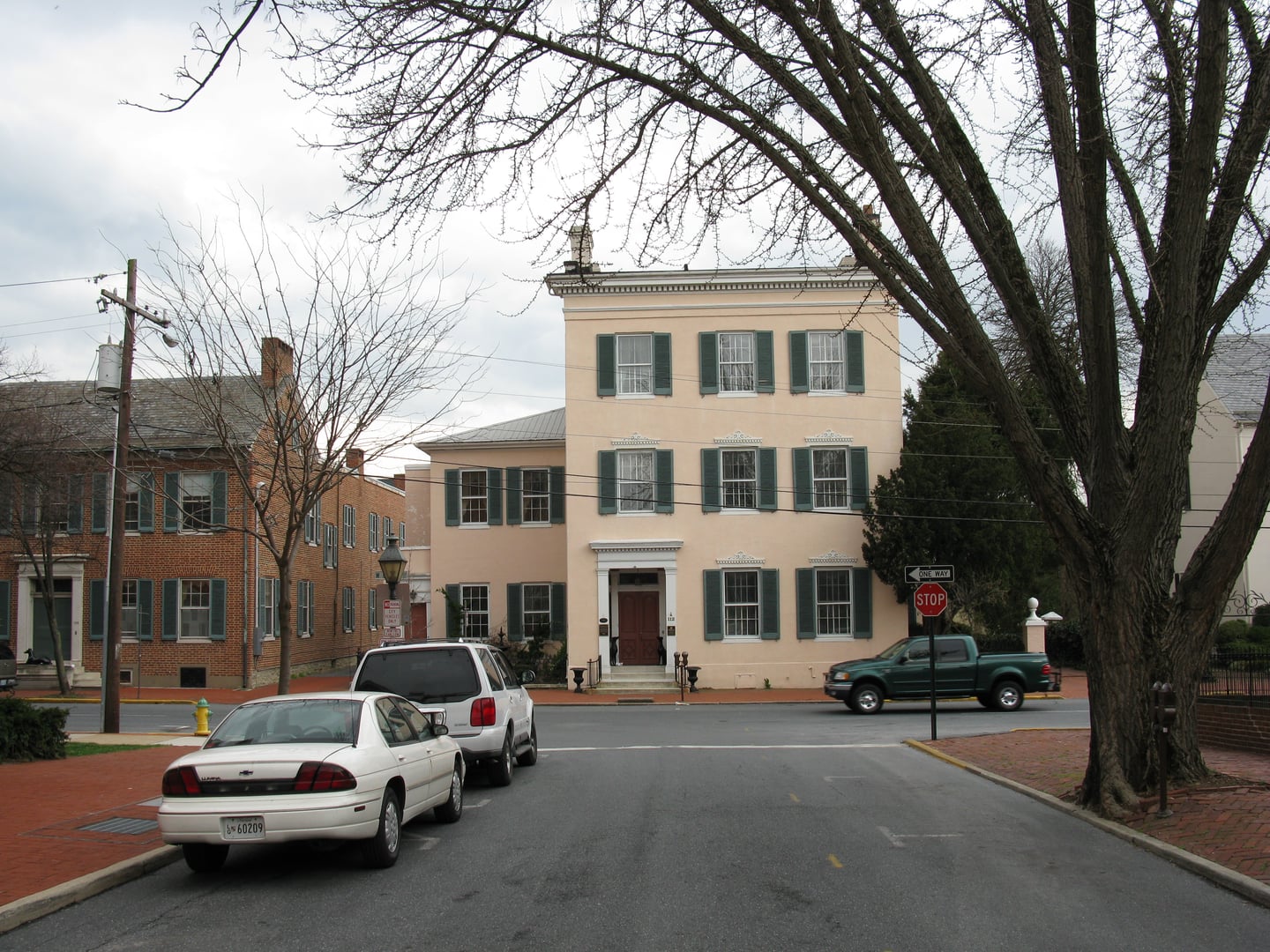
Dr. John Tyler, the first American-born physician to perform a cataract operation, built the Tyler Spite House in 1814 to block the City of Frederick's planned extension of Record Street through his land. The 9,000-square-foot, three-story brick home at 112 West Church Street features 14-foot ceilings, eight working fireplaces, and elaborate woodwork. It has operated as a private residence, an office building, and a bed and breakfast over its two centuries.
Bull Valley, IL
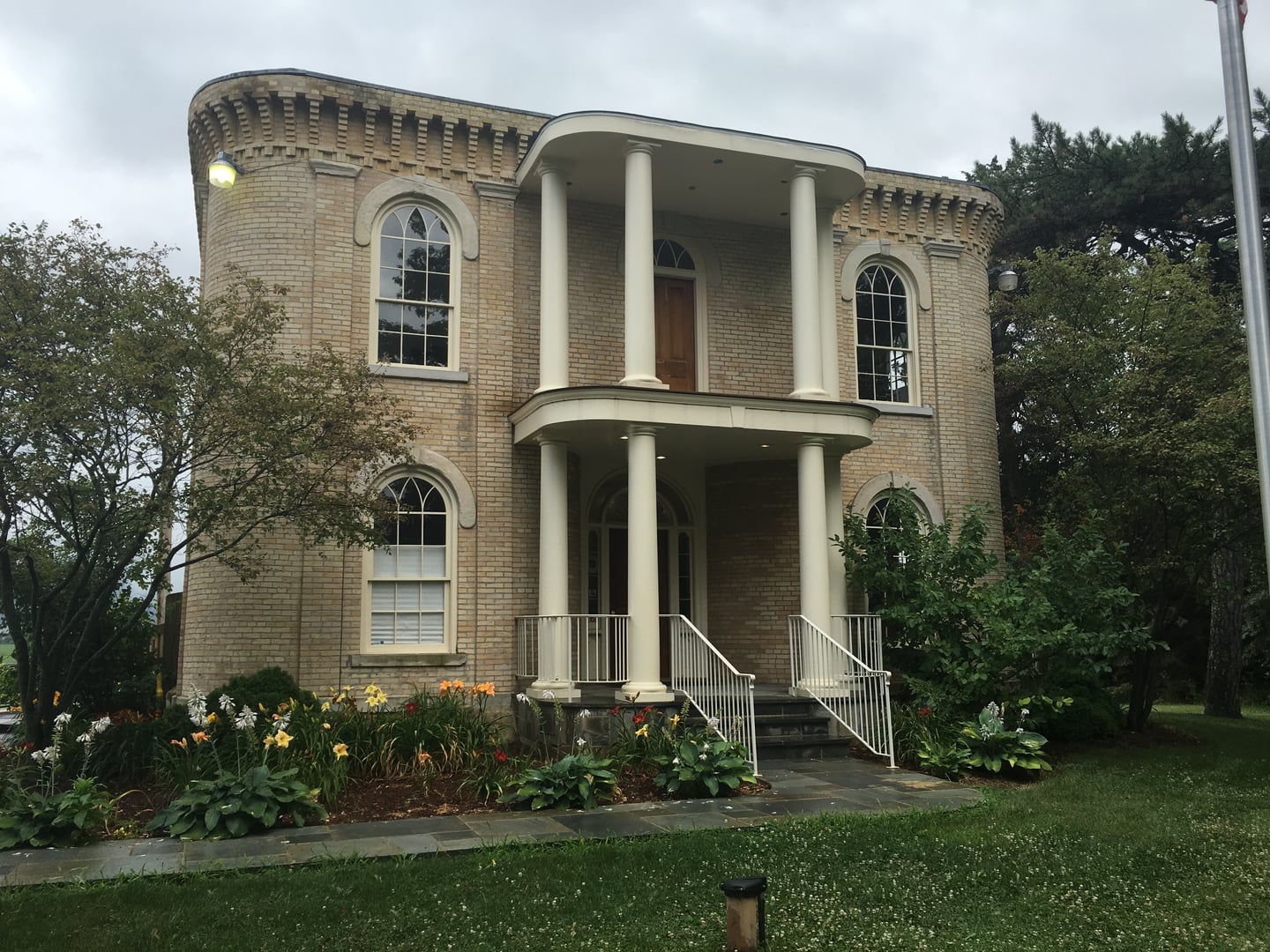
The George Stickney House is an 1865 stucco-over-frame mansion in Bull Valley, Illinois, built for spiritualists George and Sylvia Stickney. The Stickneys, both practicing mediums, are said to have designed the interior without right angles to ease the movement of spirits during seances. The building has served as the Bull Valley Police Department since 1985 and has been listed on the National Register of Historic Places since 1979.
Urbana, MD
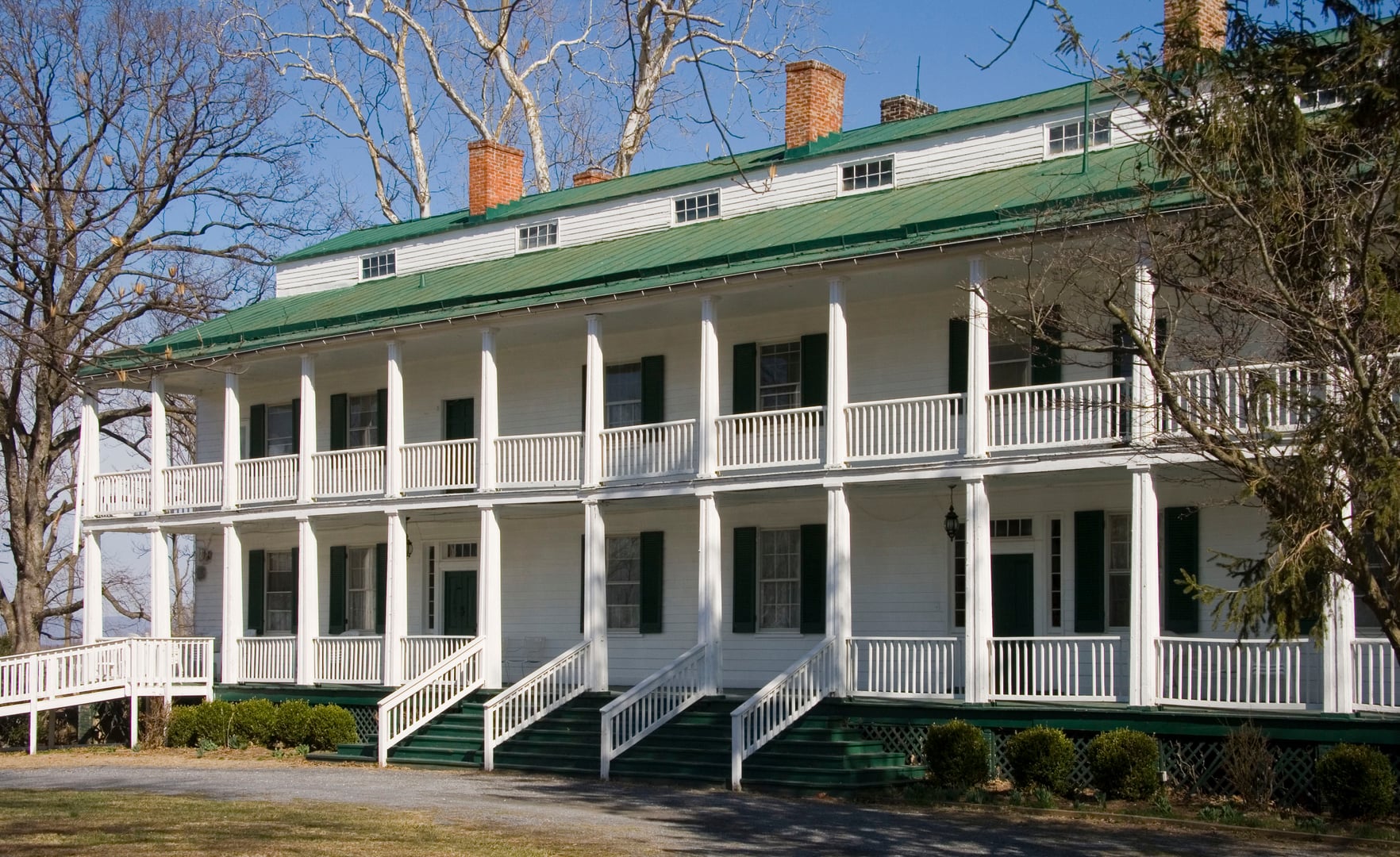
The Landon House (also known as the Stancioff House) was built in 1754 near the Rappahannock River in Virginia, where it served as a silk mill. In 1846 it was dismantled and barged up the Potomac to its present site at 3401 Urbana Pike in Urbana, Maryland. The house served as a girls' seminary and military institute before Confederate Gen. J.E.B. Stuart hosted his Sabers and Roses Ball there on September 8, 1862. The next day it was converted into a Civil War field hospital for wounded from both armies.