Est. 1870 · French Victorian architecture · Memphis Millionaire's Row · Yellow fever epidemic history · National Register of Historic Places
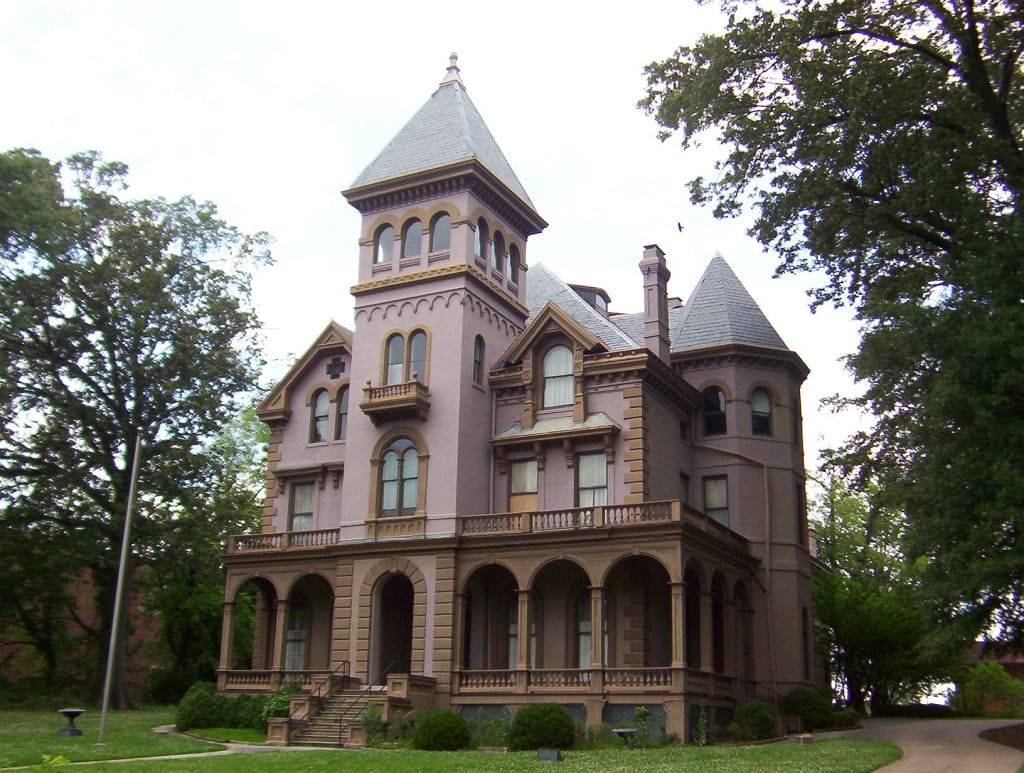
The Woodruff-Fontaine House was built between 1870 and 1871 as the Memphis residence of Amos Woodruff, a New Jersey-born carriage manufacturer who had become one of the wealthiest businessmen in post-Civil War Memphis. The three-story French Victorian residence on Adams Avenue, part of a street known locally as Millionaire's Row, features Mansard roof lines, carved hardwood staircases, and imported European furnishings. According to historic-memphis.com and the Memphis 100, Woodruff sold the home to merchant Noland Fontaine in 1883; the Fontaine family lived in the house until 1928.
Mollie Woodruff Henning, daughter of Amos Woodruff, lived in the house during years of personal tragedy. According to multiple Memphis-history sources, Mollie's infant son from her first marriage died on March 13, 1875, shortly after birth. Her first husband, Egbert Wooldridge, died a few months later from a boating accident in which he contracted pneumonia after falling from a fishing boat. She later remarried James Henning in 1883. These losses, centered on the house's second-floor bedroom now called the Rose Room, anchor the building's later folklore.
The city of Memphis acquired the property in 1936. After standing largely vacant for several decades, the house was restored as a museum and opened to the public in 1962 under the management of the Association for the Preservation of Tennessee Antiquities. The building is listed on the National Register of Historic Places and operates today as one of the most-visited historic-house museums in Memphis.
Sources
- https://www.historic-memphis.com/memphis-historic/woodruff-fontaine/woodruff-fontaine.html
- https://thememphis100.com/history/2021/10/06/haunted-tales-of-the-woodruff-fontaine-house/1987
- https://storyboardmemphis.org/history/place-history-medical-district-haunts-2/
- https://ilovememphisblog.com/2009/10/the-ghost-of-mollie-woodruff
- https://www.victorianvillageinc.org/explore/woodruff-fontaine-house
Scent of roses in empty roomsApparition of a woman in a long gownImpressions left on the Rose Room bedSensation of being followed in upstairs corridors
Folklore at the Woodruff-Fontaine House centers on the Rose Room, the second-floor bedroom historically occupied by Mollie Woodruff Henning. Mollie endured a series of losses while living in the house, including the deaths of an infant child and a husband. Local tradition holds that her presence returns to the room where she was reportedly happiest.
Docents and visitors have, over decades, described a faint scent of roses in an otherwise empty room, the impression of a figure seated on the Rose Room bed (with reports of a slight depression in the bedspread after the figure has vanished), and the glimpse of a woman in a long pale gown drifting in the upstairs corridor. The phenomena are described as gentle rather than threatening, and the museum incorporates the lore into its public programming during Halloween-season tours.
Regional paranormal investigators have, according to Action News 5, certified the house among Memphis's actively reported haunted sites. The mainstream historic and architectural significance of the home, however, is independent of the folklore: the building is a leading example of French Victorian residential design in the American South.
Notable Entities
Mollie Woodruff Henning (traditional identification)
Media Appearances
- Action News 5 paranormal investigator certification coverage