Est. 1929 · Eighteen-story Beaux-Arts hotel completed 1929 · Site of Hank Williams' final conscious hours on New Year's Eve 1952 · Listed on the National Register of Historic Places (1980) · Converted to government offices after 1980; redevelopment to 'Hotel Americana' approved 2020
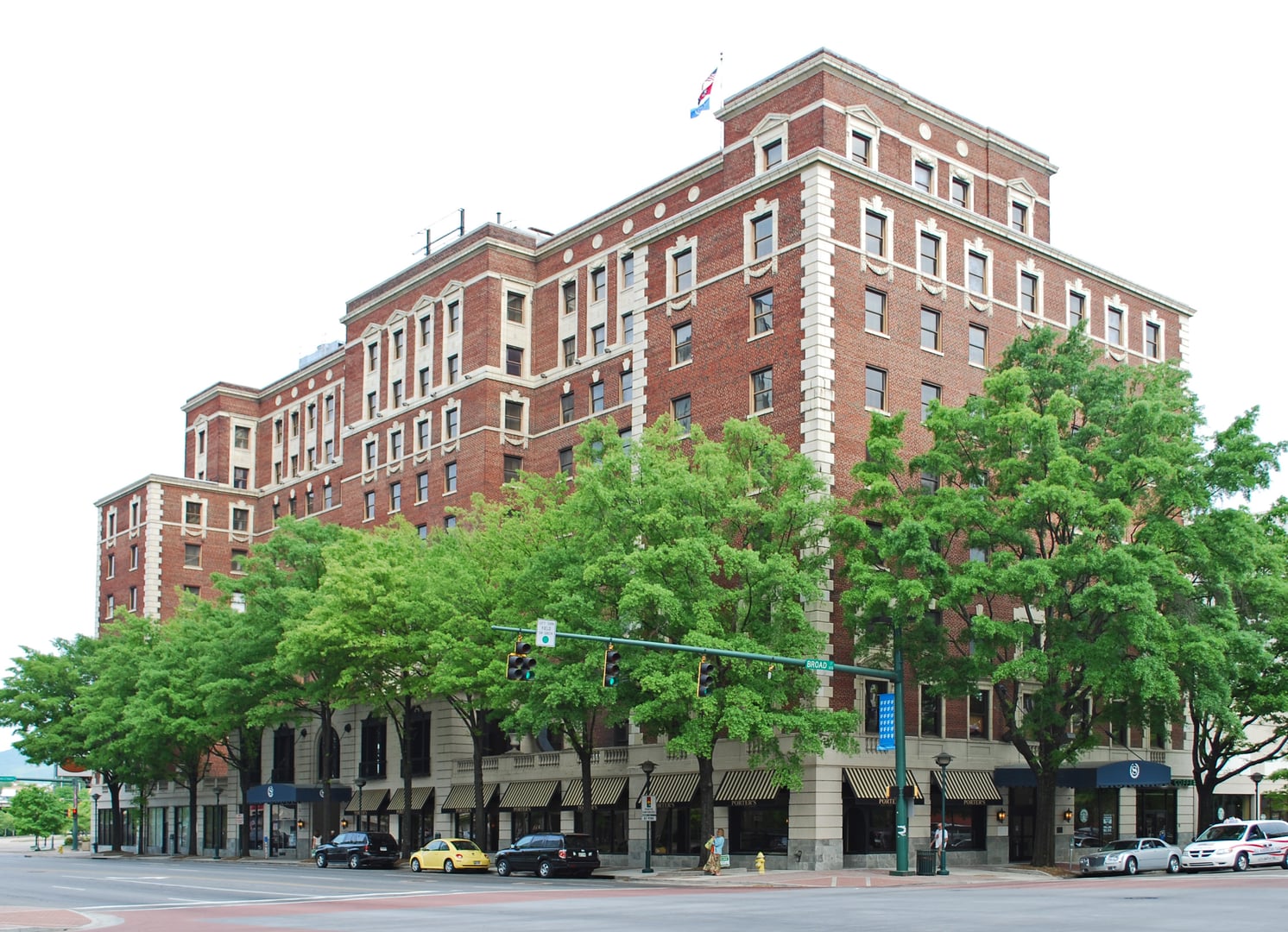
The Andrew Johnson Hotel was constructed from 1918 to 1929 at the northeast end of the Gay Street Bridge in downtown Knoxville, rising eighteen stories above South Gay Street. It opened as a luxury hotel and quickly became one of the city's most prominent commercial buildings, providing competition for the older Farragut Hotel a few blocks north.
On the evening of December 31, 1952, country music star Hank Williams checked into the Andrew Johnson Hotel. Williams, who had been struggling with chronic pain and substance abuse, became ill during the night, and a Dr. P. H. Cardwell was summoned to administer injections of vitamin B12 and morphine. At about 10:45 PM, Williams and his driver Charles Carr departed for Canton, Ohio, where Williams was scheduled to perform on New Year's Day. By the time the car reached Oak Hill, West Virginia at dawn, Williams was dead.
The hotel was added to the National Register of Historic Places in 1980 and was converted to office space, housing Knox County and state government tenants for decades. Redevelopment plans to convert the building back to a hotel under the name 'Hotel Americana' were announced in 2017 and approved in 2020; as of recent reporting the renovation had not yet begun.
The Andrew Johnson Building is the published meeting point for US Ghost Adventures' Knoxville program (branded Knoxville Ghosts), which departs nightly from 912 South Gay Street and covers the Hank Williams story as part of its route. A separate, unaffiliated local operator, Haunted Knoxville Ghost Tours, runs investigation-based tours departing from Market Square, about a quarter mile away; no independent source ties that operator's route to this building, so it is not listed as one of its stops.
Sources
- https://en.wikipedia.org/wiki/Andrew_Johnson_Building
- https://knoxvillehistoryproject.org/andrew-johnson-hotel/
- https://southernedition.com/AndrewJohnsonHotel.html
- https://usghostadventures.com/knoxville-ghost-tour/
Footsteps in upper-floor hallwaysSense of unseen presenceCold spots near the floor associated with Williams' stay (per ghost-tour material)
The paranormal narrative attached to the Andrew Johnson Hotel is anchored almost entirely to the death of country-music star Hank Williams on or about January 1, 1953. Williams checked into the hotel on December 31, 1952; received injections of vitamin B12 and morphine from a Dr. P. H. Cardwell; and departed for Canton, Ohio around 10:45 PM with his driver Charles Carr. He was pronounced dead at dawn in Oak Hill, West Virginia.
The exact moment of death has been disputed since at least the 1950s — some narratives place Williams' death in the hotel itself, others have him still breathing when Carr loaded him into the car. US Ghost Adventures' Knoxville program (Knoxville Ghosts) meets nightly at the Andrew Johnson Building and covers this ambiguity as part of its route narrative, framing it as the source of longstanding lore that Williams' spirit lingers in the building, with reports of footsteps in upper-floor hallways and feelings of an unseen presence.
Published, named eyewitness accounts of Williams-related phenomena are not robustly documented in academic or news sources we located; the lore is best characterized as tour-grade narrative built around an indisputably real and culturally significant death event at the property.
Notable Entities
Hank Williams (country music star, d. January 1, 1953)
Media Appearances
- Featured as the meeting point and a covered stop on US Ghost Adventures' Knoxville program
- Subject of many books and articles on Hank Williams' death