Est. 1855 · National Historic Landmark (Lincoln Tomb) · Abraham Lincoln Burial Site · Mid-Nineteenth-Century Rural Cemetery Movement · Three State Veterans Memorials
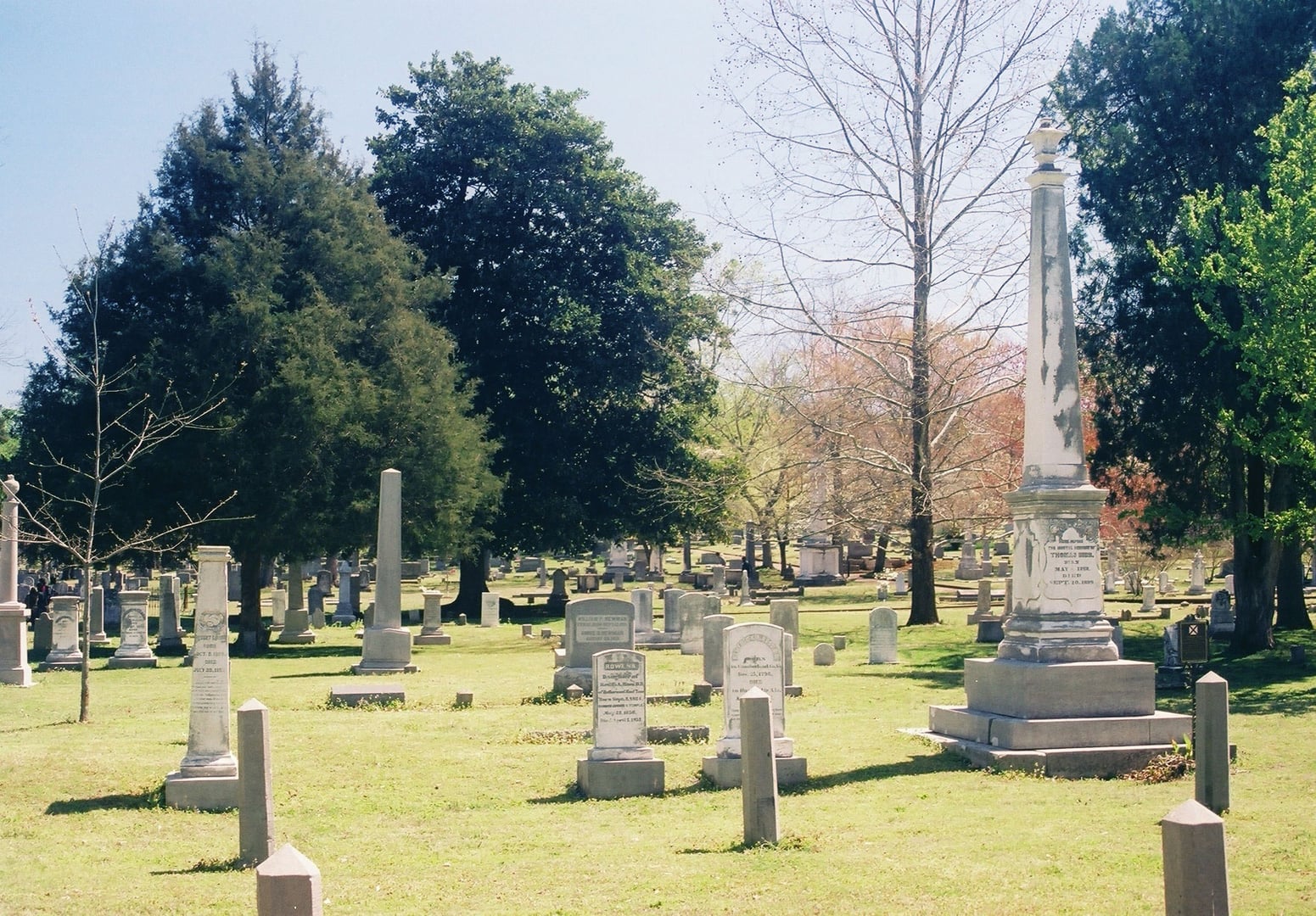
Oak Ridge Cemetery was incorporated in 1855 and dedicated in 1860 as Springfield's rural cemetery, following the mid-nineteenth-century landscape design movement that produced Mount Auburn near Boston and Spring Grove in Cincinnati. The grounds occupy approximately 365 wooded acres on a ridge north of downtown Springfield.
In April 1865, two days after the assassination of President Abraham Lincoln, Springfield citizens formed the National Lincoln Monument Association to construct a permanent memorial. Mary Todd Lincoln requested Oak Ridge as the burial site. Lincoln's body, along with the bodies of his sons, was placed in a receiving vault while construction of the tomb was undertaken to a design by sculptor Larkin Goldsmith Mead.
In 1871, Lincoln and three of his sons were placed in crypts within the unfinished memorial. The tomb was dedicated in 1874, and Lincoln's remains were interred in a marble sarcophagus in the burial chamber. The structure stands 117 feet tall, faced in Quincy granite, with a 119-foot obelisk and four bronze sculptural groups representing the Civil War services. In response to a thwarted 1876 grave-robbing attempt, the casket was reinterred in 1901 inside a concrete vault ten feet below the floor of the burial chamber.
The Lincoln Tomb was designated a National Historic Landmark in 1960 and is administered by the Illinois Department of Natural Resources Historic Preservation Division. Mary Todd Lincoln and three of the Lincoln sons (Edward, William, and Thomas "Tad") are interred in the burial chamber. Robert Todd Lincoln, the only Lincoln son to reach adulthood, is buried at Arlington National Cemetery.
Oak Ridge also holds the tombs of two Illinois governors and three major military memorials: the Illinois Korean War Memorial, the Illinois Vietnam Veterans Memorial, and the World War II Illinois Veterans Memorial.
Sources
- https://en.wikipedia.org/wiki/Lincoln_Tomb
- https://en.wikipedia.org/wiki/Oak_Ridge_Cemetery
- https://dnrhistoric.illinois.gov/experience/sites/central/lincoln-tomb.html
- https://www.illinoishistory.org/iltomb/index.html
- http://www.oakridgecemetery.org/
Phantom voicesCold spotsPhantom footsteps
Compared to its visibility as a presidential memorial, Oak Ridge Cemetery carries relatively little ghost folklore. The most-cited reports concern the Lincoln Tomb itself. Visitors and occasionally interpretive staff have described the sensation of being watched in the burial chamber, faint indistinct voices in the corridor known as the rotunda, and the feeling of cold pockets near the sarcophagus.
The tomb's history includes a documented attempt to steal Lincoln's body in 1876 by counterfeiters seeking to ransom the casket for the release of an associate from Joliet Prison. The plot was foiled when an informant tipped off authorities. The episode is sometimes invoked in retellings of the cemetery's atmosphere, though it is firmly historical rather than paranormal.
The broader cemetery has not been the subject of sustained paranormal investigation in the way more lore-heavy Midwestern burial grounds have. Its dark-tourism appeal is documentary: the place where Lincoln, his wife, and three of their four sons are interred, and where the largest concentration of visitors to a presidential grave outside of Arlington gather each year.