Gypsum Hills Landmark · Medicine Lodge Treaty Region · 1867 Peace Council Area
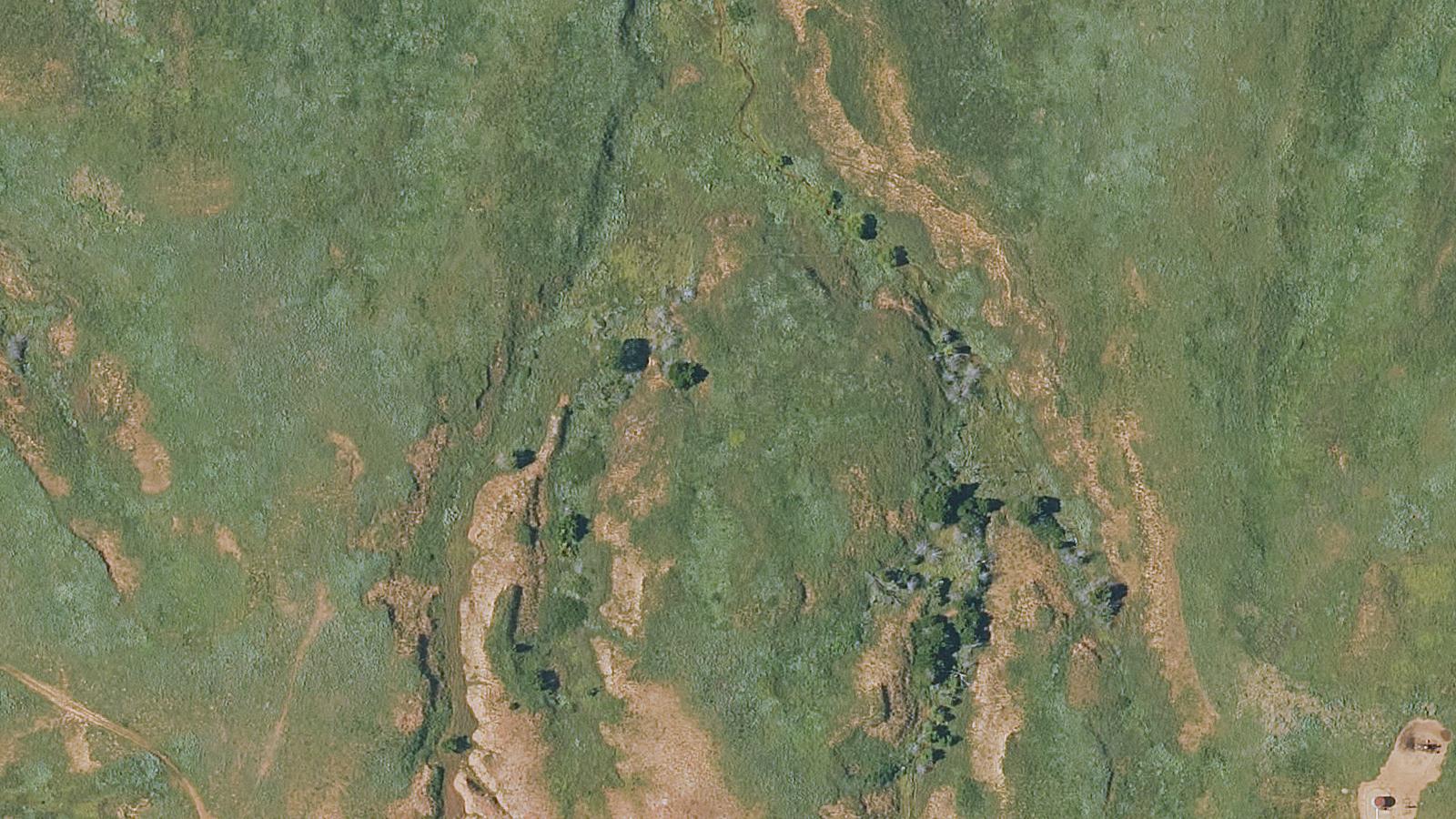
Flower Pot Mountain is a landmark in the Gypsum Hills region west of Medicine Lodge, Kansas, the county seat of Barber County. The hills themselves are part of the Permian-age gypsum and red-bed formations that define this section of south-central Kansas.
The broader region carries unusual historical weight. The Medicine Lodge Treaty Council of October 1867 produced three treaties between the United States and the Kiowa, Comanche, Plains Apache, Southern Cheyenne, and Southern Arapaho. The Peace Council camp was located about three miles above the future site of the town of Medicine Lodge. The treaties remain among the most-studied federal agreements of the post-Civil War era.
Flower Pot Mountain itself is geographic landscape rather than a developed historic site. The Shadowlands narrative describing a buried settler diary recovered after a riddle, a gnarled tree leaning unnaturally north, and 1980s-1990s cattle mutilations is local oral folklore. Master Woodsman and related Kansas outdoor-history blogs have written about the legend of the diary; none of the specific historical details have been independently documented. We present the cluster as folklore rather than as history.
Sources
- https://masterwoodsman.com/2013/flower-pot-mountain/
- https://en.wikipedia.org/wiki/Medicine_Lodge,_Kansas
- https://medicinelodgerec.com/medicine-lodge/
Cold spots
The folklore of Flower Pot Mountain is centered on the legend of a buried diary. Local tradition holds that a riddle passed down through generations of Barber County families led searchers to a small dead tree at the summit, beneath which they recovered the diary of a settler woman. The diary's final entry, in the local telling, simply reads Indians Hostile.
The gnarled tree at the summit still figures in the story. Local accounts describe it as leaning northward when surrounding trees lean south, and as carrying dead branches on the opposite side from its neighbors.
The Shadowlands narrative also includes a separate cluster of cattle-mutilation lore from the late 1980s and early 1990s, with claims of cattle udders sliced from animals and ritually displayed at the summit. These claims are unverified; no contemporaneous newspaper coverage corroborates the specific allegations. Hauntbound presents both elements as local folklore.
The documented history of the region - the 1867 treaty council, the post-Civil War Plains Wars, and the displacement of Native nations - is the more historically substantial frame in which to consider the area.