Est. 1850 · National Register of Historic Places · Antebellum North Carolina Agricultural History · Six Generations of Foy Family History · Civil War Domestic History
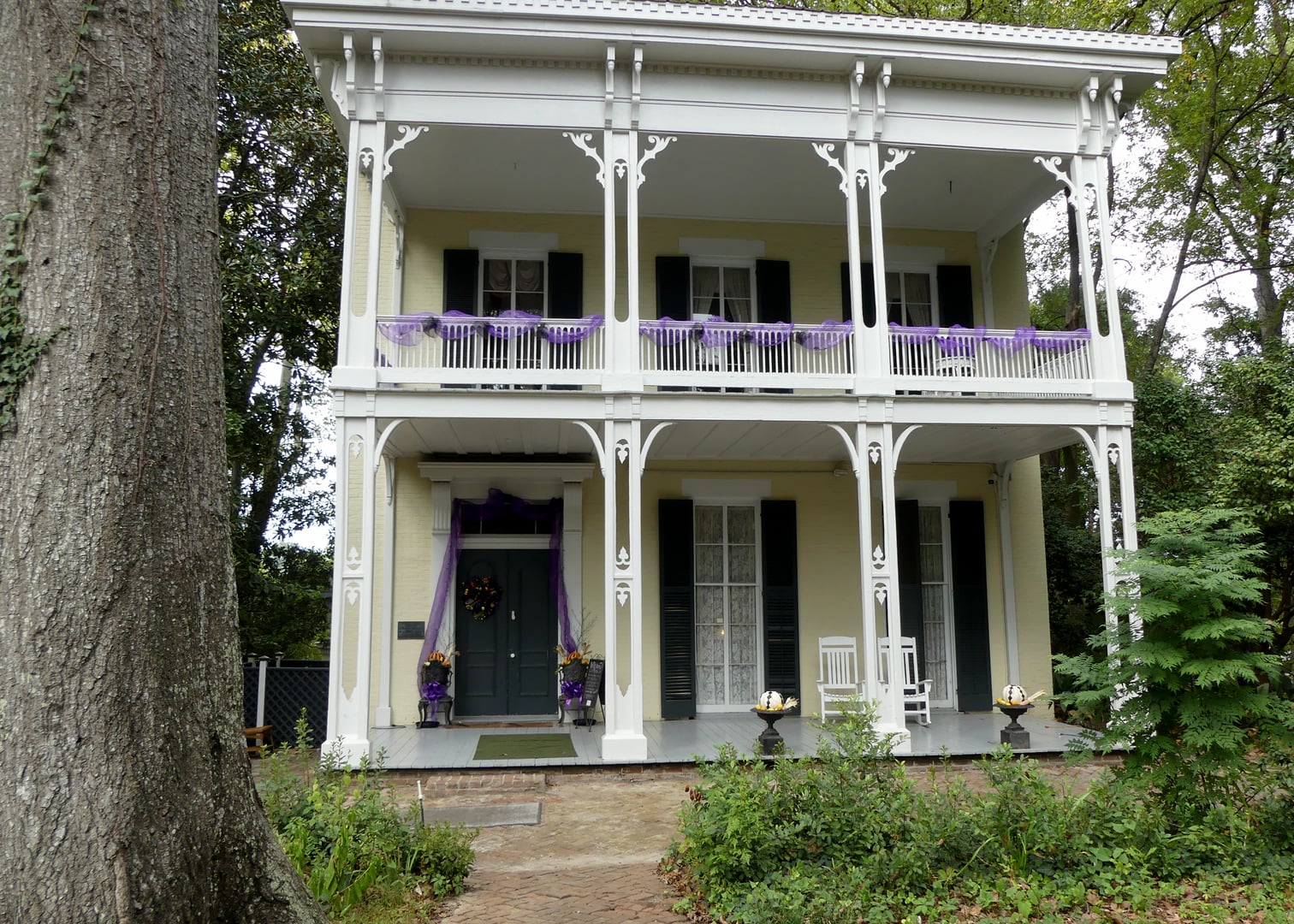
The Foy family acquired the land north of Wilmington in 1795 and held it for six unbroken generations until 1971 — nearly two centuries in which marriages, births, and deaths marked the same rooms and the same soil. The original homestead burned circa 1849, and Joseph Mumford Foy rebuilt the manor house closer to the Old New Bern Road, which would later become the Wilmington and Topsail Sound Plank Road.
Joseph Mumford Foy made Poplar Grove into one of North Carolina's earliest significant peanut operations — a crop then relatively unusual in the region. By 1860 the plantation encompassed over 2,000 acres and documented 59 enslaved workers. The labor of those workers sustained the farm across its most productive decades; this history is inseparable from the plantation's material record.
The Civil War divided the family sharply. Joseph Mumford Foy was a committed Unionist who openly opposed secession. His eldest son, David Hiram Foy, defied his father's position and enlisted with the Confederate Army. David never reached a battlefield: he contracted typhus and was carried home to die in the manor house rooms where he had been raised.
The Foy family's tenure ended in 1971 when they sold the property after 176 years of continuous ownership. Preservation efforts followed, and the manor house was restored in 1980. The property was subsequently listed on the National Register of Historic Places. Today, Poplar Grove operates as a historic site offering educational tours, markets, and paranormal programming.
Sources
- https://poplargrove.org/dailytours/paranormal-ghost-tours/
- https://www.hauntedrooms.com/north-carolina/ghost-hunts/poplar-grove-plantation
- https://www.carolinabeach.com/poplar-grove-plantation.html
Phantom footstepsApparitionsCold spotsEVPResidual haunting
The accounts from Poplar Grove span unusual chronological range. Investigators describe presences that they associate with the Colonial period through the twentieth century — a layering that reflects the property's continuous habitation across generations rather than a single dramatic event.
David Hiram Foy, who came home from the Confederate Army with typhus instead of battlefield wounds and died in his childhood rooms, is the most named presence in investigation accounts. Investigators report his footsteps — described as heavy and pacing — in the front office where plantation business was conducted. The characterization that persists across accounts is of a restless quality, as though David is still trying to fulfill a role that his early death interrupted.
The Scroll of the Dead provided to moon-tour participants is specific to Poplar Grove — it documents the deaths that occurred on the property across the centuries of Foy family occupation. The document itself is both a historical record and an investigation tool.
Haunted Rooms America hosts extended overnight investigations that cover the full manor house and grounds. Investigators describe activity in multiple rooms, with the front office and upper-floor bedrooms generating the most consistent documentation.
The tenant house and outbuildings are also included in investigation accounts, and investigators describe presences in these secondary structures as distinct from those in the main manor — reflecting, perhaps, the different populations who occupied different parts of the property across its history.
Notable Entities
David Hiram Foy