Dinner Booking Required
Dinner at Mistress Suzanne's
Dine in the restaurant inside the original 1812 inn, named for Joe Rider's third wife Suzanne and serving as the inn's primary public-facing space.
- Duration:
- 1.5 hr
HauntBound archive · catalog record
Reported phenomena, as catalogued
1812 Painesville Stagecoach Inn With a Long Tradition of Hauntings
792 Mentor Avenue, Painesville, OH 44077
Research updated September 2026
Age
All Ages for restaurant; 18+ for overnight stays at owner's discretion
Cost
$$
Restaurant and B&B pricing per published rates.
Access
Limited Access
Multi-story 1812 building with stairs
Equipment
Photos OK
Est. 1812 · One of the oldest continuously operating inns in northeastern Ohio · Documented Underground Railroad stop · Operated as a speakeasy during Prohibition
Rider's Inn was built in 1812 by Joseph Rider on what was then a developing stagecoach route across northern Ohio. The inn opened during the War of 1812, with Joseph Rider building it specifically to provide soldiers and travelers a place to eat, drink, and sleep along the route. Painesville sat on a key east-west corridor that would later be designated US Route 20.
In the decades before the Civil War, the inn was associated with the Underground Railroad, with local accounts placing it on a route used by people escaping slavery as they moved toward Lake Erie and the Canadian border. The inn also operated as a speakeasy during the Prohibition era of the 1920s, capitalizing on its established hospitality footprint.
Joseph Rider's third wife, Suzanne, served as hostess at the inn during his ownership. Local tradition holds that Suzanne died at the inn under circumstances that were not fully explained, and her name is now attached to the inn's restaurant (Mistress Suzanne's) and to Room Eleven, her former living quarters.
The inn has remained in continuous operation since 1812 under successive owners, and is generally cited as one of the oldest operating inns in northeastern Ohio.
Sources
Rider's Inn has the unusual distinction of a ghost tradition that is welcoming rather than threatening. The most-told story involves Suzanne, Joseph Rider's third wife, who served as hostess at the inn and lived in what is now Room Eleven. Local tradition holds that Suzanne occasionally answered the door for late-arriving guests in her nightgown while the owners were away, and that this hospitable role has continued in ghost form.
Guests overnighting in Room Eleven report a sense of being watched over rather than disturbed, occasional movement of small personal items, and faint footsteps in the hallway outside. Restaurant staff have, over the inn's long modern operation, described what they interpret as a Civil War-era soldier near the front windows, occasionally seen waving toward the road.
The inn embraces its haunted heritage and incorporates it into its marketing without commercializing it into a programmed attraction. Reports collected over its modern bed-and-breakfast operation are consistent enough that local paranormal investigators treat the inn as a stable, well-attested example of a hospitality-themed historic haunting.
Notable Entities
Dine in the restaurant inside the original 1812 inn, named for Joe Rider's third wife Suzanne and serving as the inn's primary public-facing space.
Stay in one of the historic guest rooms. Room Eleven, associated with the inn's longest-running ghost tradition, is the most commonly requested.
See current room rates and availability at Rider's Inn.
Check rates and bookEvery HauntBound history is researched from documented sources. We clearly separate verified historical fact from paranormal folklore.
Free Guide
11 verified stops, rated for families, mapped in order. Free.
One email to confirm, then the guide link. Unsubscribe anytime.
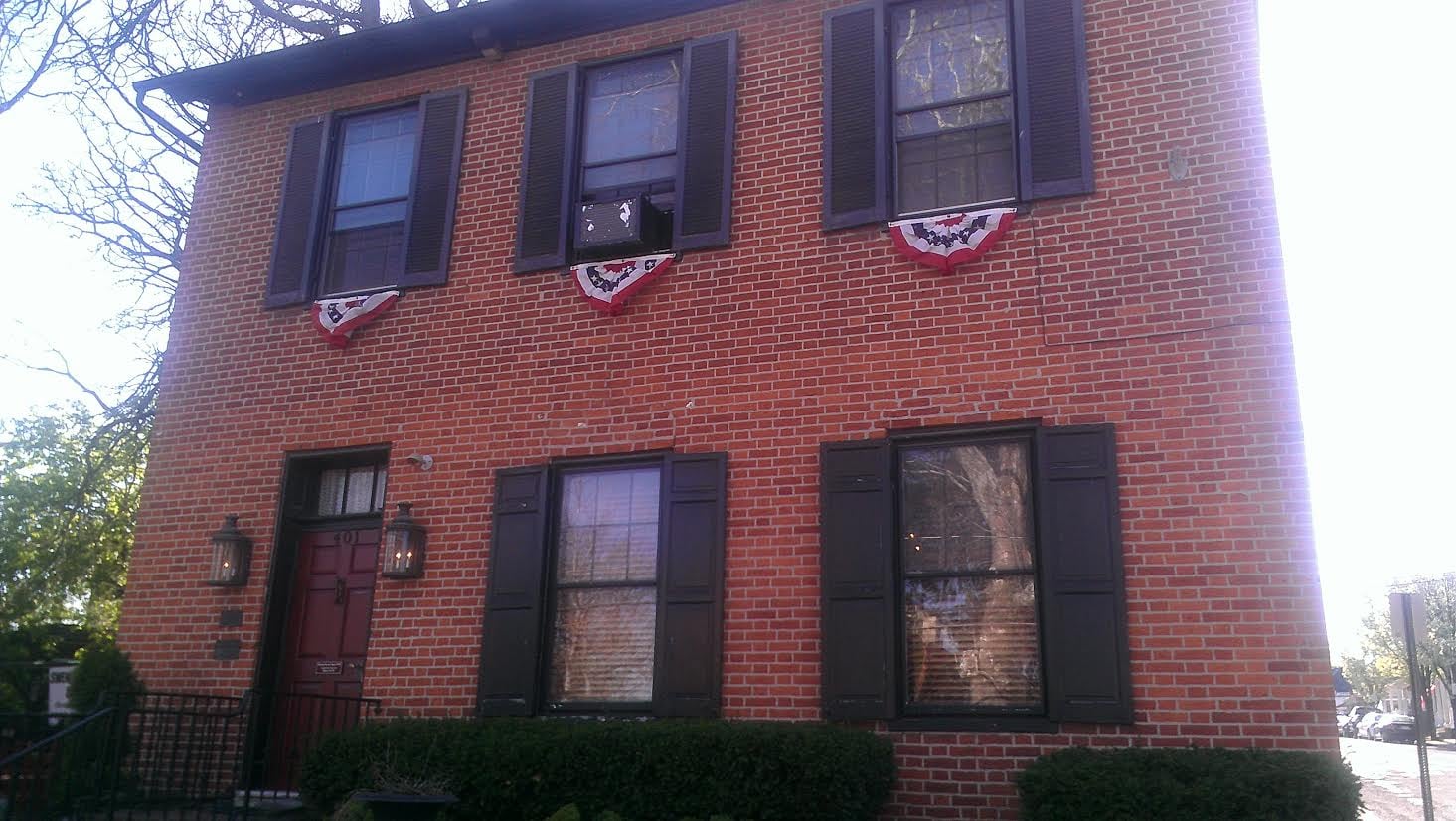
Gettysburg, PA
Built around 1810 by tanner John F. McFarlane and expanded with an 1833 brick addition, the Farnsworth House sits on Baltimore Street in Gettysburg. During the 1863 battle, Confederate sharpshooters occupied the structure, and the south-facing wall still carries more than 100 bullet holes from Union counter-fire.
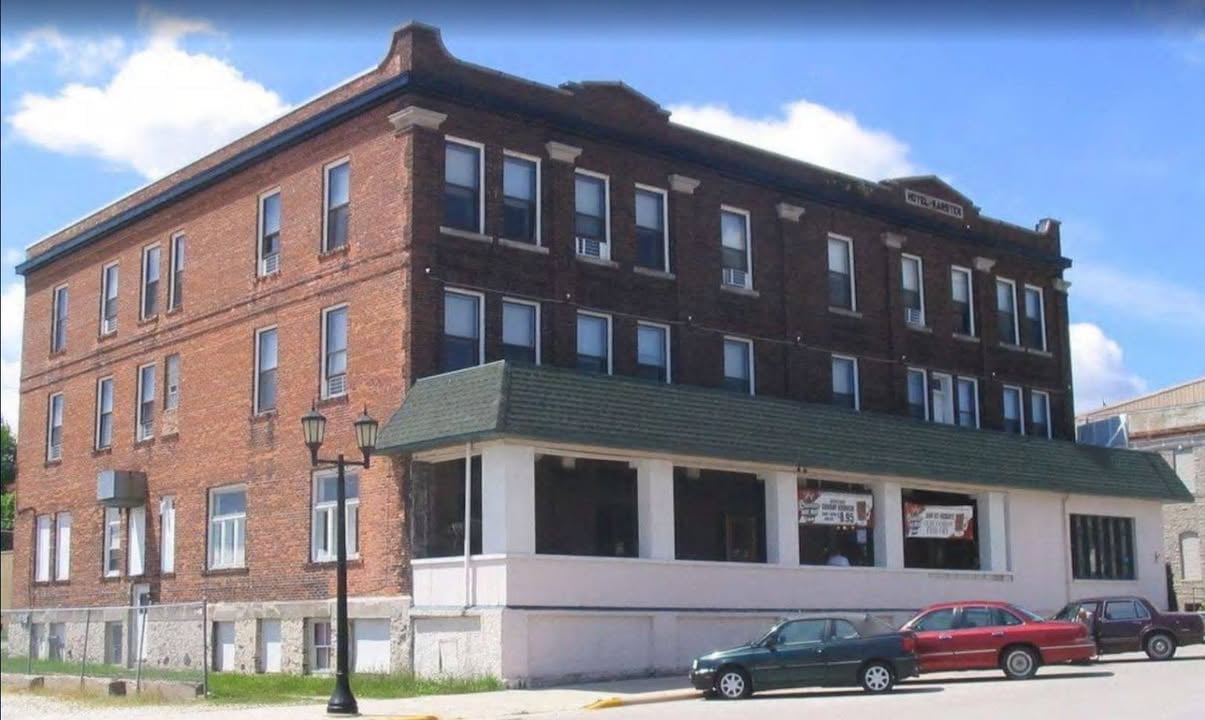
Kewaunee, WI
The Hotel Karsten opened on Valentine's Day 1913 in Kewaunee, Wisconsin, replacing an earlier wood inn called The Steamboat House that burned in the early 1910s. Built and operated by William Karsten Sr., the 52-room Arts and Crafts hotel sits on the Lake Michigan shoreline and remains one of the few surviving hotels of its period in the region.
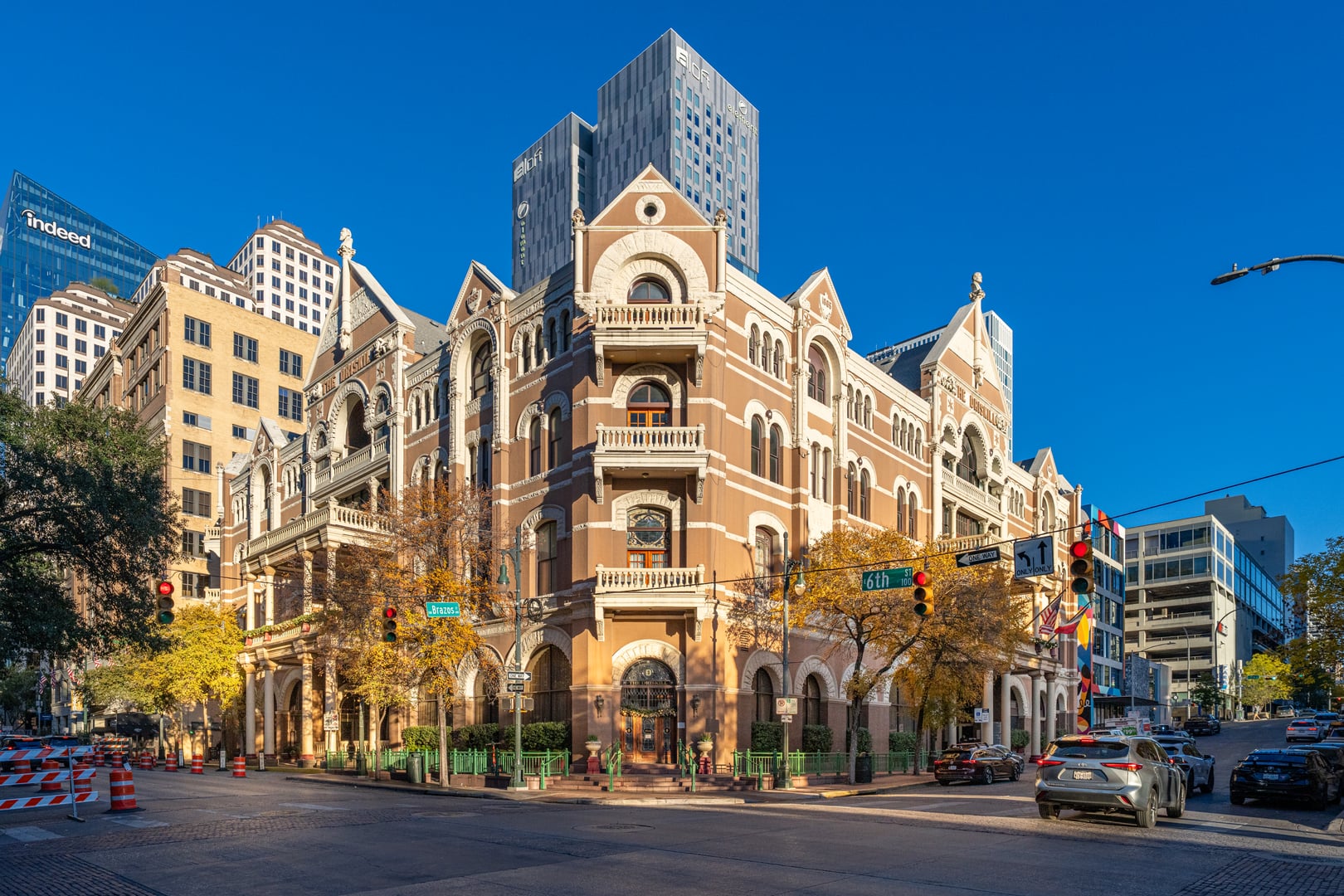
Austin, TX
Colonel Jesse Lincoln Driskill, a Tennessee-born cattle baron who supplied beef to the Confederate Army and later the Texas Rangers, opened The Driskill Hotel on December 20, 1886. Its first event, two weeks after opening, was the inaugural ball for Texas Governor Sul Ross. Driskill sold the hotel in 1888 after severe drought devastated his cattle herds and died in 1890. The hotel has hosted every Texas governor's inaugural ball since 1887.