Est. 1838 · Women's Education History · Antebellum Illinois · Captain Benjamin Godfrey
Benjamin Godfrey, a New England sea captain who had made his fortune in commerce, founded Monticello Female Seminary in 1838 on a bluff above Alton, Illinois. His intent was to establish a rigorous institution of higher learning for women at a time when such opportunities were rare west of the Appalachians. The campus he built — overlooking the Mississippi River valley — combined classical academic architecture with working farmland and developed into a regional destination for female education.
The most consequential figure in the seminary's history arrived in 1867. Harriet Newell Haskell, a native of Vermont, was appointed principal at the age of 32 and remained in the position for the next 40 years. She rebuilt the institution from its foundations — literally, after a fire in 1888 destroyed several core buildings — and developed the school's academic curriculum and national reputation through correspondence, fundraising, and sheer institutional will. Students and colleagues described her as simultaneously demanding and deeply personal, with a particular attachment to the campus chapel.
Haskell died in 1907, and Monticello Female Seminary continued to operate for another 64 years. By 1971, declining enrollment led to a fundamental change: the institution became Lewis and Clark Community College, coeducational and publicly accessible. On the day the transition was formalized, the largest and oldest tree on campus fell to the ground without apparent cause — no storm, no disease, no visible structural failure. The event entered campus lore immediately.
Lewis and Clark Community College currently enrolls more than 13,000 students at its Godfrey Road campus and continues to occupy the original Monticello Seminary buildings alongside modern construction.
Sources
- https://hauntedillinois.com/realhauntedplaces/ghost-of-harriet-haskell.php
- http://thelcbridge.com/the-ghosts-of-lewis-and-clark/
- https://en.wikipedia.org/wiki/Lewis_and_Clark_Community_College
ApparitionsPhantom smellsPhantom soundsCold spotsTouching/pushing
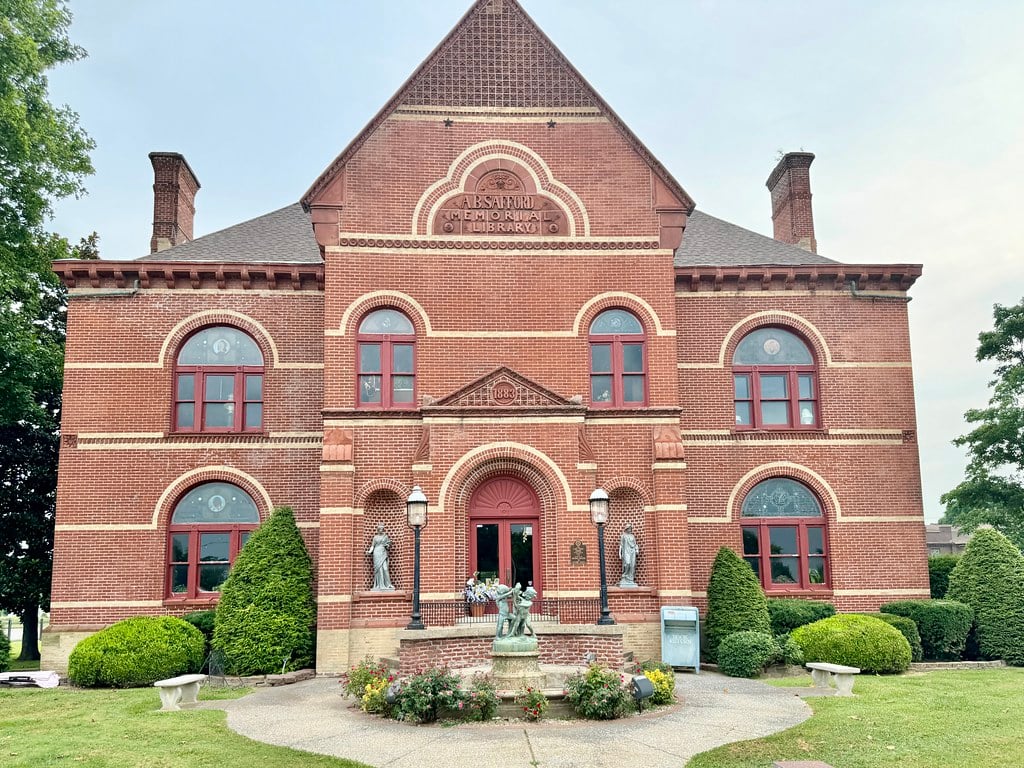
Accounts of Harriet Haskell's continued presence on campus date to shortly after her death in 1907, making this one of the longer-documented ghost traditions on any Illinois college campus. The library — which occupies what was originally the chapel, Haskell's favored room during her tenure — is the most consistently reported site.
Two librarians have independently described physical contact: one reported being tapped firmly on the shoulder twice while working alone after hours, with no one visible when she turned. A second librarian witnessed a tall woman in period dress standing near the main desk, who did not respond to being addressed and gradually became less distinct until she was no longer visible. Both accounts describe the figure as resembling photographs of Haskell in posture and dress. The scent of lilac perfume — associated with Haskell in accounts that appear to have circulated among staff for decades — has been noted by multiple witnesses in the library and was described by a radio broadcaster who spent a Halloween night in the building.
The administration building's steam-operated elevator — a surviving piece of original campus infrastructure — has been reported running between floors at night without a passenger. Maintenance and security staff responding to the reports have found the car empty. In the early 1990s, a female student reportedly communicated with building staff through an elevator intercom, stating she was trapped; when staff freed the mechanism, the car was unoccupied.
The folklore surrounding the 1971 institutional name change — the tree that fell as Monticello College formally ceased to exist — has become part of the established campus narrative, recounted in the college's own student newspaper.
Notable Entities
Harriet Newell Haskell