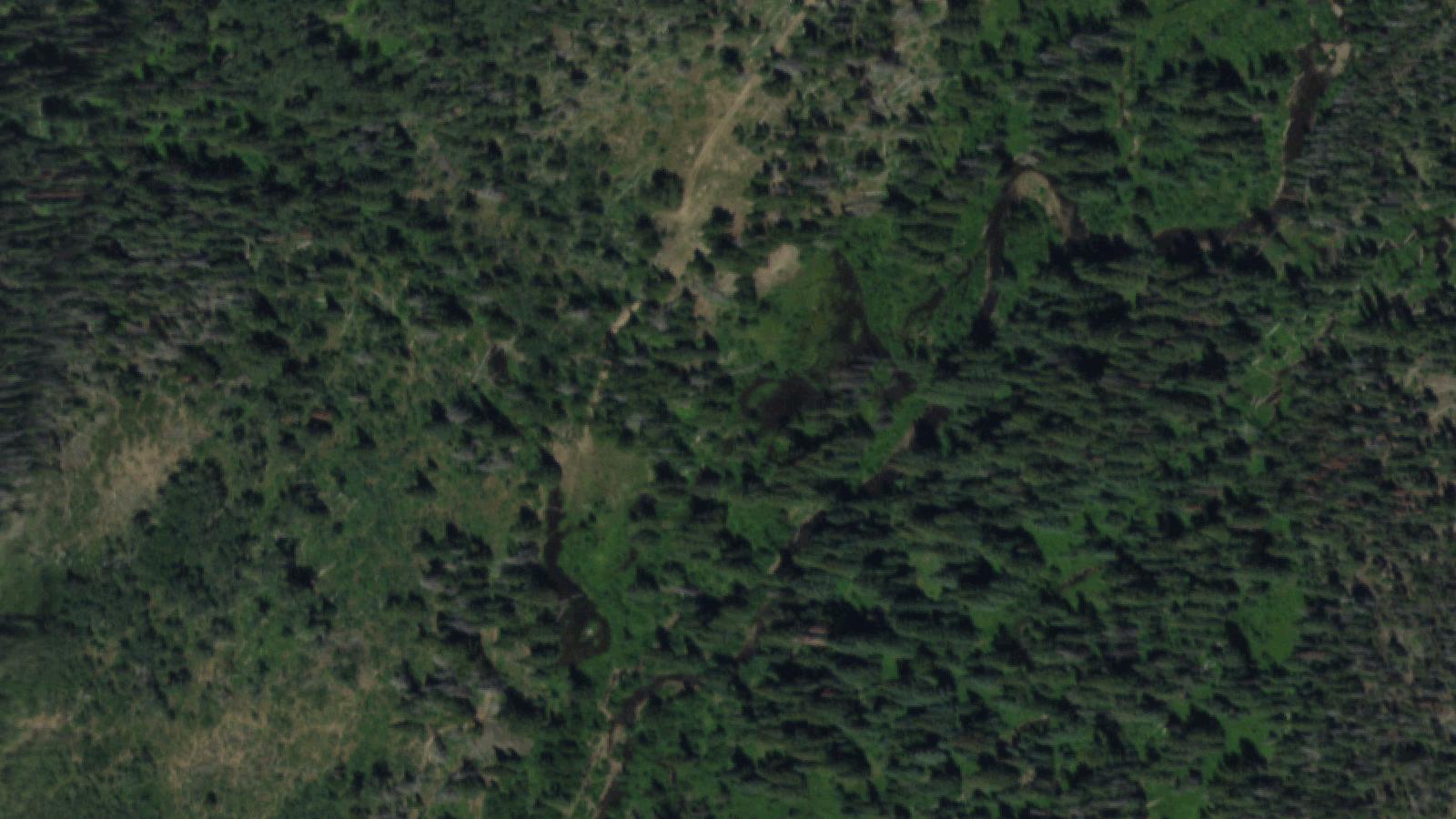
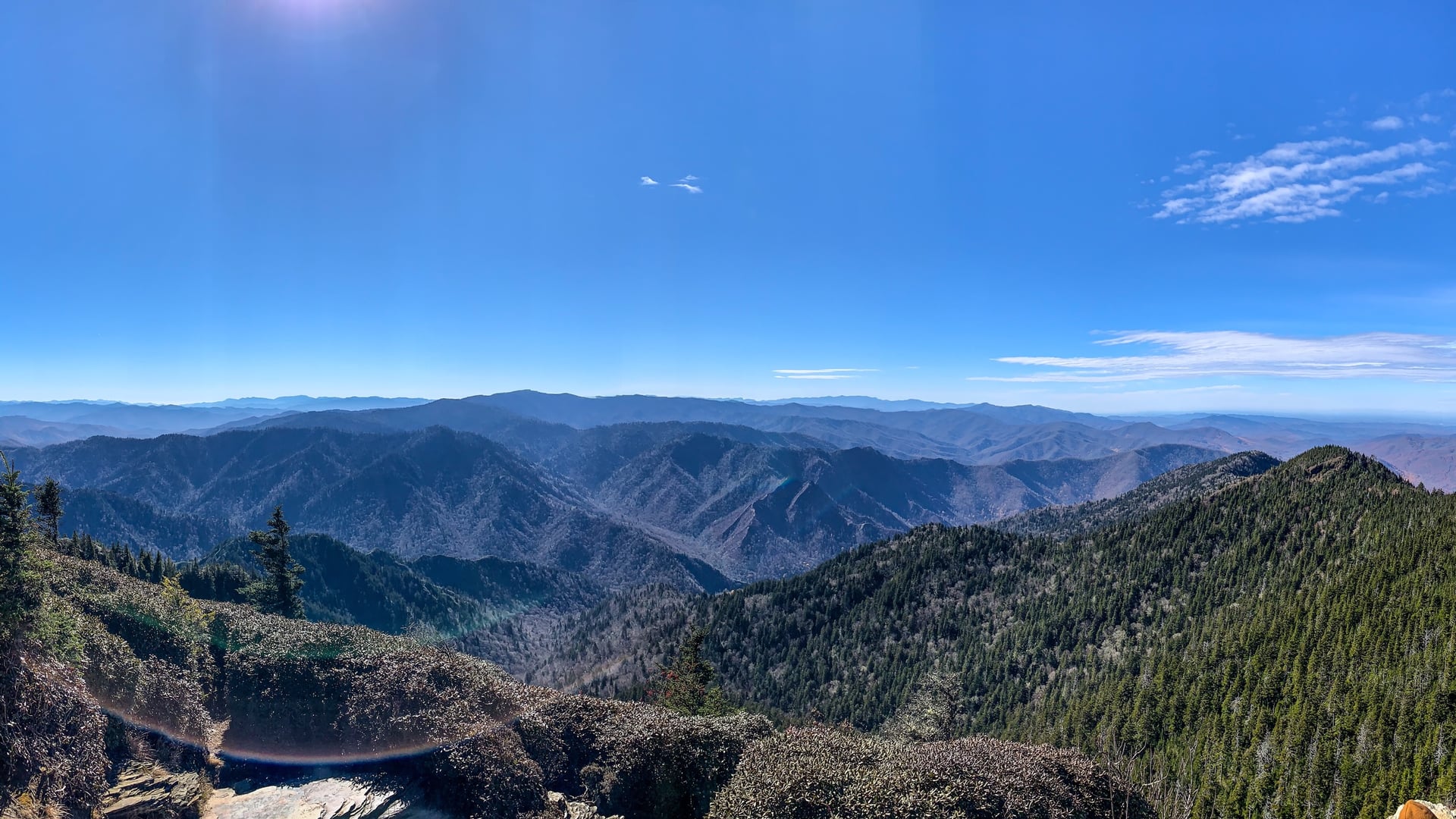
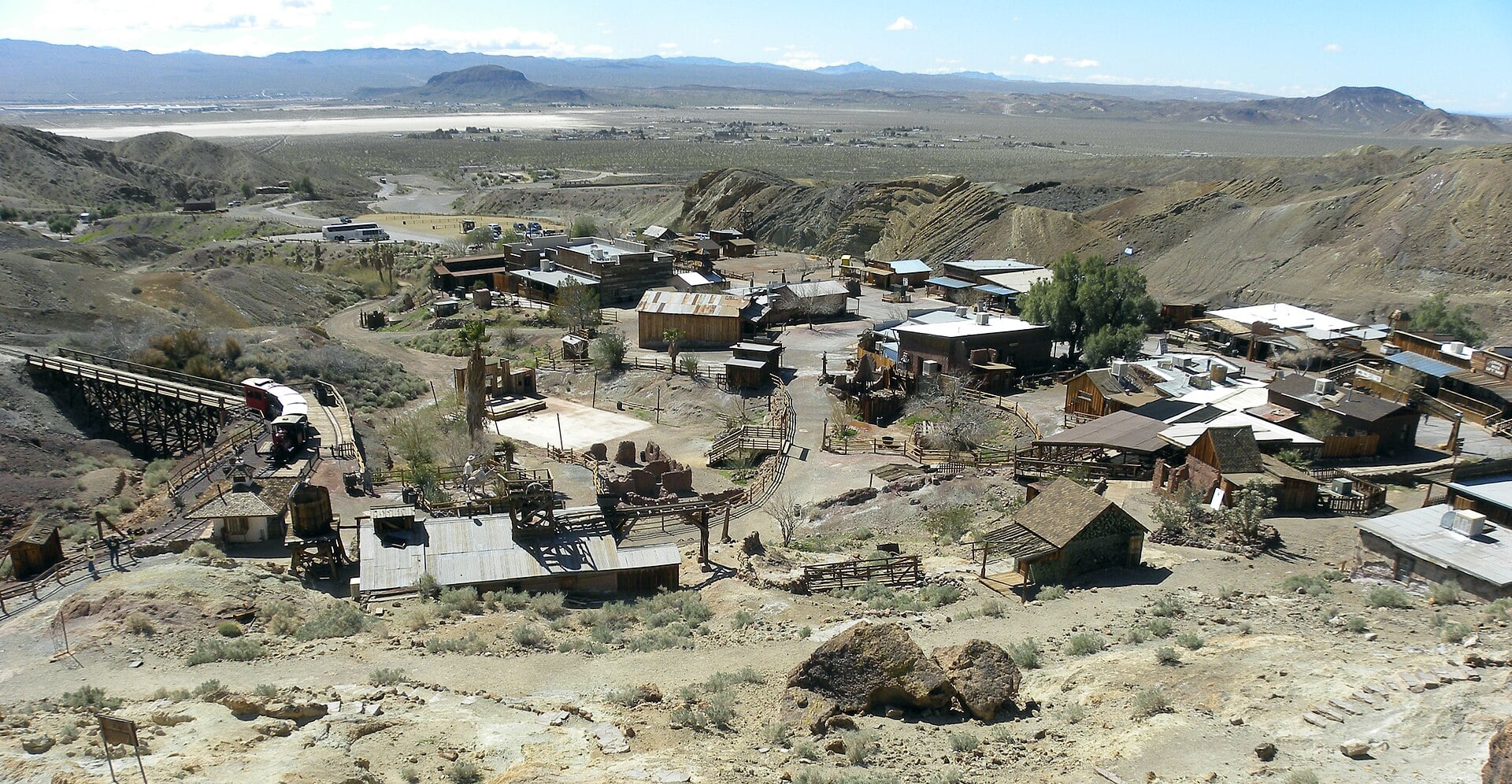
Est. 1898 · Sierra Madre Copper Boom · Encampment Mining District · Penn-Wyoming Aerial Tramway (1902)
Battle was founded in 1898 at an elevation of approximately 9,925 feet on the wagon road between the Ferris-Haggarty Mine and the smelter at Grand Encampment, Wyoming. Ed Haggerty's 1897 copper discovery had triggered a rush into the Sierra Madre Range. At its peak, Battle and its surrounding camps were part of the Encampment Mining District, which counted some 2,500 mineral claims in the region. The Penn-Wyoming Copper Company built a sixteen-mile aerial tramway from the mine to the smelter in 1902, then the world's longest, which reduced reliance on the wagon teams that had passed through Battle.
Copper prices collapsed in the early twentieth century, and a 1907 smelter fire in Encampment ended the district's industrial era. Battle was largely abandoned by 1905; the town survives today as scattered log cabins along the Battle Pass Scenic Byway (Wyoming Highway 70) between Encampment and the high passes of the Sierra Madre Range. The Grand Encampment Museum in Encampment preserves period buildings and equipment from the district's boom years.
Battle Lake is a small mountain lake near the byway summit. Slaughterhouse Gulch is a local landmark associated with the freight road that ran between Battle and Encampment during the boom years.
Sources
- https://wyomingwhispers.com/battle-wy-ghost-town/
- https://unitedstatesghosttowns.com/grand-encampment-wyoming-ghost-town/
- https://www.geowyo.com/battle-pass-byway---wy-highway-70.html
Apparitions
Regional folklore preserves a small handful of first-person accounts of a figure walking the road through Slaughterhouse Gulch, attributed in retelling to a miner killed in a turn-of-the-century explosion whose body could not be recovered intact. The most-cited single account comes from Dorothy Peryam, recorded in a regional oral tradition: in 1918, Peryam, her first husband, her brother John, and her sister-in-law Eda were camped along the road while marking timber for the Forestry Service. At dusk, a man walked down the road toward their fire, passed them without looking, and continued into the gulch without an audible footfall. The detail that he did not approach the fire for company in the high country is what marked the encounter as unusual to the witnesses.
A second long-circulated account is attributed to a driver who worked the Charles M. Scribner stage line between Battle and Encampment. The driver is said to have left the route after a man walked between his lead and wheel horses and disappeared, the team rearing and bolting in response.
The stories are folkloric in character, well-aged, and rooted in a documented industrial landscape where mine accidents were common. The phantom-miner figure is consistent with broader Western mining folklore and is best appreciated as a regional oral tradition rather than as documented paranormal investigation. Visitors driving the Battle Pass Scenic Byway should keep to the road and respect the active national-forest land surrounding the historic mining remnants.
Notable Entities
The Ghost of Slaughterhouse Gulch