Est. 1818 · National Register of Historic Places · Frontier Architecture · Chautauqua County History · William Henry Seward Connection
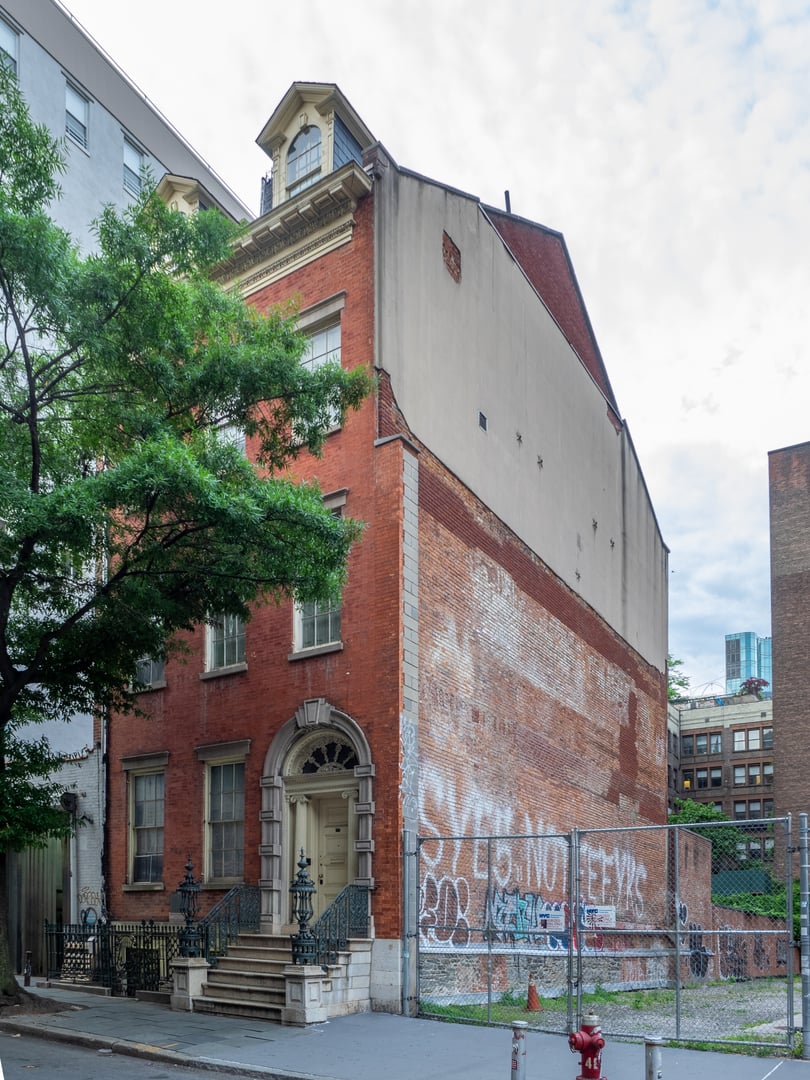
James McClurg built his mansion in 1818 in the village of Westfield on the south shore of Lake Erie in what was then recently settled western New York. He transported bricklayers from Pittsburgh — his father's industrial base — and baked his own bricks for the project. The result was a 14-room Federal-style house so out of scale with the surrounding frontier settlement that locals labeled it 'McClurg's Folly.' The nickname preserved the community's skepticism in amber.
William Henry Seward, later Lincoln's Secretary of State, practiced law in Westfield and lived in the mansion for a period. The building passed through several owners over the following century.
The Chautauqua County Historical Society obtained a lease on the mansion in 1950 — records vary slightly, with some sources citing 1951 — and has since restored and furnished it in nineteenth-century style. The museum holds military artifacts, farm and craftsman tools, pioneer kitchen equipment, toys, and Native American artifacts, along with an extensive research library and photograph collection. The society was founded in 1883, making it one of the oldest in western New York.
The mansion was placed on the National Register of Historic Places in 1984.
Sources
- https://en.wikipedia.org/wiki/McClurg_Museum
- https://www.cchsmcclurg.org/plan
ApparitionsShadow figures
The paranormal tradition at McClurg Mansion is specific in its source. During a fourth-grade field trip — the museum has hosted these visits regularly for decades — two boys encountered something in one of the rooms. They described a white shadow. A girl in her mid-twenties. She was in a corner, crying.
They went over to see who she was. Nobody was there.
The boys' account, as preserved through New York Haunted Houses and regional paranormal sites, identifies the figure as one of the mansion's maids. The mansion did employ domestic staff during its years as a private residence, spanning the early nineteenth century through the 1880s at minimum. Axes and other tools or weapons are noted in basement collections, though their connection to the hauntings tradition, if any, is not specified in available sources.
The figure is female, young, in distress — a combination that appears across a significant portion of American domestic haunting tradition, often associated with the invisibility of domestic labor and the absence of historical record for women in service positions. Whether the maid figure represents a specific individual or a general category of the unmemorialized is a question the legend does not address.
Fourth-grade classes from the Westfield area continue to visit the museum. The tradition of the haunting appears to have been in circulation at least since the 1980s based on the original Shadowlands account.
Notable Entities
The Weeping Maid