Est. 1929 · National Register of Historic Places · 1929 Fox Theater Chain · First Nebraska Sound-Era Theater · Keith Neville Building
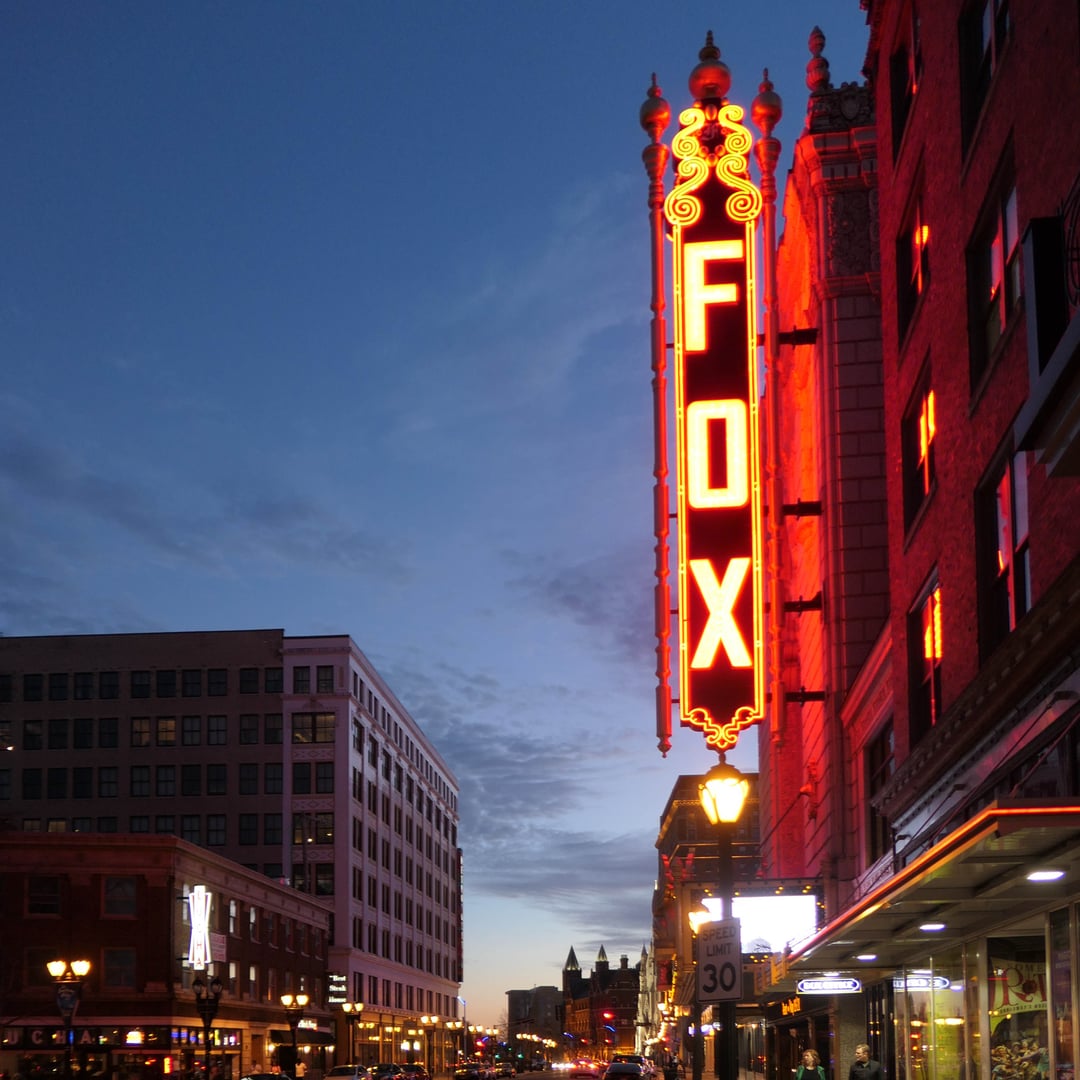
The Fox Theater was built in 1929 by the North Platte Realty Company, a partnership between Alex Beck and Keith Neville. Neville had served as Nebraska's 18th governor from 1917 to 1919. The building was designed by Omaha architect F. A. Henninger and opened to the public on November 24, 1929. North Platte's Fox was the first theater in Nebraska built from the outset to the Fox studio's specifications for the recently-introduced talkies.
The building is a prominent regional example of the 1920s American picture palace. The decorative program mixes Egyptian Revival, Georgian, Moorish, and Roman motifs in the lobby and auditorium. The proscenium and balcony detailing reflect the late silent-era ambition to provide a theater experience as elaborate as the films themselves.
The Fox operated as a movie theater for five decades. In December 1980, Keith Neville's four daughters donated the building to the North Platte Community Playhouse, the city's volunteer-led community theater organization founded in 1955. Following a public-donation and volunteer-labor renovation, the venue reopened in 1983 and was renamed the Neville Center for the Performing Arts in honor of Keith Neville. The Fox Theater was added to the National Register of Historic Places in 1985. The Neville Center continues to host plays, concerts, lectures, and community events year-round.
Sources
- https://en.wikipedia.org/wiki/Fox_Theatre_(North_Platte,_Nebraska)
- https://northplattecommunityplayhouse.com/history/
- https://cinematreasures.org/theaters/9638
- https://e-nebraskahistory.org/index.php?title=NRHP%3A_Fox_Theater
- https://nptelegraph.com/news/over-350-flock-to-haunted-evening/article_65b038ca-2b90-5465-af72-e5607c463678.html
Cold spotsTouch sensationSense of presence
Like many American movie palaces, the Fox/Neville Center carries an in-house ghost tradition passed down among performers, ushers, and stage crew. The most consistent reports cluster in the balcony, specifically in and around the lighting booth, and describe a sudden drop in temperature followed sometimes by the brief sensation of a hand on the shoulder or back.
The character, when described, is treated as a longtime resident of the theater and is regarded as harmless. Performers preparing for productions occasionally reference him in pre-show rituals. The phenomena have not escalated into the more aggressive category of theater-ghost lore, and the Community Playhouse organization has not formally documented or commercialized the reports.
Other phenomena reported less frequently include small objects shifting position in the dressing rooms between rehearsals and an occasional figure glimpsed near the proscenium during empty-house walk-throughs. Like much theater folklore, the lore is part of the building's working culture rather than a curated paranormal attraction.