Est. 1790 · Birthplace of Two Governors · Site of Amasa Sprague Murder (1843) · Catalyst for Rhode Island's Abolition of Capital Punishment
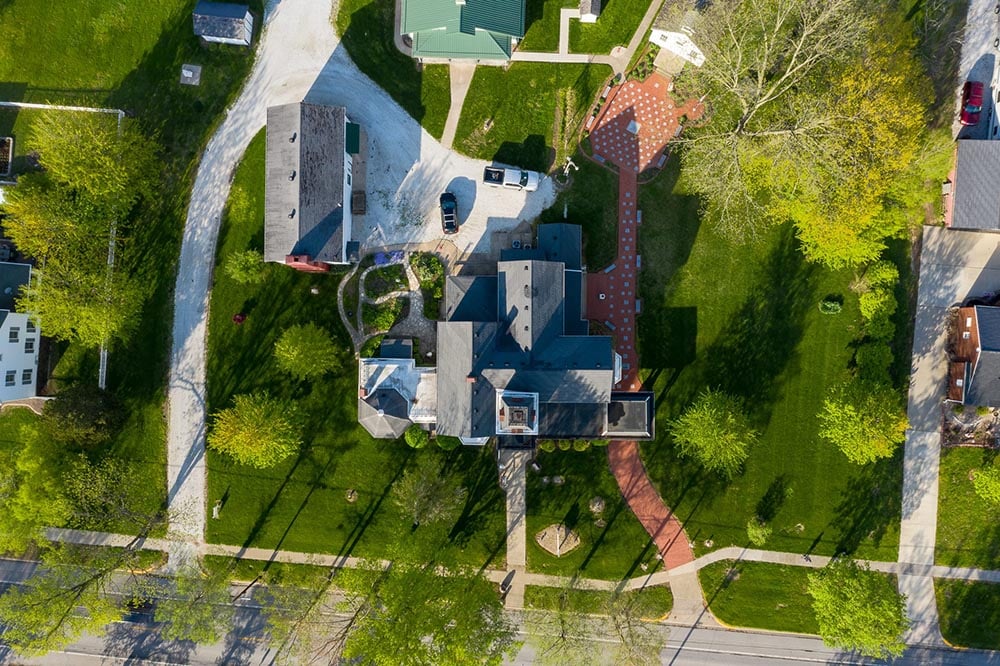
The Sprague family converted a small grist mill on the Pocasset River into one of New England's earliest cotton mills in 1808, and the textile fortune that followed funded the expansion of the family seat at 1351 Cranston Street. The original house, built by William Sprague in 1790, grew into a 28-room manor with Italian marble fireplace mantels, a Steinway Centennial Grand Concert piano, and a sweeping center staircase. A large carriage house was added by Colonel Sprague in 1864.
The mansion produced two Rhode Island governors. William Sprague III served as governor in the 1830s. His nephew, William Sprague IV, served as Rhode Island's 27th governor from 1860 to 1863 during the opening years of the Civil War, and afterward as a U.S. senator from 1863 to 1875.
The family's most consequential local event was not political. On December 31, 1843, Amasa Sprague, brother of Governor William Sprague III and a partner in the family textile operation, was found beaten and shot to death along a path near the mansion. An Irish immigrant named John Gordon was tried, convicted, and hanged for the murder on February 14, 1845. Historians and researchers have since concluded that Gordon's conviction resulted from anti-Irish Catholic bias rather than reliable evidence; no confession by any Gordon family member has ever been documented. The case became Rhode Island's last execution and led the state legislature to abolish capital punishment. Governor Lincoln Chafee posthumously pardoned John Gordon on June 29, 2011. (Sources: Wikipedia — John Gordon (convict); New England Historical Society; Rhode Island General Assembly pardon resolution.)
The mansion remained the family homestead for four generations before passing through several hands and ultimately becoming the headquarters of the Cranston Historical Society in the 1960s. The Society maintains the mansion as a museum and event space, with public tours on Thursday afternoons from April through November and by appointment year-round.
Sources
- https://en.wikipedia.org/wiki/Governor_William_Sprague_Mansion
- https://www.cranstonhistoricalsociety.org/sprague-mansion
- https://www.visitrhodeisland.com/listing/governor-sprague-mansion/8360/
- https://www.cranstononline.com/stories/haunted-history-of-sprague-mansion,128592
- https://en.wikipedia.org/wiki/John_Gordon_(convict)
- https://newenglandhistoricalsociety.com/murder-amasa-sprague-irishman-persecuted-crime/
- https://ournewenglandlegends.com/podcast-176-the-haunted-sprague-mansion/
- https://www.theyankeexpress.com/2025/11/07/553349/sprague-mansion
- https://www.hauntworld.com/http---www-cranstonhistoricalsociety-org
- https://anomalien.com/haunted-rhode-island-sprague-mansion/
ApparitionsPhantom footstepsCold spotsObject movementPhantom voices
The mansion's best-known presence is a butler who has identified himself in seances and investigations as Charlie. Charlie is associated not with the Sprague family directly, but with a wealthy household that occupied the mansion after the Spragues had left. Visitors and staff most often report his presence on or near the main staircase: footsteps descending the stairs when the building is otherwise empty, and a passing draft of cold air that follows the same path.
A second cluster of reports involves a small upstairs bedroom filled with antique dolls. Tour participants regularly report the sensation that the dolls' eyes follow them across the room, and several accounts describe seeing the figure of a young girl, sometimes accompanied by a dog, near the bed.
The Cranston Historical Society has not commercialized the mansion's reputation. Investigations by Rhode Island paranormal groups, including the Rhode Island Paranormal Research Society, have been documented in local news, and the building has been profiled in regional coverage as one of the state's most active historical sites. Investigators have reported audio anomalies, unexplained temperature drops on the main staircase, and equipment performance issues consistent with what visitors describe.
Whether any of this is connected to the 1843 Amasa Sprague murder is a question local accounts decline to answer. The murder happened outdoors on a path near the mansion, not inside the building, and the established lore points to later occupants rather than to the Sprague family itself.
Notable Entities
Charlie the ButlerThe little girl with a dog