Drive-By
Exterior View
View the brick institutional building from Osborne Street. The school remains an active private Catholic high school and does not permit casual public access to grounds or interior spaces.
- Duration:
- 20 min
HauntBound archive · catalog record
Reported phenomena — as catalogued
Catholic high school with reputed teacher apparition
25 Osborne Street, Johnstown, PA 15905
Research updated June 2026
Age
Not Applicable — Active Private School
Cost
Free
No public access to school grounds. Contact for private events or special programs.
Access
Limited Access
Paved
Equipment
No Photos
Est. 1922 · Catholic Education · Pennsylvania Industrial Heritage · Post-War Educational Expansion
Bishop McCort Catholic High School traces its origins to Johnstown Catholic High School, which opened on September 8, 1922, after Catholic parishioners of Johnstown raised approximately $100,000 for their own school under the direction of Bishop John Joseph McCort. McCort, a native of Philadelphia and former instructor at St. Charles Borromeo Seminary, had succeeded Bishop Eugene A. Garvey as Bishop of Altoona in 1920 and initiated the fundraising campaign in January 1922. The founding class consisted of 127 freshmen, with plans to add a grade annually.
The school's history is intertwined with Johnstown's catastrophic flood history. The 1936 St. Patrick's Day Flood (March 17, 1936) submerged the school along with the rest of downtown Johnstown, causing property losses across the city exceeding $50 million. On May 27, 1962, the school was renamed Bishop McCort High School in honor of its late founding bishop. On October 8, 2008, control of the school was transferred to an independent non-profit 501(c)(3) board of trustees, and it now operates as Bishop McCort Catholic Academy at 25 Osborne Street in the Westmont neighborhood of Johnstown.
Sources
Among long-running student lore at Bishop McCort is a chalkboard ritual known as the 'Deac' legend. According to the tradition, if a visitor enters a particular classroom after dark, switches off the lights, and calls out 'Good morning Deac' three times, a figure is said to appear written on the chalkboard with the reputed ability to grant a wish. The identity of 'Deac' is unclear in available accounts; forum discussions among alumni reference the story but cannot pin it to a specific teacher or incident.
The legend fits a familiar pattern in school folklore — a summoning ritual tied to a specific room and a former educator, transmitted student-to-student rather than through documented witness reports. No verified apparitions, photographs, or paranormal investigations are recorded at the building, and the tradition appears entirely within oral campus culture and aggregator paranormal sites.
Notable Entities
View the brick institutional building from Osborne Street. The school remains an active private Catholic high school and does not permit casual public access to grounds or interior spaces.
Some links on this page may earn HauntBound a small commission when you book, at no extra cost to you. Our editorial picks are independent. Full disclosure
Every HauntBound history is researched from documented sources. We clearly separate verified historical fact from paranormal folklore.
Free Guide
11 verified stops, rated for families, mapped in order. Free.
One email to confirm, then the guide link. Unsubscribe anytime.
Bull Valley, IL
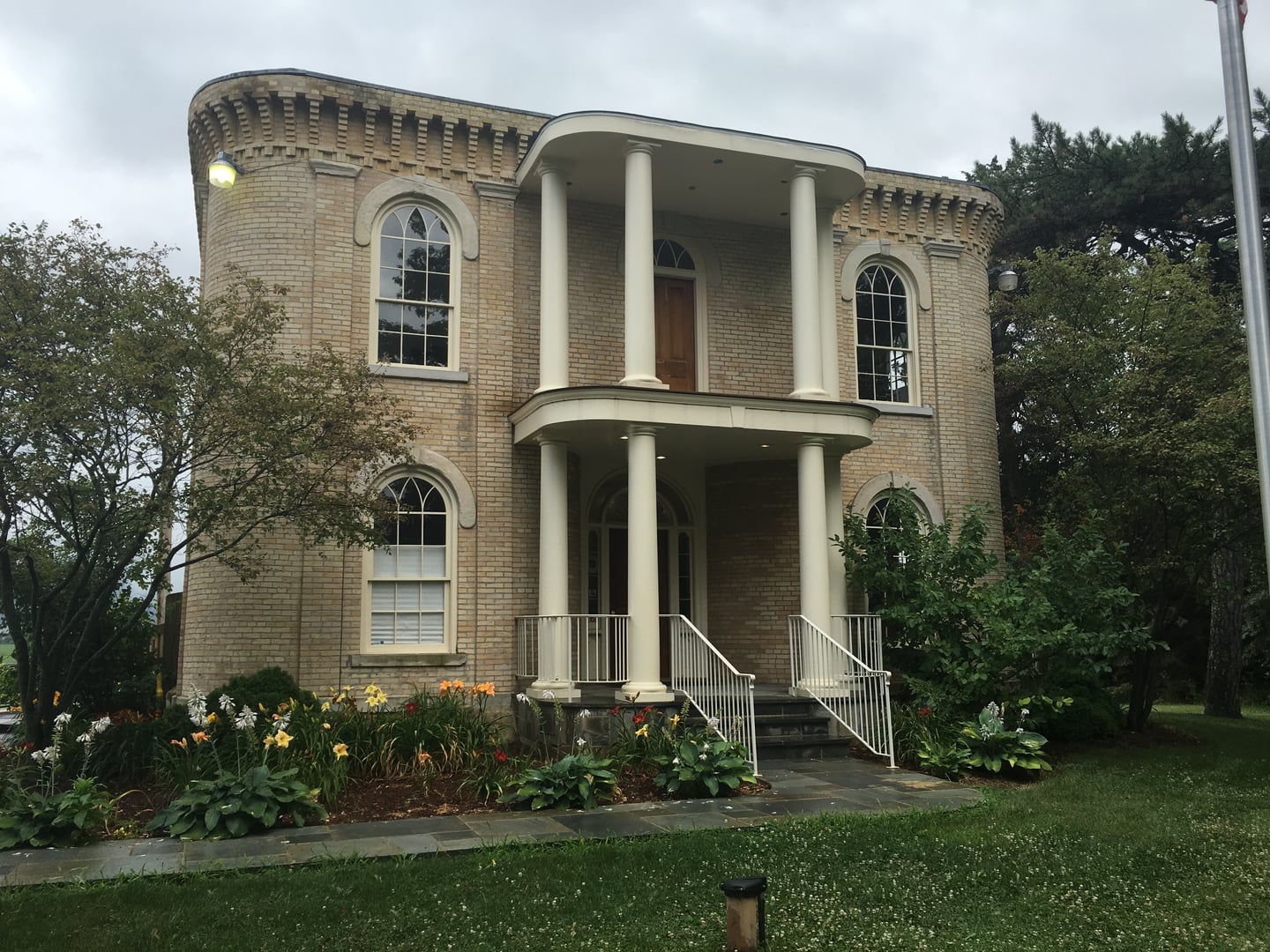
The George Stickney House is an 1865 stucco-over-frame mansion in Bull Valley, Illinois, built for spiritualists George and Sylvia Stickney. The Stickneys, both practicing mediums, are said to have designed the interior without right angles to ease the movement of spirits during seances. The building has served as the Bull Valley Police Department since 1985 and has been listed on the National Register of Historic Places since 1979.
Camp Hill, PA
Camp Hill High School was constructed on land that historically contained a children's cemetery. During school construction, the cemetery remains were not excavated, and the burial ground remains beneath the school structure. A small metal door three feet above ground level provides access to the original dirt-floored space with burial mounds.
New Oxford, PA
Chestnut Hall is a Victorian residence in New Oxford, Pennsylvania, designed by architect J.A. Dempwolf in fine 1880s Victorian style. The current owners operated Chestnut Hall Bed and Breakfast at the property from 2003 to 2012, during which time it won multiple regional bed-and-breakfast awards. The property is now a private residence.