Battlefield Visitation
Visit Bloody Hill, a Civil War battlefield in Missouri with historical significance and reported paranormal phenomena associated with the battle.
- Duration:
- 1.5 hr
- Cost:
- Free
- Days:
- Check with venue
- Times:
- Daylight hours
HauntBound archive · catalog record
Reported phenomena — as catalogued
+ 1 further entry on record
Civil War Battle Site with Paranormal Activity
Springfield, MO
Research updated May 2026
Age
All Ages
Cost
Free
Free
Access
Limited Access
Battlefield terrain
Equipment
Photos OK
Est. 1861 · Civil War History · Battle Site
Bloody Hill marks the highest ground at Wilson's Creek, the site of the Battle of Wilson's Creek on August 10, 1861—the first major Civil War engagement west of the Mississippi River. Union forces under Brigadier General Nathaniel Lyon attacked Confederate forces commanded by Generals Sterling Price and Ben McCulloch. Over six hours, some of the Civil War's most intense combat occurred on Bloody Hill as Lyon's troops defended the high ground against repeated Southern assaults. General Lyon was mortally wounded during the battle. Union forces ultimately retreated, giving Confederates control of southwestern Missouri, though heavy casualties on both sides (approximately 1,317 Union and 1,222 Confederate/allied forces killed, wounded, or captured) prevented Confederate pursuit. The site is now protected as Wilson's Creek National Battlefield, operated by the National Park Service.
Sources
Visitors to Bloody Hill report consistent paranormal phenomena associated with the battle's trauma and violence. Staff and visitors describe seeing apparitions of uniformed soldiers—both Union and Confederate—moving across the battlefield. Some accounts describe wounded soldiers calling for help, while others report silent cavalry charges. Witnesses have also reported sounds resembling cannon fire and gunshots without visible source, and hearing soldiers' voices and footsteps in nearby woods. Cold spots have been documented on the battlefield despite warm ambient temperatures. One distinctive account describes a young girl delivering water at the Ray House, visible only as an apparition. These phenomena are consistent with residual haunting patterns attributed to sites of significant historical trauma and death.
Visit Bloody Hill, a Civil War battlefield in Missouri with historical significance and reported paranormal phenomena associated with the battle.
Some links on this page may earn HauntBound a small commission when you book, at no extra cost to you. Our editorial picks are independent. Full disclosure
Every HauntBound history is researched from documented sources. We clearly separate verified historical fact from paranormal folklore.
Free Guide
11 verified stops, rated for families, mapped in order. Free.
One email to confirm, then the guide link. Unsubscribe anytime.
Kure Beach, NC
Fort Fisher was the largest earthwork fortification of the Civil War, built by the Confederacy beginning in 1861 to protect blockade-running traffic into the port of Wilmington. After a failed Christmas Eve 1864 assault, a combined Union land and naval bombardment captured the fort in January 1865. Fort Fisher's fall closed the last open Confederate seaport.
Atlantic Beach, NC
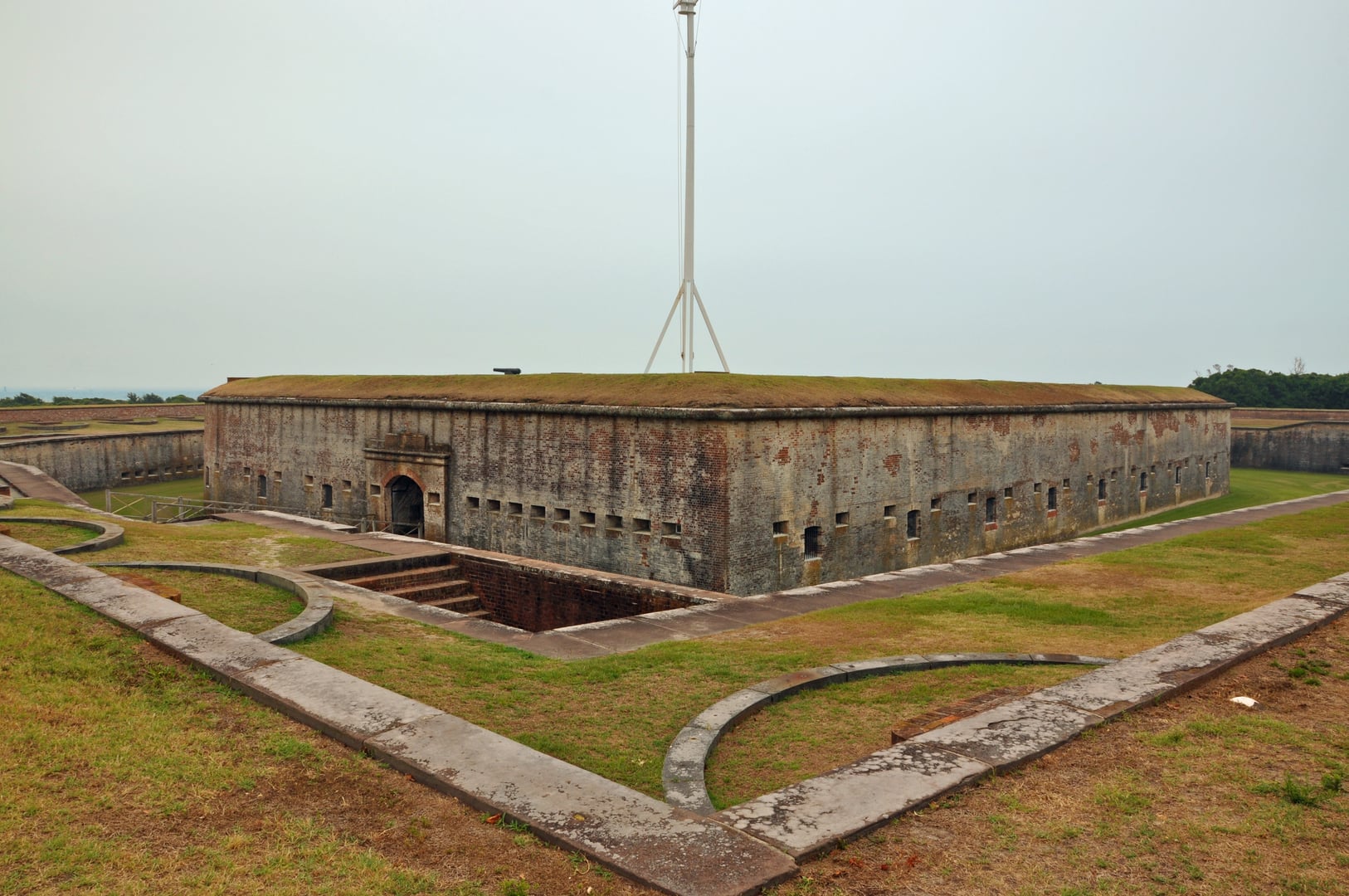
Fort Macon is a Third System brick coastal fort built between 1826 and 1834 to guard Beaufort Inlet on the North Carolina coast, named for U.S. Senator Nathaniel Macon. North Carolina militia seized the fort for the Confederacy in April 1861, and Union forces under Major General Ambrose E. Burnside recaptured it in 1862. It is now the centerpiece of Fort Macon State Park.
Hammond, OR
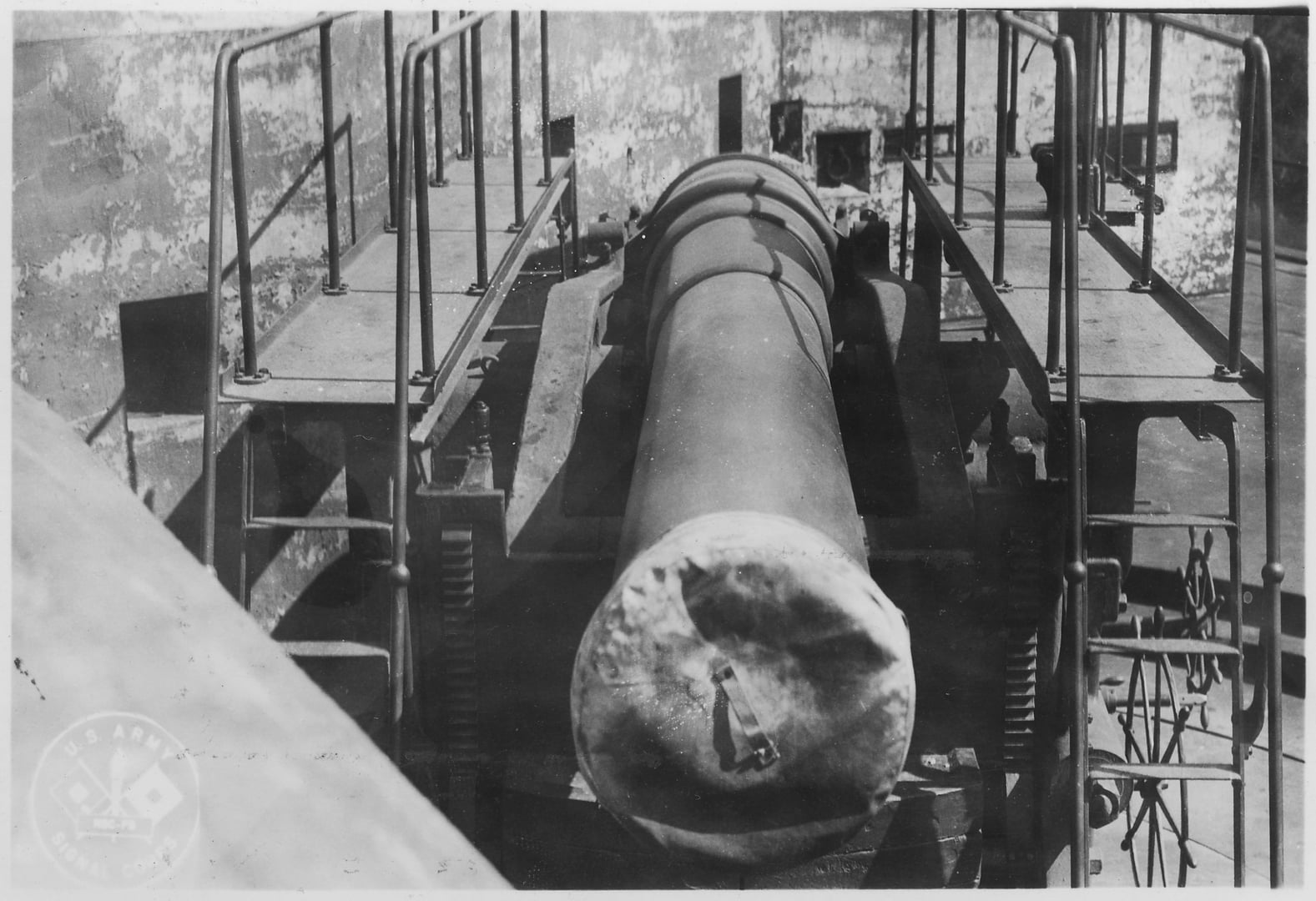
Battery Russell is one of nine concrete coastal-artillery emplacements built between 1897 and 1906 to defend the mouth of the Columbia River as part of Fort Stevens. Completed in 1904 and named for Civil War Brig. Gen. David A. Russell, the battery mounted two 10-inch M1888 'disappearing' rifles. It was decommissioned in 1944. On the night of June 21-22, 1942, the Japanese submarine I-25 surfaced offshore and fired roughly 17 shells in the direction of the fort — the first foreign attack on a mainland U.S. military installation since the War of 1812. The site is preserved within Fort Stevens State Park, Hammond, Oregon.