Est. 1899 · Oklahoma Land Run Era · Pioneer Settlement · Roger Mills County History
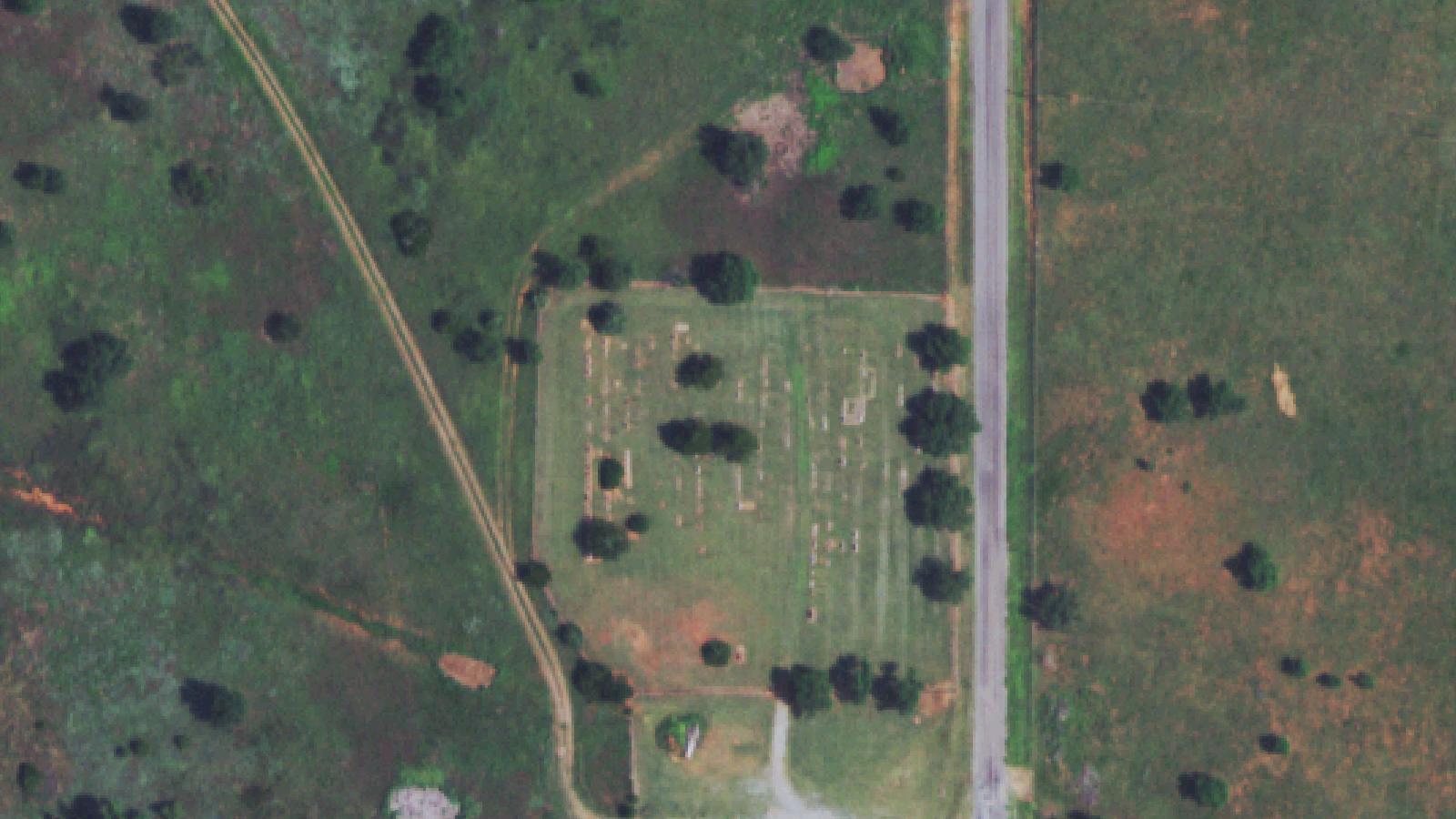
Kiowa Cemetery was founded in March 1899 on the George and Nancy Lacey homestead, three miles south and three miles west of Hammon in Roger Mills County, Oklahoma. The Lacey homestead occupied the southeast corner of Section 21, Township 13 North, Range 21 West of the Indian Meridian, with the cemetery plot positioned at that corner between the Big and Little Kiowa Creeks — drainages from which both the cemetery and the surrounding community take their name.
Local accounts record that George Lacey, in poor health, had been considering the donation of part of his homestead for community burial for some time before the immediate need arose. The death of one-month-old Tommy Hill in March 1899 prompted the formal designation. Four people were buried in the cemetery's inaugural year: Tommy Hill, George Lacey himself (who died at age forty-five the same year), Cal Rowland, and Charley Eakins.
From its founding the cemetery accommodated any denomination and was operated free of charge — a policy that continues today under a maintaining trust fund. The community briefly operated under the post-office name 'Larned' between 1902 and 1906, after a post office of that name located in Section 28 directly across from the cemetery; the cemetery itself, however, has always been called Kiowa.
Many of the earliest residents buried here were born in 1850 or before, arriving in western Oklahoma during the Oklahoma Land Run period from Texas and other southern and midwestern states. Roger Mills County, organized as part of Oklahoma Territory in 1892, sits in the high plains of western Oklahoma adjacent to the Texas Panhandle on land with deep Kiowa, Comanche, and Cheyenne history that predates Euro-American settlement by centuries.
Sources
- https://www.okcemeteries.net/rogermills/kiowa/kiowainfo.htm
- https://www.findagrave.com/cemetery/98764/kiowa-cemetery
- https://okrogerm.org/cemeteries/kiowa/
- https://oklahoma.hometownlocator.com/maps/feature-map,ftc,2,fid,1094401,n,kiowa%20cemetery.cfm
ApparitionsShadow figures
The cemetery sits at a historical intersection — land that was Kiowa, Comanche, and Cheyenne territory within the living memory of the homesteaders whose graves form the cemetery's oldest section. That layered context informs the local tradition attached to the site.
The most consistently repeated account describes a figure appearing near the entrance gates: a man in traditional dress, mounted on horseback, visible to those approaching but absent on closer inspection. Whether this account reflects the regional history of Indigenous displacement or simply the tendency of isolated rural cemeteries to accumulate folklore is a question the available record does not resolve.
More broadly, residents of the Hammon area have described figures observed moving through open land at night and occasionally during daylight, between the creek drainages and across the cemetery grounds. These reports are diffuse rather than tied to specific incidents within the cemetery itself. Independent investigation of the site has not been documented in available paranormal-research sources, and the accounts remain in the regional oral tradition.
The cemetery's setting — flanked by two creeks, surrounded by working pasture, more than a century of pioneer headstones — contributes to its reputation regardless of which specific account is being repeated.