Est. 1675 · National Register of Historic Places · Only Salem Structure Tied to the 1692 Witch Trials · First Period Architecture · Judge Jonathan Corwin Residence
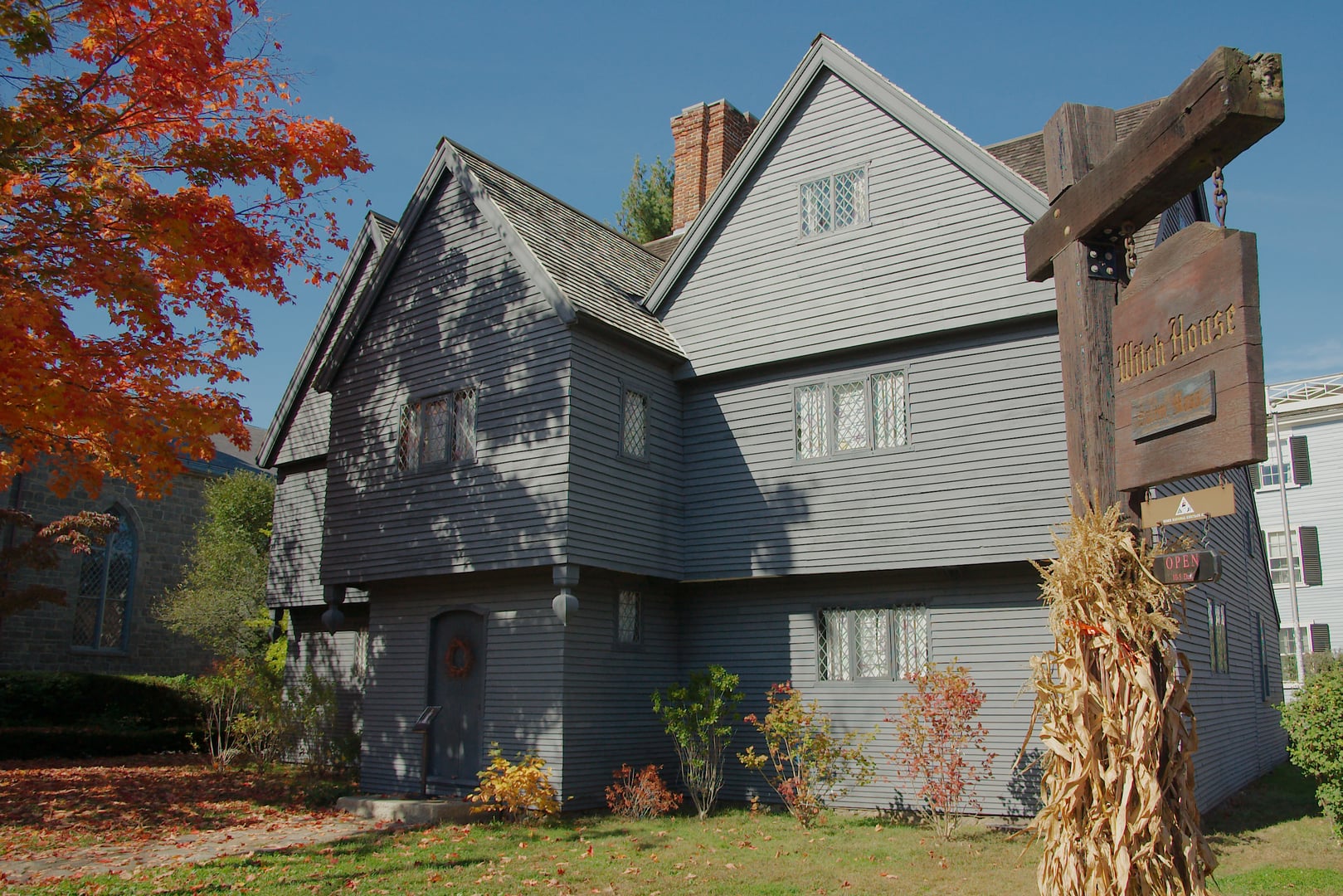
Captain Nathaniel Davenport began construction on the Essex Street property in 1675. Davenport moved to Boston before the framing was complete and sold the unfinished structure to Judge Jonathan Corwin, who finished the house and moved in with his wife Elizabeth Sheafe Corwin and their children. The First Period framing, originally a two-and-a-half-story timber-frame structure with leaded casement windows, survives in substantially original form.
Corwin served as a magistrate of the Massachusetts Bay Colony. In May 1692, Governor William Phips appointed Corwin to the Court of Oyer and Terminer, the special tribunal convened to hear witchcraft cases at Salem. Over the next four months, the court tried more than 30 individuals; 19 were hanged at Proctor's Ledge between June 10 and September 22, 1692, and Giles Corey was pressed to death under stones on September 19. An additional five accused individuals died in jail.
Pretrial examinations of accused individuals were conducted at the homes of the presiding magistrates. Corwin's house was used for some of these examinations. The court was dissolved by Governor Phips in October 1692 after public and clerical pressure mounted against the spectral-evidence standard used in the trials.
The Corwin House remained a private residence under successive owners through the 19th century. In 1944, Historic Salem, Inc. acquired the property and undertook a restoration that returned the exterior and selected interior rooms to a 17th-century appearance. The City of Salem opened the building as a museum in 1947 and continues to operate it. The Witch House is the only structure remaining in Salem with documented direct ties to the 1692 trials and is listed on the National Register of Historic Places.
Sources
- https://en.wikipedia.org/wiki/The_Witch_House
- https://www.thewitchhouse.org/
- https://salemwitchmuseum.com/locations/jonathan-corwin-house/
- https://historyofmassachusetts.org/witch-house-salem/
Cold spotsApparitionsPhantom sounds
The Witch House sits at an unusual intersection of American historical memory and the dark-tourism industry that has grown up around Salem since the late 19th century. Tens of thousands of visitors pass through the building each year. Many arrive expecting a haunted-house experience and find instead a substantive material-culture museum with period leaded casement windows, original framing, and First Period furnishings.
Visitor accounts of unusual phenomena exist and are documented in regional folklore collections and ghost-tour narrations. Reports cluster in the upper rooms, where pretrial examinations are said by some traditions to have been conducted, and include cold spots, the sense of a presence, and brief glimpses of period-dressed figures in mirrors and doorways. None of these accounts is endorsed by the City of Salem or by the museum.
The most important context for any visit is the documented history. Nineteen people were hanged and one pressed to death during the 1692 trials, and an additional five died in jail. Their names are recorded at the Salem Witch Trials Memorial in Salem and on the Proctor's Ledge memorial dedicated in 2017. Approaching the Corwin House primarily as a haunted attraction risks obscuring the actual injuries done to actual people by a court on which Jonathan Corwin sat. The museum's interpretive program is built around this distinction.