Est. 1847 · Mormon Pioneer National Historic Trail · Old Fremont Cemetery · Marker commemorating off-site Liberty Pole Camp
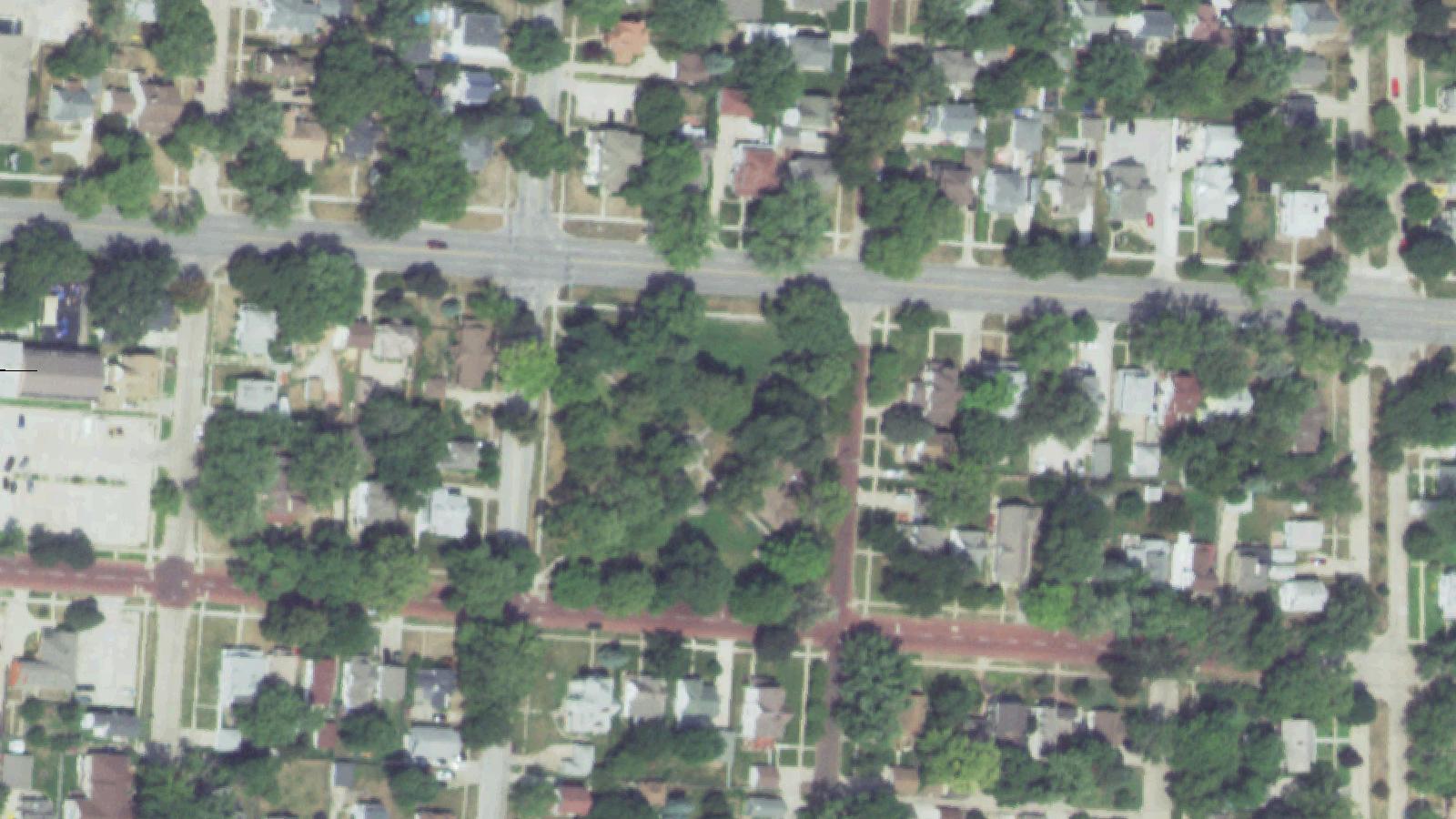
The block now known as Barnard Park, between Military Avenue and Clarkson and Irving Streets in Fremont, Nebraska, carries two intersecting histories. A Utah Pioneer Trails and Landmarks Association marker in Barnard Park commemorates Liberty Pole Camp, which the NPS study places southwest of Fremont and west of U.S. 77. Its marker text says the Mormon Pioneer Trail passed here April 17, 1847.
The block served as Fremont's first municipal cemetery, dedicated in the late nineteenth century during the city's first population boom. As the city grew and the cemetery filled, the burials were relocated to what is now Ridge Cemetery in the 1880s. Find a Grave records the site as the Old Fremont Cemetery; local memory and Find a Grave documentation indicate that not every burial was relocated, with markers consisting of perishable wood and small stones lost over the decades. The city converted the block to public park use, named for an early benefactor, and the space has functioned as a Fremont neighborhood park since.
Sources
- https://www.nps.gov/mopi/planyourvisit/nebraska.htm
- https://www.deseret.com/2018/1/24/20638797/picturing-history-fremont-nebraska-and-the-mormon-pioneer-trail/
- https://www.findagrave.com/cemetery/2787984/barnard-park-(old-fremont-cemetery)
- https://fremonttribune.com/news/local/history/paranormal-investigators-allege-filming-ghost-barnard-park/article_11a4d3d2-2fe8-11ee-9efb-c3f6f9e8481a.html
- https://fremonttribune.com/news/spirits-of-barnard-park-under-investigation/article_badef806-1b7a-11ee-ae17-7fd9db4266a4.html
ApparitionsPhantom footstepsCold spots
Local tradition holds that Barnard Park, as a purported former cemetery with a trail marker commemorating an off-site camp, generates a recognizable category of figure-walking reports. Visitors describe figures crossing the lawn or moving between trees in low light. The most-told single figure is a woman associated with the park's winter months, sometimes described as a Mormon Trail traveler who was said to have lost a child at the 1847 camp (outside Barnard Park) and who walks the perimeter in mourning. A secondary recurring figure is a man often described lying on a park bench in warmer weather, attributed in retelling to one of the original cemetery burials that was not relocated in the 1880s.
The attributions are folkloric in the best sense: they connect former-cemetery folklore and the trail-marker tradition to present-day reports. Eventide Paranormal Research Group and other local paranormal organizations have visited the park, and the site is a regular stop on regional dark-tourism lists. The park itself remains a working city park used for daily neighborhood activity and warrants the same respect as any cemetery whose burials may remain underfoot.