Est. 1927 · Pueblo Deco Architecture · Route 66 Heritage · National Register of Historic Places
Italian-American entrepreneur Oreste Bachechi and his wife Maria Franceschi Bachechi commissioned the KiMo Theater as a tribute to the Indigenous communities of the region that had supported the family's earlier business ventures. They selected Kansas City architect Carl Boller of the Boller Brothers firm, who conducted an extensive research trip through New Mexico and Arizona before producing his design. The resulting building, completed in 1927, fused Pueblo Revival adobe forms with Art Deco decorative programs in a hybrid style now identified as Pueblo Deco. The KiMo is the most fully realized surviving example of the style.
The Albuquerque Journal sponsored a naming contest in June 1927, offering a fifty-dollar prize for a six-letter name appropriate to the building's character. Pablo Abeita, the former governor of Isleta Pueblo, submitted the winning entry. 'KiMo' translates loosely as 'mountain lion' or 'king of the beasts.'
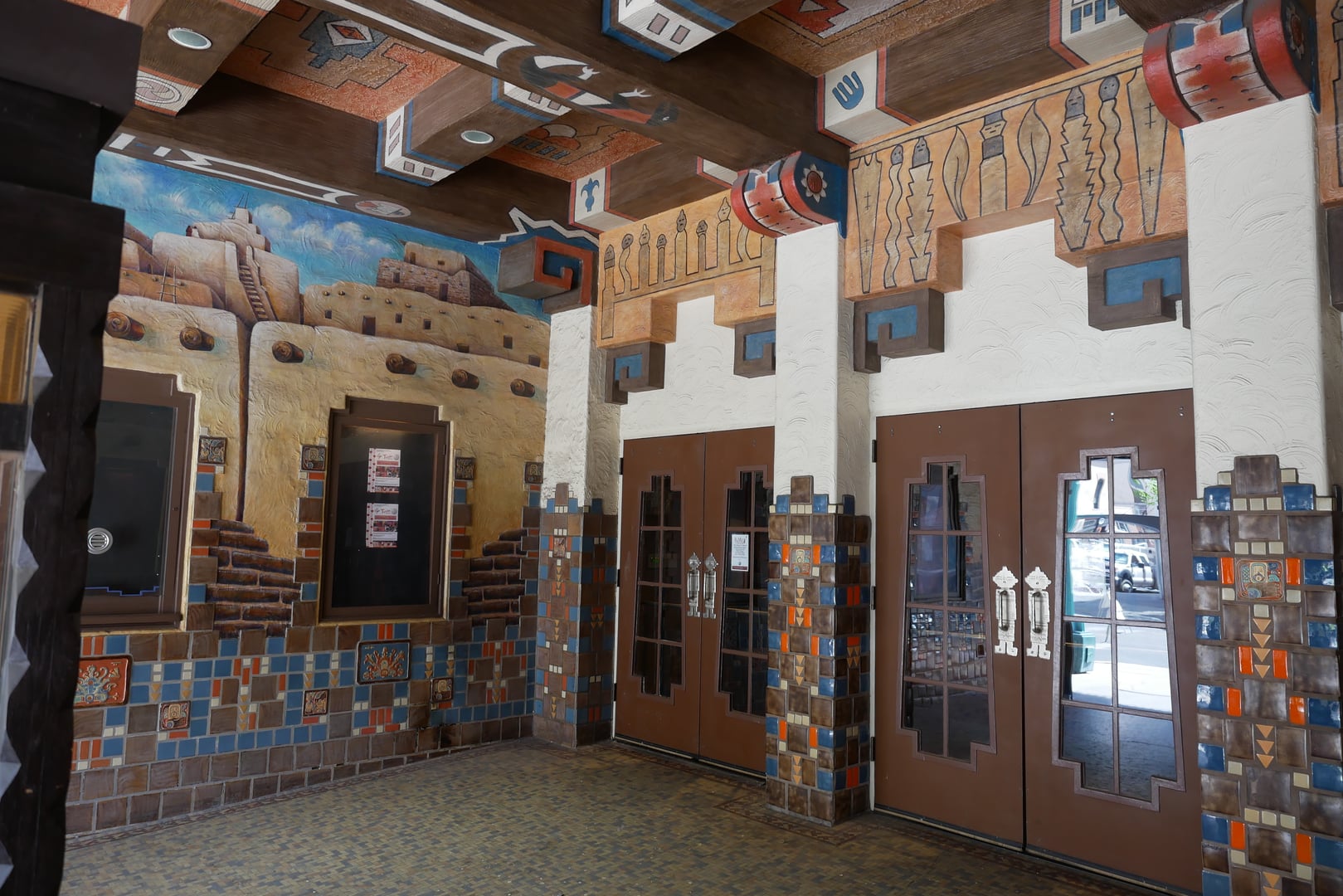
The theater opened as a movie palace with vaudeville accompaniment. The auditorium ornament includes painted longhorn ceiling medallions, steer-skull wall sconces, and Pueblo-pattern friezes. Like most picture palaces of the era, the KiMo declined through the postwar period and into the 1960s. The theater closed in the early 1970s, and demolition was discussed. The City of Albuquerque purchased the building in 1977 and undertook a long restoration, returning the theater to active use as a city-owned performance venue.
The restoration project has continued in phases through the 2000s and 2010s, including substantial work on the lobby, marquee, and exterior tilework. The KiMo is listed on the National Register of Historic Places and is operated by the city's Department of Arts and Culture.
Sources
- https://en.wikipedia.org/wiki/KiMo_Theater
- https://www.legendsofamerica.com/nm-kimotheatre/
- https://alibi.com/feature/the-definitive-kimo-ghost/
ApparitionsObject movementEquipment malfunctionPhantom footsteps
On August 2, 1951, a boiler in the basement of the KiMo Theater exploded, destroying part of the original lobby. Six-year-old Bobby Darnall, who had come to the theater for a Saturday matinee, was killed in the blast. The accident is a documented historical event.
Local theater folklore developed in the decades after Bobby's death. Cast and crew members have reported a small figure in a striped shirt and blue jeans on the lobby staircase, lighting cues failing during performances, costumes disappearing from racks, and small objects moving in the dressing rooms. By the 1970s, a tradition had developed of hanging doughnuts on a water pipe along the back wall of the theater behind the stage as an offering to Bobby's spirit. The doughnuts reportedly disappear overnight. Performers from touring productions describe being told about the tradition during load-in.
The story has become one of the most-told theater ghost narratives in the American Southwest. The Albuquerque alternative weekly Weekly Alibi published an in-depth account of the tradition; Atlas Obscura and Legends of America have covered it as well.
Editorial respect is owed here. Members of Bobby Darnall's family have publicly stated that they feel exploited by the commercialization of his death and have asked that the ghost-story framing be set aside. Visitors who attend performances at the KiMo can engage with the building primarily as a Pueblo Deco architectural landmark; the Bobby story is documented here for cultural context, but the family's wishes should inform how it is told.
Notable Entities
Bobby Darnall