Est. 1926 · West Virginia University Historic Campus · Women's Educational History · Georgian Revival Architecture · Woodburn Female Seminary Legacy
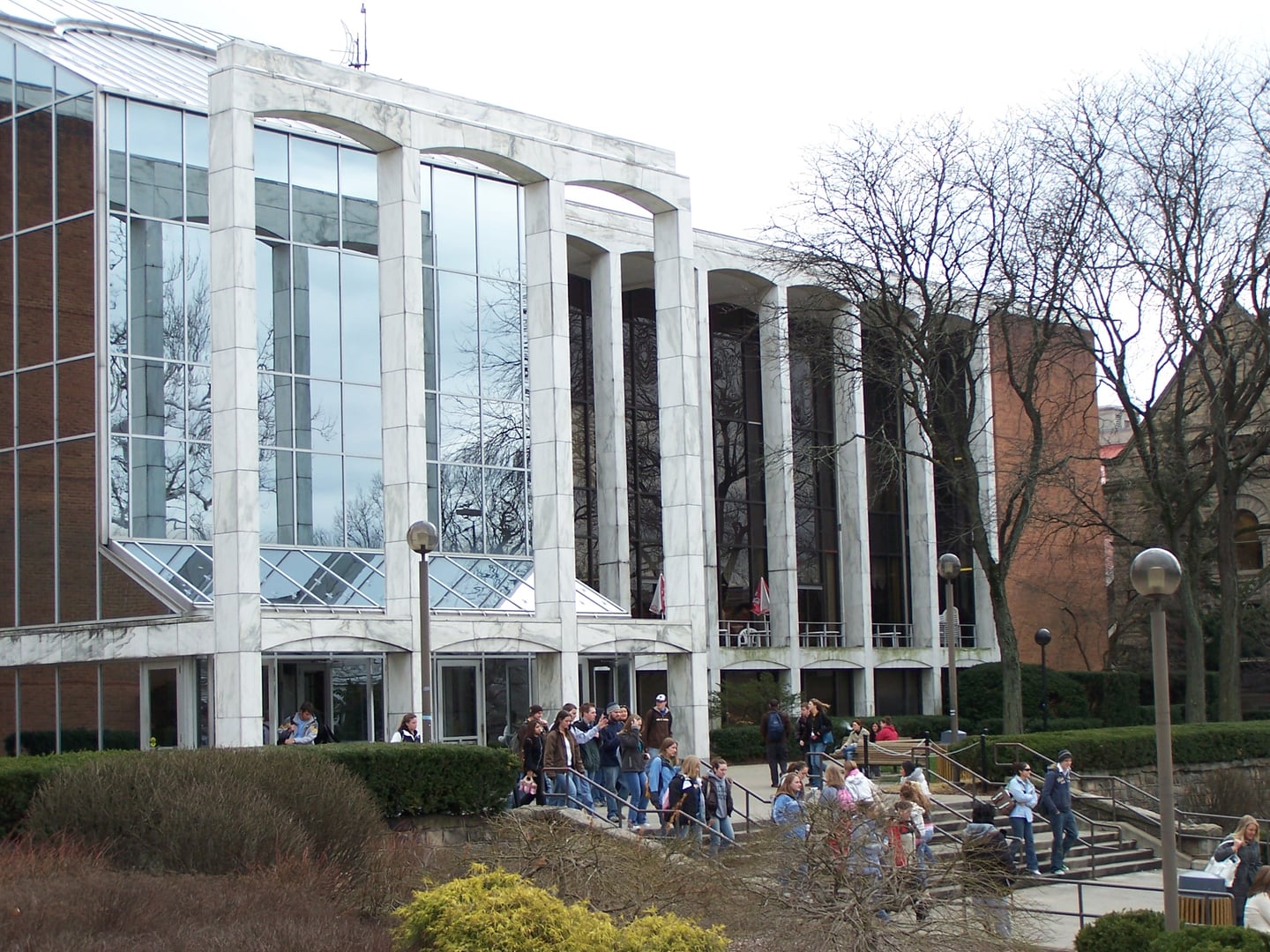
Elizabeth Moore Hall was constructed between 1926 and 1928 on the main campus of West Virginia University in Morgantown. The three-story red brick building with Georgian Revival detailing was designed as a combined women's physical education facility, dormitory, and campus center — a space that consolidated resources for female students at a time when university life for women was typically segregated from male student facilities.
The building is named for Elizabeth Moore, who arrived in Morgantown in 1852 when her husband, the Reverend John R. Moore, was appointed principal of the Monongalia Academy. Elizabeth and John Moore established the Woodburn Female Seminary in 1858, incorporated as an institution dedicated to educating local girls and women. Elizabeth Moore served as principal and teacher; her husband as superintendent. During its eight years of operation, the seminary educated hundreds of students before Moore sold it to the Monongalia Academy following her husband's death in 1864. The seminary's history and purpose form a direct line to the institution that became West Virginia University.
A 1962 addition expanded the building. Over its history it has served as a women's graduate student dormitory, the office of the Dean of Women, and the home of numerous campus organizations. The basement contains a swimming pool.
The building was documented by the Library of Congress and is listed in architectural reference collections as a notable example of Georgian Revival campus design.
Sources
- https://en.wikipedia.org/wiki/Elizabeth_Moore_Hall
- https://en.wikipedia.org/wiki/Elizabeth_Moore_(educator)
- https://www.thedaonline.com/podcasts/haunted_halls/haunted-halls-of-wvu-episode-1-e-moore-hall/article_5fe8872c-f357-11e9-a9a7-3fa1194daa8f.html
- https://wvhistoryonview.org/catalog/039409
ApparitionsObject movement
The ghost of Elizabeth Moore is one of West Virginia University's most consistently cited campus legends, and it comes with a detail that separates it from typical spectral folklore: a restriction on audience.
Accounts hold that Elizabeth Moore appears only to women. Men may see her, but only if a woman is present with them at the time. This constraint, unusual in paranormal accounts, has been repeated across multiple sources documenting campus lore.
The pool in the basement of Elizabeth Moore Hall is the location most associated with a specific account. Two students swimming in the facility reported observing Moore's figure floating above the water's surface beside them. The account has circulated in WVU student culture and was documented in the student newspaper's podcast series on campus haunted history.
The second recurring element is the portrait. A photograph of Elizabeth Moore hangs in the entryway of the building on the left wall. According to multiple accounts, when the picture is removed from that location — relocated to another room, replaced with a different image, or repositioned within the entryway — it returns to its original hanging position. The accounts do not describe the movement happening in view of witnesses; the portrait is simply found back where it was.
Moore's figure has also been reported walking the hallways and staircases of the building before slowly fading. The accounts carry a specific quality: she appears purposeful rather than distressed — consistent with the documented character of a woman described in historical records as brave, educationally committed, and administratively forceful.
Notable Entities
Elizabeth Moore