Est. 1843 · Black Angel of Oakland Cemetery (Mario Korbel, 1912) · Bohemian-American Immigrant History · Iowa City Pioneer Burial Ground
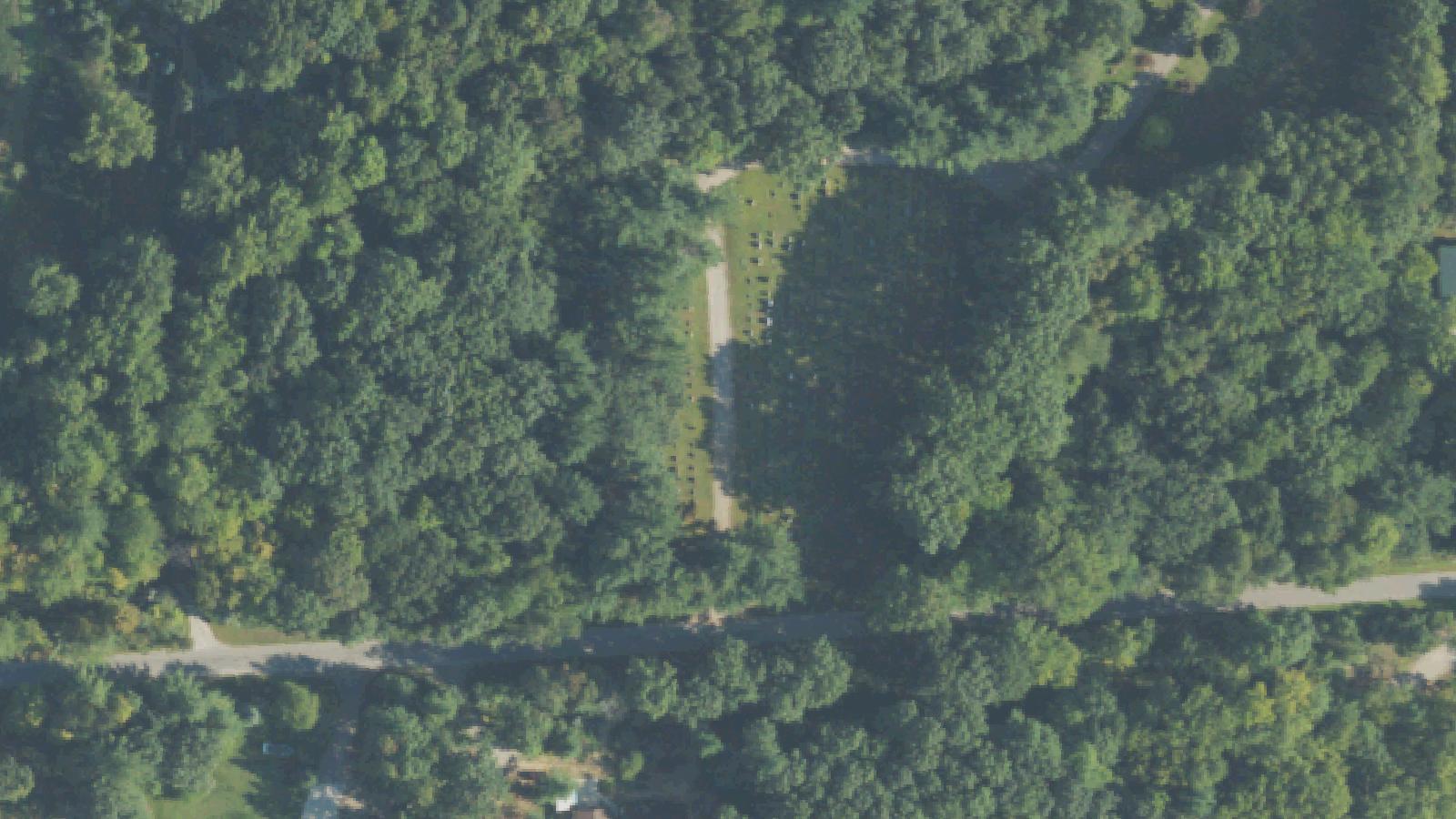
Oakland Cemetery was established as Iowa City's municipal burying ground in 1843, six years after Iowa City became the territorial capital. The cemetery occupies a tract north of downtown along Brown Street and remains operated by the City of Iowa City Parks and Recreation Department.
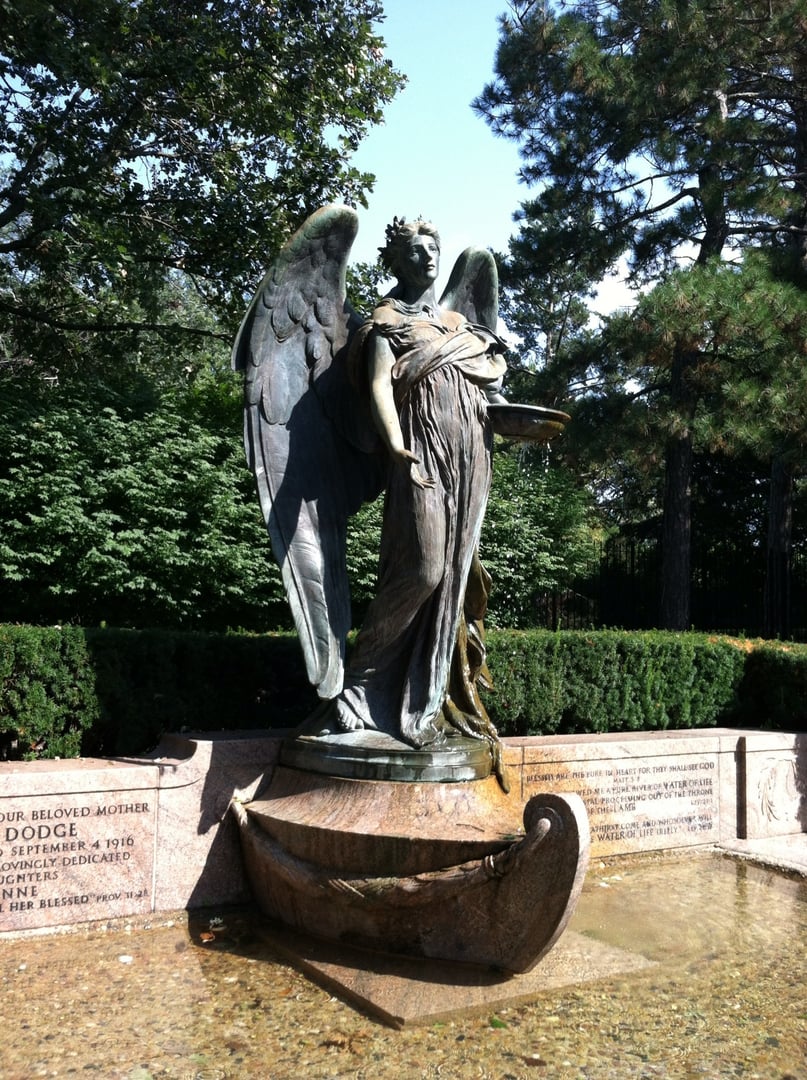
The cemetery's most-discussed monument is the Black Angel. The piece was commissioned by Teresa Karasek Dolezal Feldevert (1836-1924), a Bohemian-born midwife who emigrated to Iowa City around 1880. Teresa had buried her son Eddie Dolezal in Oakland in 1891 after the seventeen-year-old died of spinal meningitis, marking his grave with a carved tree-stump monument. Following the death of her second husband Nicholas Feldevert in 1911, Teresa engaged Czech-American sculptor Mario Korbel in Chicago to design a memorial honoring her son, her husband, and herself.
Korbel produced an 8.5-foot bronze angel with extended wings. Teresa was reportedly dissatisfied because Korbel did not incorporate Eddie's existing tree-stump marker as she had requested, and the disagreement led to litigation; she ultimately paid the $5,000 commission. The monument was installed in 1912. Teresa died of cancer in 1924; her ashes were interred beneath the statue.
The sculpture was originally a polished golden bronze and oxidized to its present black patina over the following decades. The Black Angel is one of the most-visited cemetery monuments in the upper Midwest and was added to the National Register of Historic Places listing for Oakland Cemetery's older sections.
Sources
- https://en.wikipedia.org/wiki/Oakland_Cemetery_(Iowa_City,_Iowa)
- https://www.iowa-city.org/weblink/0/doc/1481292/Electronic.aspx
- https://ouriowaheritage.com/black-angel/
- https://www.kcur.org/talk-show/2016-10-20/how-a-black-angel-statue-in-iowa-went-from-heartfelt-memorial-to-spooky-legend
- https://uilifeafter.wordpress.com/2014/11/24/the-truth-behind-the-black-angel/
- https://adventuresincemeteryhopping.com/2024/03/29/iowa-city/
Cold spotsApparitions
Almost every undergraduate generation at the University of Iowa has handed down some version of the Black Angel legends. The core claims circulate around the statue's color change and the supposed moral status of those who interact with it.
The most common story holds that touching or kissing the statue brings death within a short time, with exceptions sometimes carved out for virgins or for those who approach on Halloween. A parallel claim holds that a pregnant woman who walks beneath the angel's outstretched wings will miscarry. A third holds that the statue darkened from polished bronze to black as a response to a sin in Teresa Feldevert's life. Variations of that final claim, often anti-immigrant or misogynist in tone, have been documented and analyzed by University of Iowa folklorists.
The darkening itself has a documented metallurgical explanation. Bronze oxidizes to black-green patina with exposure to weather; the comparable speed of oxidation on the Black Angel is consistent with similar bronze sculptures in other midwestern cemeteries. The contradiction between the documented chemistry and the persistent folklore is part of what makes the Black Angel a case study in how cemetery monuments generate myth.
The Black Angel has been featured in University of Iowa student newspapers, regional ghost-tour guides, and the KCUR public-radio program Up to Date. No incidents matching the lore have been verified.
Notable Entities
The Black Angel