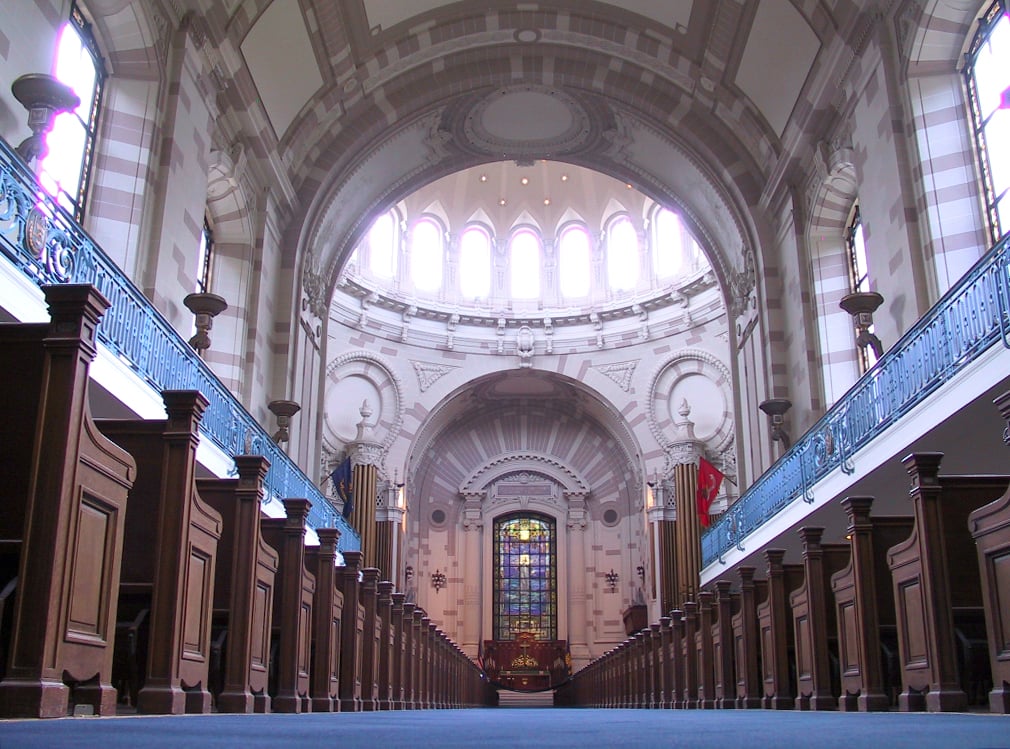
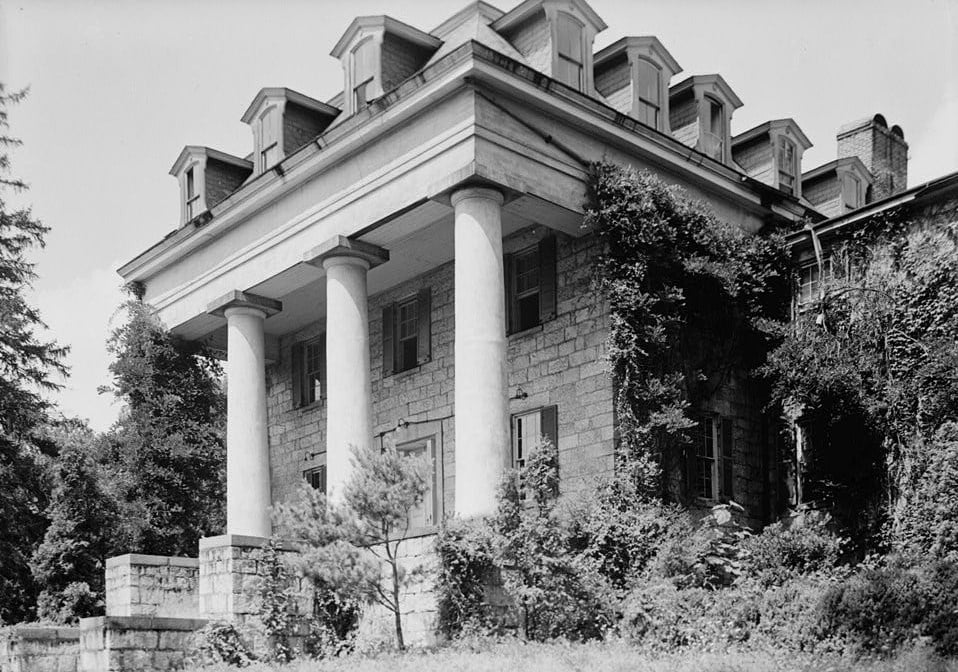
Est. 1779 · Oldest U.S. state capitol in continuous legislative use · Site of Washington's resignation of commission, December 23, 1783 · Site of Treaty of Paris ratification, January 14, 1784 · Largest all-wooden dome in North America · National Historic Landmark (1960)
Construction of the present Maryland State House began in 1772 on the highest point of Annapolis, replacing two earlier capitol buildings on the same site dating to 1697 and 1707. The present building was completed in 1779. The building was designed by Joseph Horatio Anderson, with the wooden dome added later by Annapolis architect Joseph Clark and completed between 1788 and 1797. The State House is the oldest state capitol in continuous legislative use in the United States and was designated a National Historic Landmark in 1960.
The building served as the meeting place of the Continental Congress from November 26, 1783 to August 13, 1784, making Annapolis the de facto national capital during that period. On December 23, 1783, General George Washington formally resigned his commission as Commander in Chief of the Continental Army in the Old Senate Chamber, an event commemorated by a Charles Willson Peale painting that still hangs in the State House. The Treaty of Paris, formally ending the Revolutionary War, was ratified by Congress in this room on January 14, 1784.
The wooden dome, designed by Joseph Clark and built between 1788 and 1797, rises approximately 181 feet above the building's foundation. It is constructed entirely of cypress beams held together with wooden pegs and iron straps — no nails were used in the dome's primary structural assembly. At 113 feet tall internally and 50 feet in diameter, it is the largest all-wooden dome in North America. Maryland State Archives records identify Thomas Dance as the plasterer who fell from interior scaffolding on February 23, 1793, while finishing the dome's plasterwork, sustaining injuries from which he died.
The State House remains the working seat of Maryland's legislative branch. The Senate of Maryland and Maryland House of Delegates meet in modern chambers on the building's south wing, while the historic Old Senate Chamber and Old House of Delegates Chamber are preserved as museum spaces open to the public. The Maryland State Archives and the Maryland Office of Tourism jointly manage visitor programs at the site.
Sources
- https://msa.maryland.gov/megafile/msa/speccol/sc5200/sc5287/000001/000000/000012/unrestricted/dome4000.html
- https://msa.maryland.gov/megafile/msa/stagsere/se1/se14/000027/html/hesitant_revolut/msa/stagser/s1259/121/5847/html/story.html
- https://en.wikipedia.org/wiki/Maryland_State_House
- https://www.baltimoresun.com/2023/09/21/ghost-stories-meet-the-legendary-residents-of-these-annapolis-haunts/
- https://chesapeakeghosts.com/the-haunted-dome-of-the-maryland-state-house/
- https://myannapolisoffice.com/spooky-stories-haunt-annapolis/
Phantom footstepsDisembodied voicesCold spotsApparitions on dome balustrade
The Maryland Historical Trust and the Maryland State Archives both record that Thomas Dance, a plasterer working under contract on the dome's interior, fell from scaffolding inside the rotunda on February 23, 1793. He died from his injuries shortly after. Multiple secondary accounts, including coverage by the Baltimore Sun and the Chesapeake Ghosts tour, state that Dance's employer refused to pay his widow the wages he had earned at the time of his fall, allegedly saying that 'dead men don't get paid,' and that his widow and children were left destitute.
From this historically documented industrial death, a body of ghost lore has grown around the State House dome. According to Chesapeake Ghosts, the Annapolis Ghosts tour company, and the Baltimore Sun's 2023 ghost-stories feature, guards and night-shift staff have reported phantom footsteps circling the rotunda after hours, cold rushes of air in sealed legislative offices, and disembodied voices in unoccupied corridors. The most consistent visual report is of a figure walking the balustrade inside the dome — a feature accessible only via an interior catwalk that is closed to the public.
The Maryland Historical Trust's October 2024 'Spooky Sketches' blog post lists the State House among Maryland's haunted historic buildings, repeating the Thomas Dance attribution. The Annapolis Ghost Tours and US Ghost Adventures itineraries both include the State House as a routine exterior stop on their evening walks; the building's working-government status means access after hours is restricted to authorized staff.
Notable Entities
Thomas Dance (plasterer, d. 1793)
Media Appearances
- Baltimore Sun: Ghost stories: Meet the legendary residents of these Annapolis haunts (2023)
- Maryland Historical Trust blog: Spooky Sketches (2024)