Drive-By
Exterior View
View the 1847-founded hospital's historic Uptown Pittsburgh campus from the street. The building is an active medical facility; interior access is limited to patients and staff.
- Duration:
- 15 min
HauntBound archive · catalog record
Reported phenomena — as catalogued
Pittsburgh's First Hospital and Its Enduring Nun
1400 Locust St, Pittsburgh, PA 15219
Research updated May 2026
Age
All Ages
Cost
Free
Active hospital — public access is limited to patient care areas and lobbies only. No admission fee.
Access
Wheelchair OK
Paved
Equipment
No Photos
Est. 1847 · Sisters of Mercy · First Pittsburgh Hospital · Historic Medical Institution
On January 1, 1847, seven members of the Sisters of Mercy opened a hospital in the Uptown neighborhood of Pittsburgh, establishing what would become two simultaneous firsts: the first hospital in Pittsburgh, and the first Mercy Hospital in the world. The congregation had arrived in Pittsburgh from Ireland in 1843, and their commitment to care for the sick and poor quickly outpaced their initial resources.
The following year, 1848, Mercy established the region's first teaching hospital with resident physicians in training — a structural innovation that shaped medical education in western Pennsylvania for generations. Through the late 19th and early 20th centuries, the hospital grew in both capacity and specialization, eventually occupying a substantial institutional campus in Uptown.
In the 1960s, Mercy made the consequential decision to rebuild and remain in Uptown Pittsburgh rather than relocate to the suburbs. Over the following four decades, the hospital expanded, replaced aging facilities, and developed specialized programs. The obstetrics department, which had operated on the sixth floor of the older building, was relocated and eventually closed in the late 1960s.
Mercy Hospital of Pittsburgh merged with UPMC on January 1, 2008, becoming UPMC Mercy. The hospital continues to operate as a Level I trauma center in Pittsburgh.
Sources
The sixth floor accounts share a particular quality that distinguishes them from most institutional ghost lore: the figure acts as a caregiver. Patients on overnight shifts have told staff that a nun visited their room and brought them a blanket or a water pitcher. The patients describe the interaction as warm and unremarkable — a routine act of care. What becomes remarkable is the response from staff, who know that no nuns currently serve in a patient-care capacity at the hospital.
The woman in the reports is believed to be Sister Mary Loretta. Her name circulates among longtime staff, though the specifics of her biography — when she served, how she died, whether her death occurred at the hospital itself — are not documented in accessible sources. What the accounts agree on is her character: attentive, gentle, oriented toward the practical comfort of patients rather than dramatic manifestation.
The sixth floor was home to the obstetrics department until the late 1960s, when it closed. The temporal layering is characteristic of this type of account — an attachment to a specific space and function that persisted after the institutional role itself ended. Whether this represents genuine residual activity or the accumulated weight of a story repeated among generations of staff is, as with most such accounts, genuinely unclear.
Notable Entities
View the 1847-founded hospital's historic Uptown Pittsburgh campus from the street. The building is an active medical facility; interior access is limited to patients and staff.
Some links on this page may earn HauntBound a small commission when you book, at no extra cost to you. Our editorial picks are independent. Full disclosure
Every HauntBound history is researched from documented sources. We clearly separate verified historical fact from paranormal folklore.
Free Guide
11 verified stops, rated for families, mapped in order. Free.
One email to confirm, then the guide link. Unsubscribe anytime.
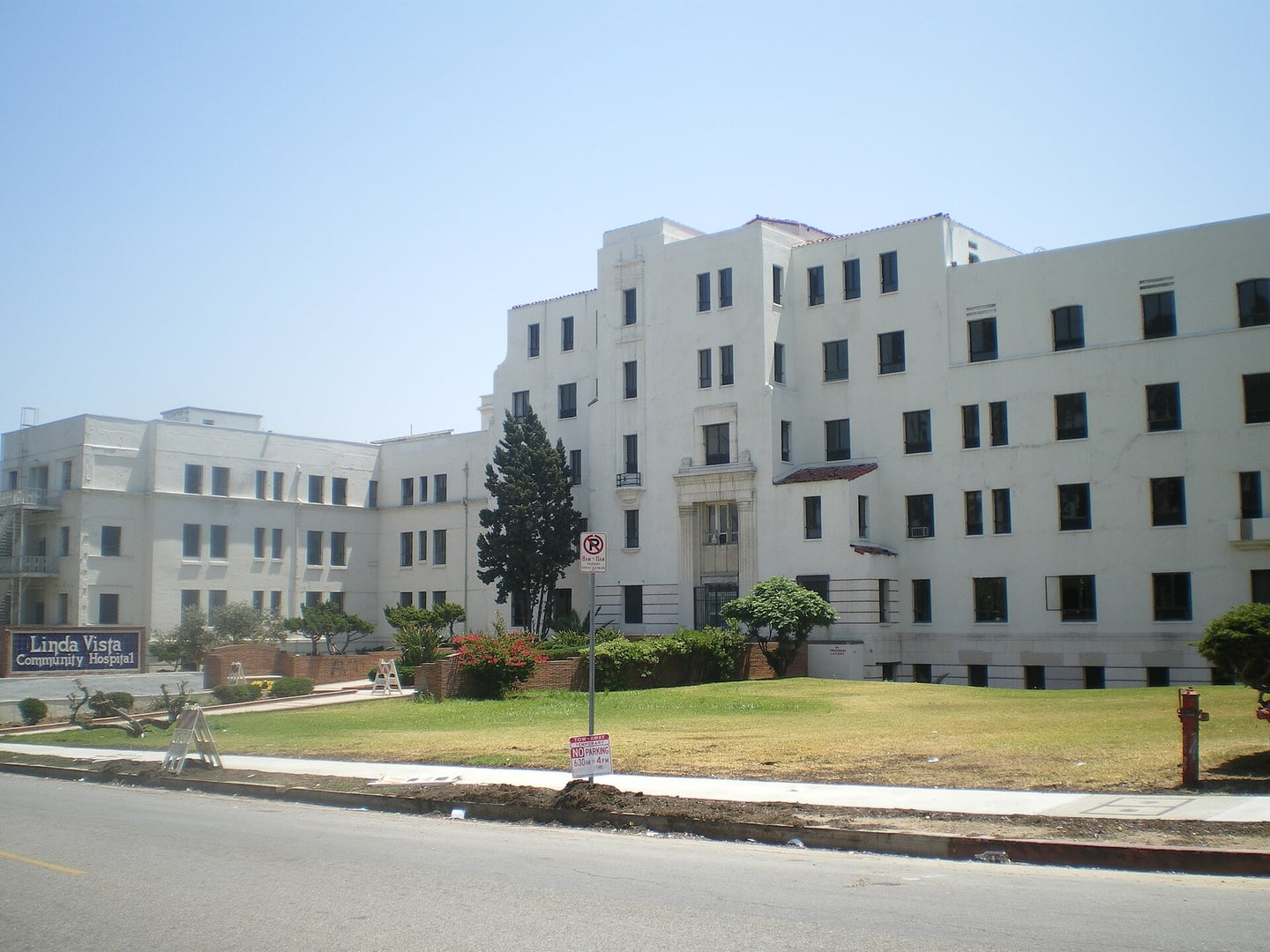
Los Angeles, CA
The Linda Vista Community Hospital opened in 1904 in Boyle Heights, Los Angeles, originally as the Santa Fe Coast Lines Hospital serving railroad employees. The Mission Revival building operated as a community hospital through the late twentieth century, sat vacant from 1991 to 2011 while serving as a frequent horror-film location, and was converted to senior affordable housing in 2012.
Jersey City, NJ
Built in 1931 as part of Mayor Frank Hague's Jersey City Medical Center complex and named for his mother, Margaret Hague Maternity Hospital was one of the largest maternity facilities in the country. At its 1923 operational peak the infant mortality rate approached one in five live births. After the maternity ward closed in 1979 and the hospital went bankrupt in 1988, the Art Deco building was converted to The Beacon luxury apartments.
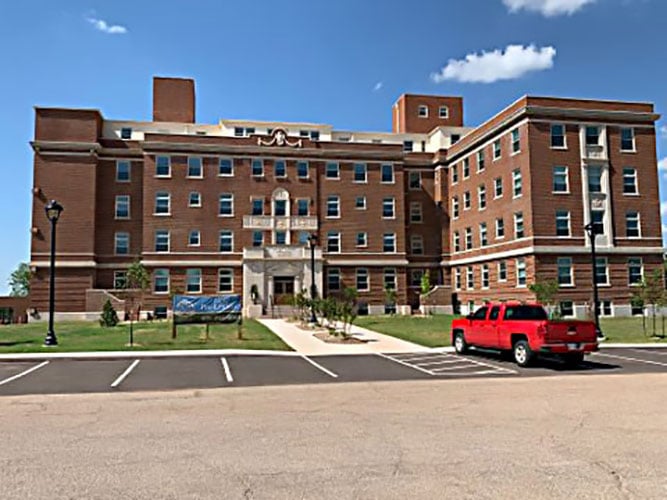
Guthrie, OK
The building at 2000 W Warner Avenue in Guthrie began as a Methodist Episcopal hospital project in 1925, halted by the Great Depression. A Guthrie nonprofit completed it in 1932 as Cimarron Valley Wesley Hospital; the Benedictine Sisters bought it in 1946 and finished construction. It became Alverno Heights Hospital under the Sisters of St. Francis in 1964, was renamed Logan County Memorial Hospital in 1974, deeded to Logan County in 1977, and replaced by a new facility in 1978. The five-story building then stood abandoned for roughly four decades before being redeveloped around 2020 into the Villas of Benedictine Pointe, an affordable senior-living community.