Est. 1858 · Women's History · Public Library History · Italianate Architecture · Civic Philanthropy
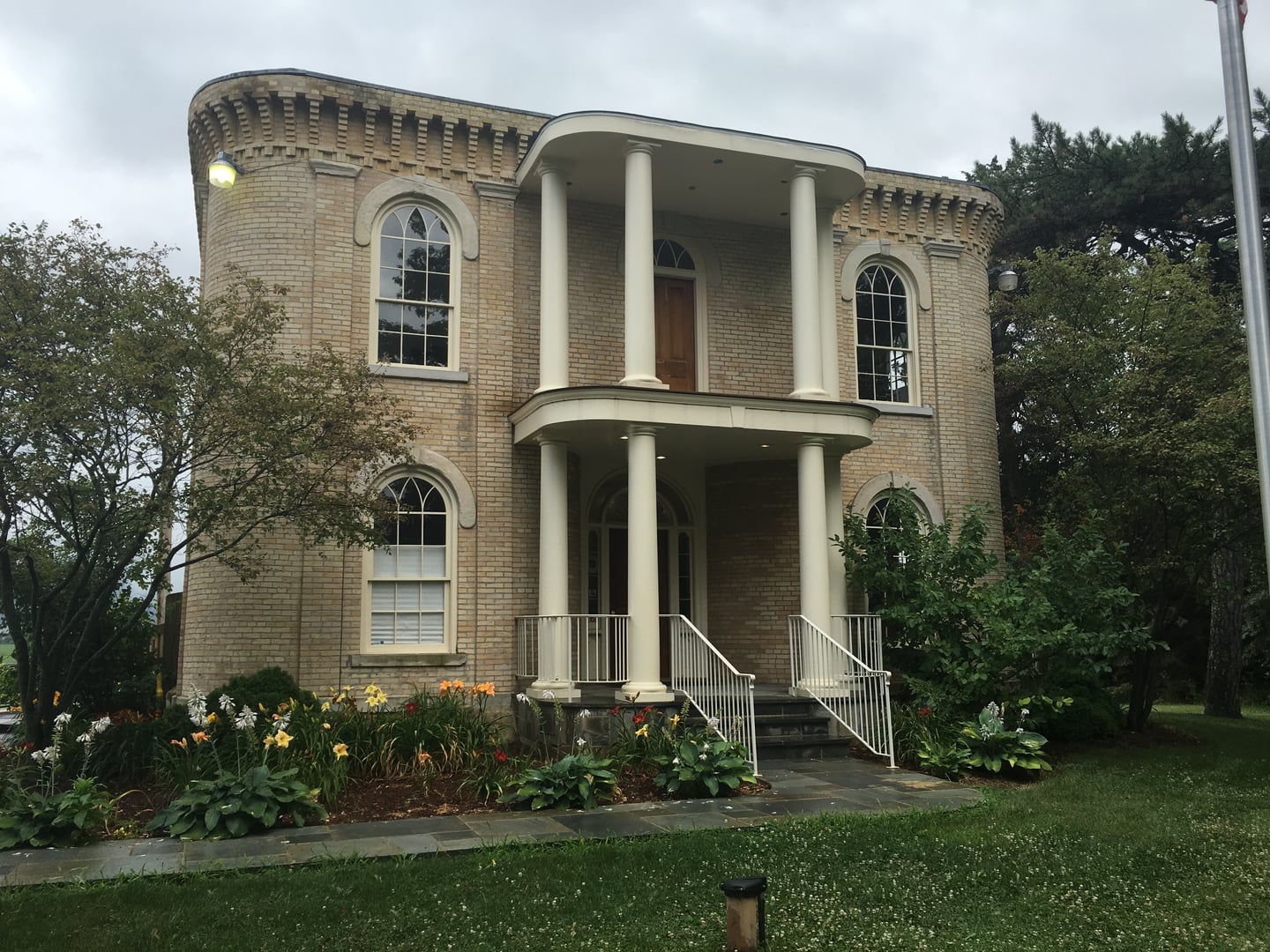
Edwin Mills constructed the two-story Italianate brick residence at 130 N. Huron Street in 1858. The Starkweather family later occupied the home, and Mary Ann Starkweather became determined that it would outlast her as a civic asset.
The Ladies Library Association of Ypsilanti was incorporated in November 1869. Starkweather donated the property to the Association in 1890, and for the next 74 years it functioned as the Ypsilanti Ladies' Library — one of the few libraries in the region operated and maintained by women. The library was made free to Ypsilanti citizens in 1899 by an act of Common Council, with the city assuming operating expenses of $250 per year.
By 1963, the library had relocated to a 1915 Beaux-Arts building at 229 West Michigan Avenue that had previously housed the city post office. The original Starkweather building closed as a library in 1964 and was subsequently converted into office space — the fate Starkweather had specifically not intended for it.
The building sits adjacent to Eastern Michigan University and is part of the historic fabric of Ypsilanti's Huron Street corridor. It is listed in local historic preservation surveys for its architectural character.
Sources
- https://99wfmk.com/haunted-ladies-library/
- https://www.waymarking.com/waymarks/WM3DGE
- https://www.wemu.org/wemu-news/2018-03-13/womens-history-month-establishing-libraries-in-ypsilanti-and-washtenaw-county
ApparitionsPhantom footstepsTouching/pushing
The phenomena at the old Starkweather Home follow a consistent spatial pattern. Reports cluster on the upper floor — the same hallway where Starkweather herself would have walked — and in the basement.
Office workers staying late have heard footsteps moving across the floor above them when no one else is in the building. The sound is described as deliberate and unhurried. A janitor working in the basement reported being touched by something he could not see.
Several employees have reported seeing a woman in period dress moving through the upstairs hallway. The figure appears and then is no longer there. Staff who have researched the building's history recognize the description as consistent with surviving portraits of Mary Ann Starkweather.
The local interpretation of the activity centers on Starkweather's thwarted legacy. She donated her home explicitly to be used as a library. When that purpose ended and the building became office space, the hauntings are said to have begun. Whether the activity is residual — the imprint of decades of daily routine — or something more responsive is a question that remains open.
Notable Entities
Mary Ann Starkweather