Est. 1800 · War of 1812 · Star-Spangled Banner · Civil War Prison · World War I Hospital · National Monument
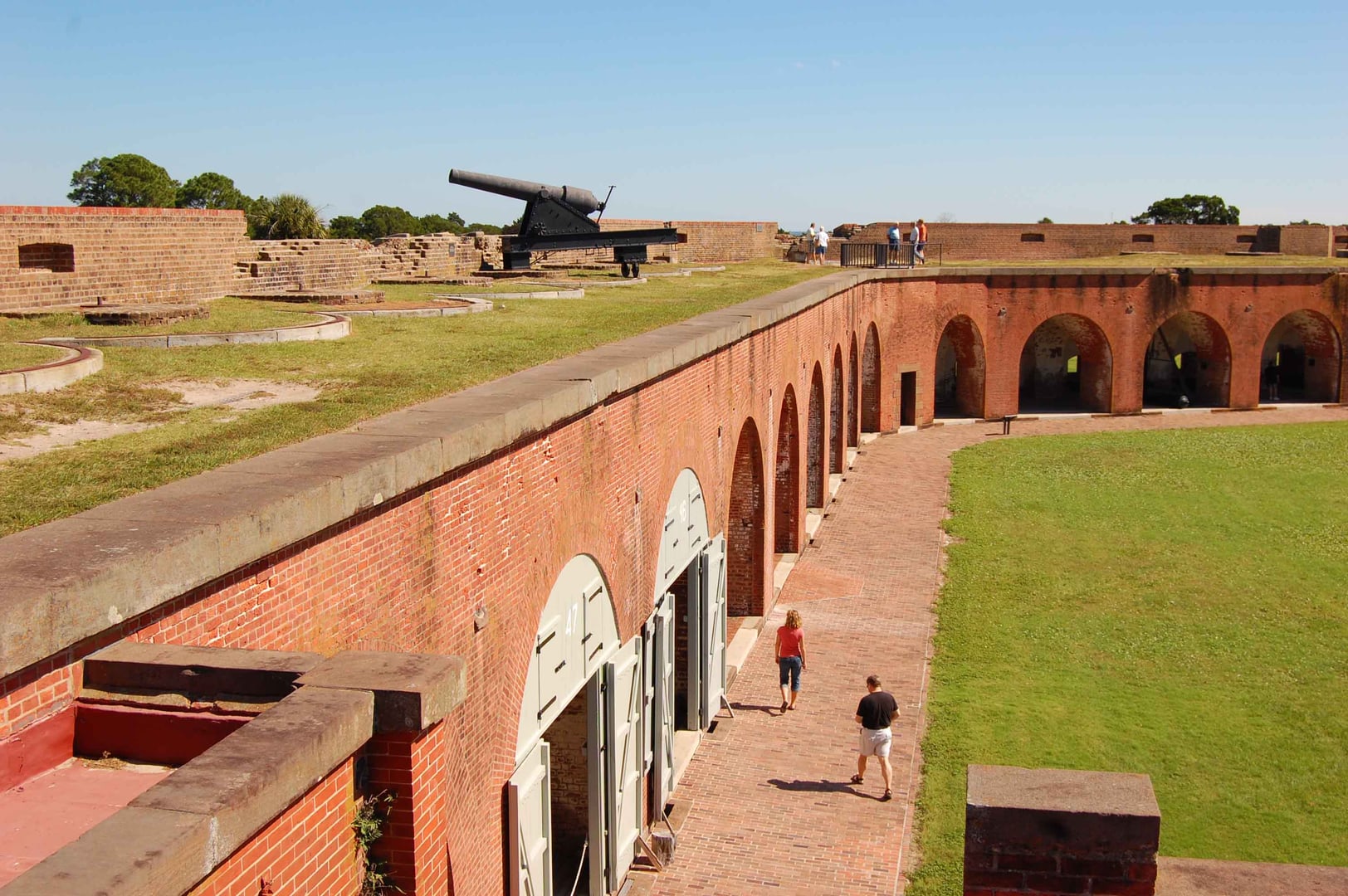
Fort McHenry was completed in 1800 on the Whetstone Point peninsula, replacing the Revolutionary-era Fort Whetstone. Its irregular, five-pointed plan reflected the Vauban-style fortification methods of late-18th-century French and American military engineers, designed to deflect bombardment along multiple angles of fire.
The fort's enduring significance dates to the night of September 13-14, 1814, when British warships attempted to reduce the fort and seize Baltimore. After roughly 25 hours of shelling, the garrison's outsized 30-by-42-foot American flag was visible at dawn over the ramparts. Francis Scott Key, watching from a vessel in the harbor, wrote the verses that became "The Star-Spangled Banner."
During the Civil War, Fort McHenry held Confederate sympathizers and political prisoners from Maryland, including former Baltimore mayor George William Brown. In 1917 the U.S. Army erected one of the largest military hospitals in the country on the surrounding grounds, treating tens of thousands of wounded soldiers from the Western Front. The 1918 influenza pandemic caused additional deaths at the hospital. The hospital buildings were later removed, and Fort McHenry was designated a National Monument and Historic Shrine in 1939, the only NPS site to hold that dual designation.
The fort is administered today by the National Park Service. Reenactments, ranger-led programs, and the Fort, Flag and Fire ceremony continue throughout the summer season.
Sources
- https://www.nps.gov/fomc/planyourvisit/index.htm
- https://www.nps.gov/fomc/planyourvisit/basicinfo.htm
- https://tourbaltimoreghosts.com/haunted-history-of-fort-mchenry/
- http://www.southernspiritguide.org/the-heavn-rescued-land-fort-mchenry-baltimore-maryland/
- https://baltimorefishbowl.com/stories/top-7-haunted-places-the-mid-atlantic-day-tripper-has-visited/
- http://aparkrangerslife.blogspot.com/2010/10/ghost-stories-of-fort-mchenry.html
- http://americashauntedroadtrip.com/fort-mchenry/
- https://www.hauntingsaroundamerica.com/post/fort-mchenry
- https://www.baltimoresun.com/news/bs-xpm-2004-10-30-0410300183-story.html
- http://aparkrangerslife.blogspot.com/2010/08/ghost-haunting-fort-mchenry-national.html
ApparitionsPhantom footstepsPhantom voicesCold spotsLights flickeringTouching/pushing
Fort McHenry's paranormal reputation rests on three layers of historical death: combat fatalities from the 1814 bombardment, prisoner deaths during its Civil War service, and influenza fatalities at the World War I hospital that briefly covered the surrounding ground.
The most-repeated account describes a white-clad woman in the officers' quarters area. Local lore identifies her with the wife of a noncommissioned officer assigned to the fort whose children died during an epidemic believed to date to the 1920s; she is reported to have pushed visitors on the staircases. Other recurring reports include footsteps in empty corridors, lights inside the powder magazines that turn off and on without explanation, and the sound of cries attributed by tellers to the Civil War prison era.
The National Park Service does not promote ghost tours of the fort, and rangers' reported experiences appear in third-party Baltimore-area ghost-tour material rather than in NPS publications. Investigators wishing to record overnight evidence at Fort McHenry must apply for a Special Use Permit through park administration. The reports remain folkloric rather than documented in primary historical sources.
Notable Entities
The Lady in White