Est. 1902 · Bretton Woods Conference 1944 · New England Grand Resort Architecture · National Historic Landmark
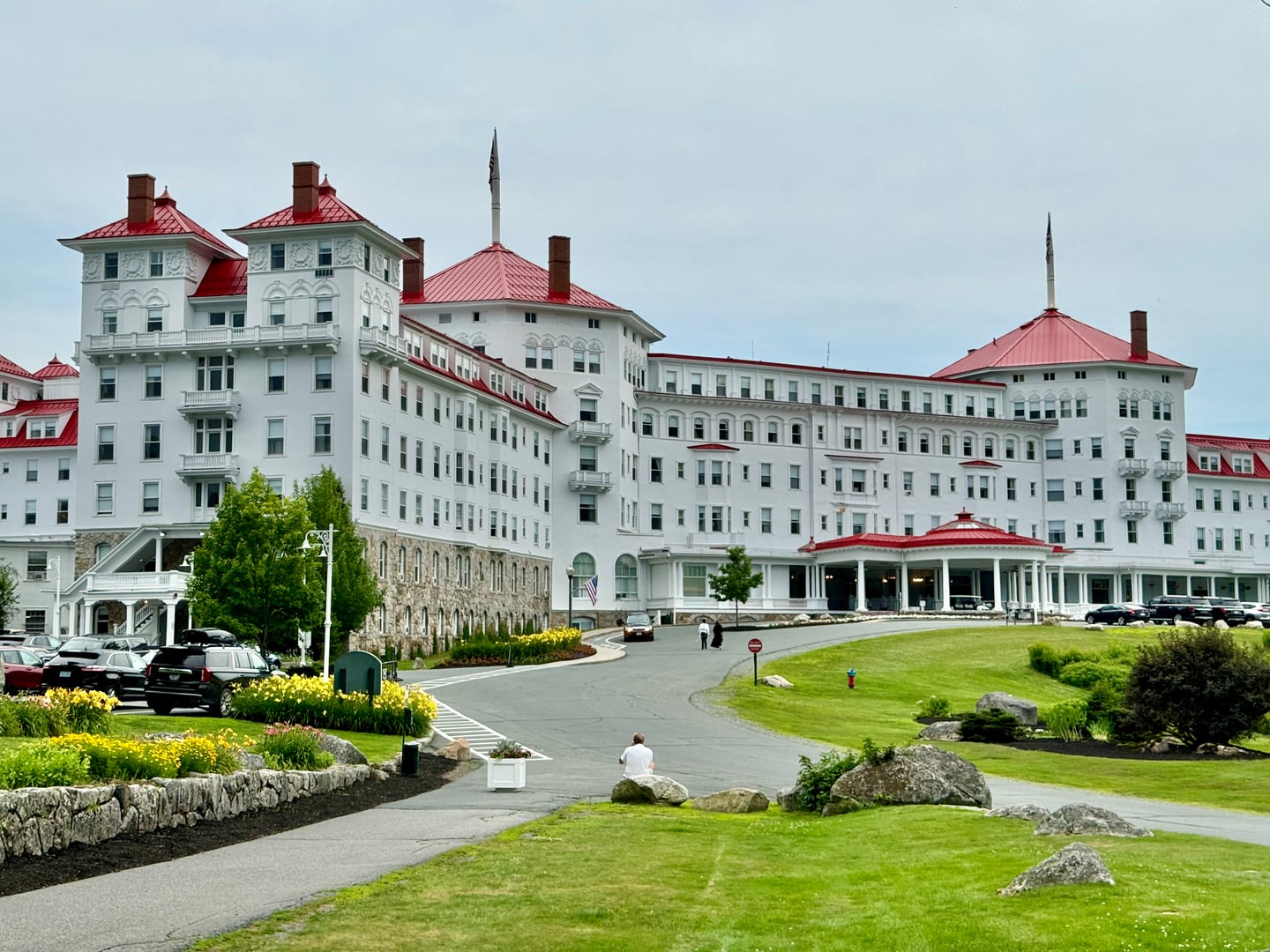
Joseph Stickney made his fortune in railroads and coal, and when he decided to build a grand resort in the White Mountains of New Hampshire, he did not approach the project modestly. He selected a site in Bretton Woods with a commanding view of Mount Washington and hired an architect to design a Spanish Renaissance building on a scale suited to the Gilded Age's appetite for theatrical grandeur. The hotel opened in 1902 and immediately established itself as one of the premier destinations in the American Northeast.
Stickney's attention to his wife Caroline Foster was architectural as well as personal. The resort was designed with specific amenities for her: an indoor swimming pool — exceptional for 1902 — and a private dining room that still bears her name as the Princess Room. The building rose to 269 rooms across a 310 Mount Washington Hotel Road footprint that made it the largest wooden structure in New England.
Stickney died on December 22, 1903, the year after the hotel opened. Caroline inherited the property and continued to inhabit it, eventually marrying French nobleman Jean Baptiste Marie de Faucigny Lucinge, a union that gave her the informal honorific she carries in local memory and on the hotel's current marketing materials: The Princess.
The hotel's historical significance extends well beyond its social history. In July 1944, Bretton Woods was the site of the United Nations Monetary and Financial Conference — 44 nations meeting to establish the post-war international monetary system. The conference created the International Monetary Fund and the World Bank and established the gold-exchange standard that governed global currencies until 1971. The room where these agreements were reached still stands in the hotel.
The Omni hotel group operates the property today. It remains a full-service luxury resort with ski access to Bretton Woods Mountain Resort, extensive dining, and year-round programming.
Sources
- https://www.historichotels.org/us/hotels-resorts/omni-mount-washington/ghost-stories.php
- https://twosistersabroad.com/mount-washington-haunted-hotels/
- https://redoakproperties.com/blog/stay-haunted-hotel-room-nh/
- https://en.wikipedia.org/wiki/Joseph_Stickney
ApparitionsPhantom soundsObject movementEVP
The resort staff call her The Princess, and they have been doing so for decades. Caroline Foster Stickney, later the Princess de Lucinge, is the most prominently reported apparition at the Omni Mount Washington, and the accounts attached to her sightings have a specific consistency that distinguishes them from generic haunting claims.
Room 314 is the center of the story. The room was Caroline's private suite, and it retains her original bed — a detail the hotel actively promotes and that gives the accounts a material anchor. Witnesses who have stayed in Room 314 describe an elegant woman in Victorian-era clothing sitting on the edge of the bed at night. The figure's behavior, as described by multiple independent accounts, is distinctive: she sits and brushes her hair, appears to be aware of being observed, and then simply disappears. No dramatic confrontation, no cold spots preceding the encounter — just the presence, then its absence.
The Historic Hotels of America website, which features the resort in its collection, documents several recurring phenomena beyond Room 314: the sound of light tapping on guest room doors with no one outside, personal objects disappearing and reappearing in their original locations, and sightings of a woman in Victorian clothing in various hotel corridors.
Ghost Hunters investigated the property and recorded what investigators interpreted as an electronic voice phenomenon in Room 314. The segment was produced and broadcast as part of the show's run.
Hotel staff describe the presence as benign — curious rather than threatening, an entity that behaves as though the hotel is still hers to supervise. The characterization has been consistent across multiple staffing generations, suggesting the legend has developed organically rather than being manufactured for marketing purposes.
Notable Entities
The Princess (Caroline Foster Stickney)