Overnight Stay Booking Required
Overnight Stay
Stay in a Victorian-era suite; Rooms 15, 17, and 19 are specifically named in local lore for reported encounters.
- Duration:
- 12 hr
HauntBound archive · catalog record
Reported phenomena, as catalogued
An 1890 boutique hotel in the Bishop Block of downtown Port Townsend, built by retired British sailor and Chimacum Valley homesteader W.H. Bishop, with lore of a pipe-smoking man in gray.
714 Washington St, Port Townsend, WA 98368
Research updated September 2026
Age
All Ages
Cost
$$
Boutique hotel rates; suites with kitchenettes available.
Access
Limited Access
Three-story 1890 commercial block with stairs to upper floors.
Equipment
Photos OK
Est. 1890 · Contributing property to the Port Townsend Historic District (NHL 1977) · Built by William H. Bishop, former British sailor and Chimacum Valley pioneer · Converted by the U.S. Navy in 1940 as WWII civilian-workforce rooming house · Opened as a hotel for the first time in 1980
The Bishop Block at 714 Washington Street was completed around 1890 (some sources cite 1889 or 1891) by William H. Bishop, a former British Royal Navy sailor who, with companion William Eldridge, abandoned ship near Victoria during the Crimean War, paid a Native ferryman to take them across the Strait of Juan de Fuca, and walked to Port Townsend. Bishop homesteaded in the Chimacum Valley for decades before retiring to Port Townsend in 1889 and becoming a leading builder of commercial blocks during the city's Victorian boom.
The building, designed in collaboration with architect Charles Packard, was a three-story commercial structure intended for upper-floor offices over street-level retail. The 1893 financial panic cut short demand for offices, and the building was sold to the Owl Cigar Company, which used the upper floors for tobacco storage and distribution.
In 1940 the U.S. Navy acquired the building and converted it into a WWII civilian-workforce rooming house. In 1980 the Bishop Block opened for the first time as a hotel under John and Karen Pickett, and in the 1990s the property was restored by Cindy and Joe Finnie to reflect its Victorian origins.
The Bishop Hotel is a contributing property to the Port Townsend Historic District, a National Historic Landmark since 1977.
Sources
According to the Peninsula Daily News and the Port Townsend Leader, the most consistent reported presence at the Bishop Hotel is a man in a gray suit and hat who appears in a corner of the main room, lingers long enough to be noticed, and then vanishes. The Leader's overnight first-person feature, 'In search of spirits,' documents staff and guest reports including the unexplained smell of pipe tobacco despite a strict no-smoking policy.
Rooms 15, 17, and 19 are specifically named in haunted-place coverage including GhostQuest as locations where guests have reported an 'unnerving spirit' or unexplained sensations. The identity of the gray-suited figure is not definitively attributed in the available sources; the building's century of mixed uses — office tower, cigar warehouse, Navy rooming house, and hotel — provides multiple possible historical figures behind the reports.
These accounts are characteristic of low-level long-running boutique-hotel paranormal lore: not dramatic, not commercialized to a haunted-attraction degree, but persistent enough to surface in regional reporting across multiple decades.
Notable Entities
Stay in a Victorian-era suite; Rooms 15, 17, and 19 are specifically named in local lore for reported encounters.
Some links on this page may earn HauntBound a small commission when you book, at no extra cost to you. Our editorial picks are independent. Full disclosure
See current room rates and availability at The Bishop Hotel.
Check rates and bookRates come from booking partners, so a small property may not be listed. Book direct with The Bishop Hotel
Every HauntBound history is researched from documented sources. We clearly separate verified historical fact from paranormal folklore.
Free Guide
10 verified stops, rated for families, mapped in order. Free.
One email to confirm, then the guide link. Unsubscribe anytime.
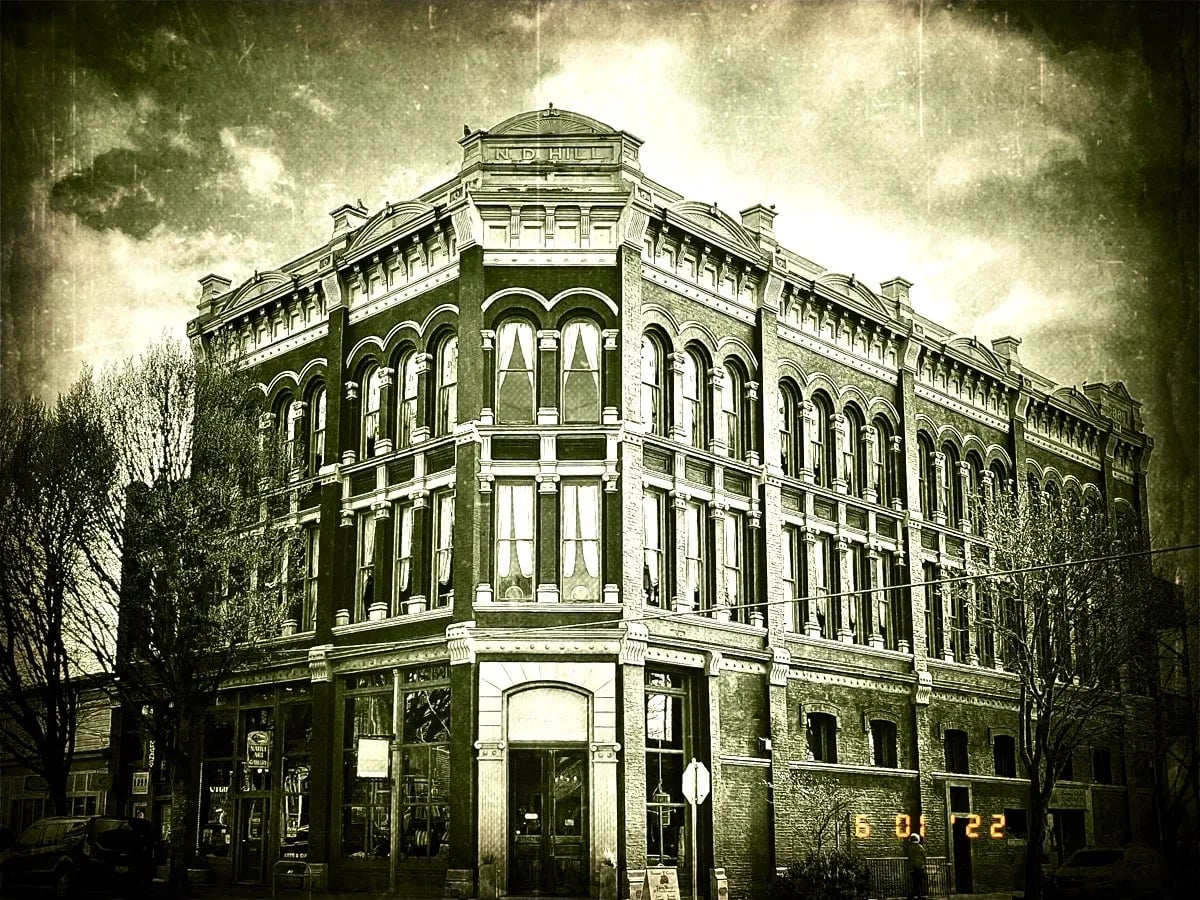
Port Townsend, WA
The hotel occupies the second and third floors of the 1889 N.D. Hill Building at 635 Water Street. Long operated as The Waterstreet Hotel, it has been rebranded as The Monarch Hotel under new ownership that has renovated rooms while keeping the building's historic Victorian character.
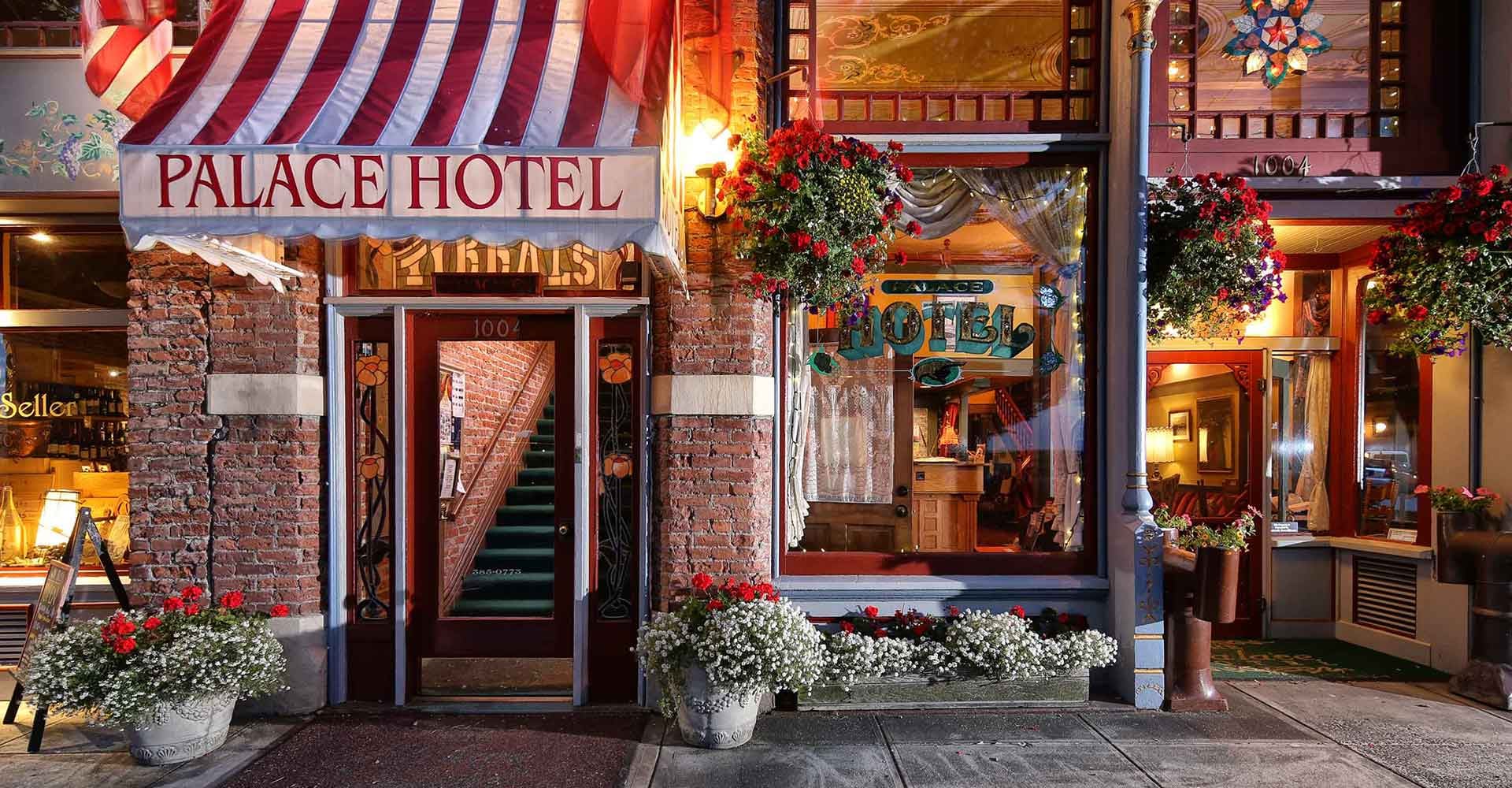
Port Townsend, WA
Built in 1889 by retired sea captain Henry L. Tibbals during Port Townsend's Victorian boom, the building has served many purposes; it operated 1925-1933 as the 'Palace of Sweets,' a combination hotel and brothel. Today it is a restored boutique hotel inside the Port Townsend Historic District (a National Historic Landmark).
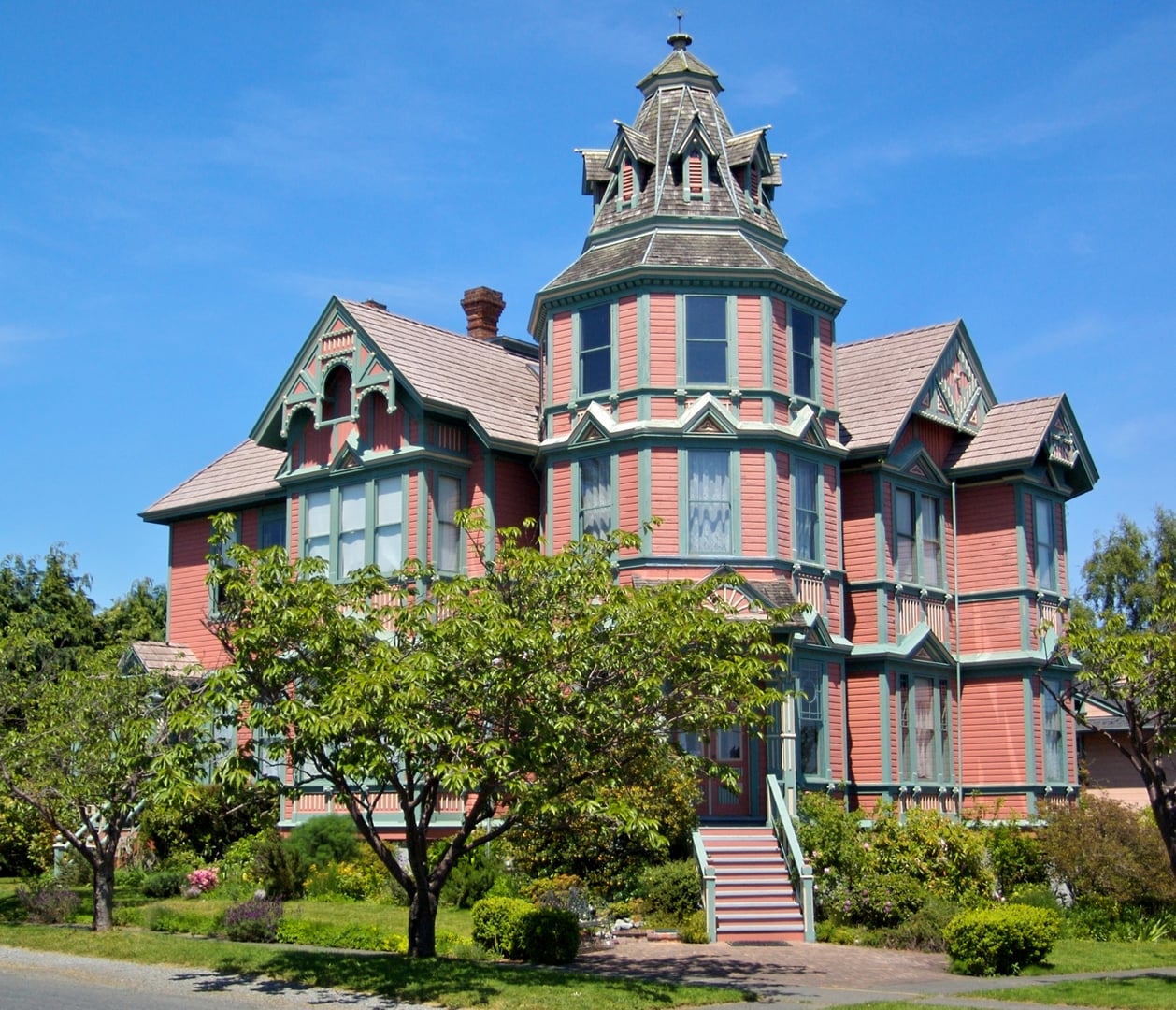
Port Townsend, WA
Contractor George Starrett built the mansion in 1889 as a wedding gift for his wife, Ann. The 11-bedroom Queen Anne / Stick Victorian features a 70-foot free-hung spiral staircase rising to a dome painted with frescoes. Bayside Housing & Services, a nonprofit, acquired the property in August 2023 and continues to operate it as a bed and breakfast while converting part of the building into workforce housing.