Est. 1951 · Montgomery County Public School Heritage · Maryland Educational History
Gaithersburg High School has operated continuously since 1904, making it the second-oldest high school in Montgomery County. The original Gaithersburg School occupied a different building before fire destroyed it in 1895 — an event with no reported fatalities that nonetheless contributed, through oral tradition, to one of the school's ghost legends.
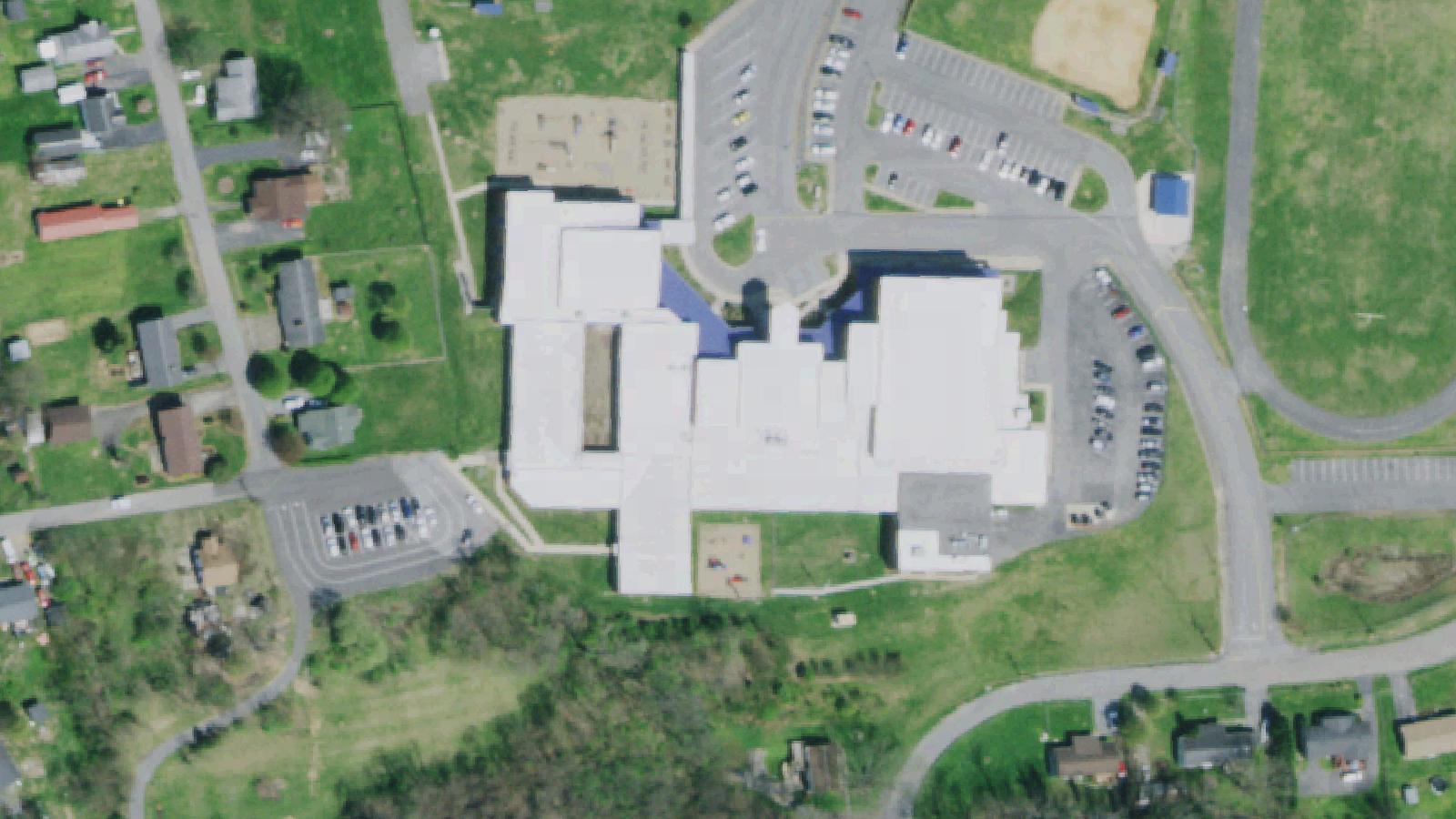
The current building at 101 Education Boulevard was constructed in 1951 and housed grades 7 through 12 before the campus was reorganized into a four-year high school. A comprehensive modernization was completed in 2013, substantially altering the building's interior configuration.
The school's most documented connection to its ghost legend involves a real person. Mr. Wims served as the first building manager of Gaithersburg High School, a position he held for approximately thirty years. He was known throughout the school community and died in a car accident in Frederick County — not, as the legend sometimes claims, in a boiler explosion on school grounds. His identity survived in institutional memory because of the depth of his connection to the building: three decades of daily presence, the kind of embodied knowledge of a physical space that outlasts its possessor in the stories people tell about a place.
Sources
- https://en.wikipedia.org/wiki/Gaithersburg_High_School
- https://montgomeryghosts.wordpress.com/2013/05/25/haunted-high-school/
ApparitionsPhantom sounds
The Gaithersburg High School legend centers on Mr. Wims and a particular sensory detail: the sound of keys jingling in empty hallways.
The accounts come primarily from track athletes who train in the building and on the grounds during early-morning or late-evening hours when most of the campus is unoccupied. Multiple athletes and at least one coach have described hearing the keys — a rhythmic metallic sound moving through Halls C and D — without locating a source. Some have described seeing a figure matching Wims's description: peppery salt-and-pepper hair, navy building-manager uniform, the keyring that was inseparable from his daily rounds.
A competing legend attributes the hall's reputation to a 1970s chemical incident in the lower C Hall area — a story that a local paranormal researcher investigated and found inconsistent with the building's actual layout. Lower C Hall is and has been a storage area, not a classroom space. The chemical smell that persists in that section traces to a locked supply closet, not a disaster site.
What the investigation confirmed is that Mr. Wims is real — not a confabulation, not a collective invention. His thirty-year tenure at the school left an institutional memory deep enough that his specific appearance is preserved in the legend with unusual precision. The janitor who would become the school's most durable ghost died in a car accident, not in a boiler room, but the place that absorbed his daily life for three decades still carries his presence, in some form, for the people who spend their early mornings running its halls alone.