Delaware Regional Folklore
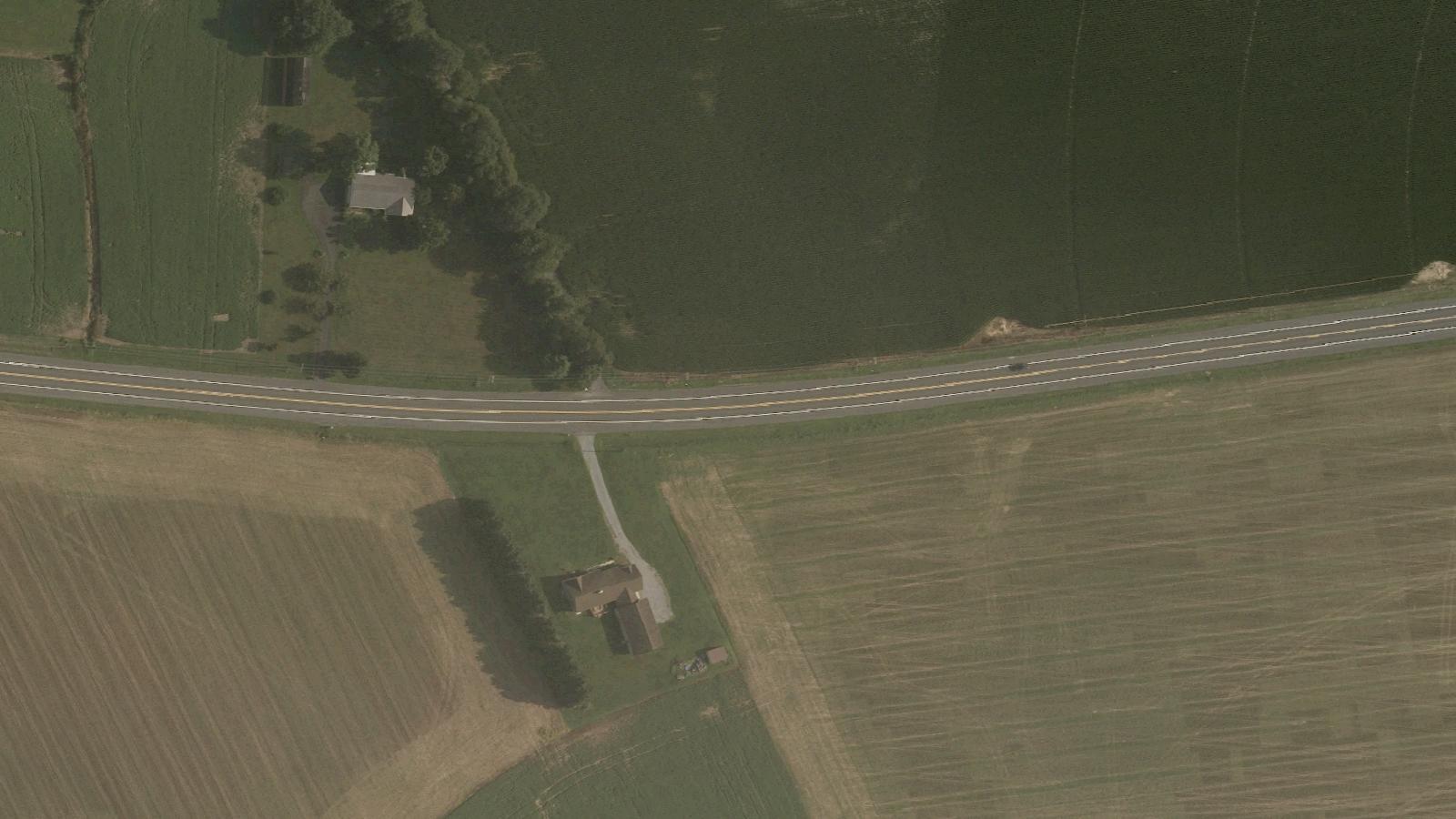
Delaware Route 12 — locally called Midstate Road — is a secondary highway running through Kent County's flat, open farmland. The western Frederica stretch continues into Felton and carries one of the state's most persistent roadside legends.
The Fence Rail Dog tradition dates to at least the early twentieth century. Delaware folklorists place it within the broader American and Anglo-Celtic 'black dog' tradition, which associates large spectral hounds with liminal places — crossroads, old roads, and property lines. The Delaware variant is distinguished by its scale: witnesses describe a hound as tall as a split-rail fence.
Origin stories vary. The most-circulated account describes a tenant who killed his landlord during a property dispute, processed the remains with cornmeal, and fed them to his dog. Alternate versions substitute an outlaw's suicide or the murder of an enslaved boy whose body was dumped along the road. No contemporary court record or newspaper account confirming a specific homicide tied to the legend has been identified in published sources. The persistence of the tradition — with multiple coexisting origin narratives — is itself the historical phenomenon worth noting.
Sources
- https://pinebarrensinstitute.com/cryptids/2018/11/13/cryptid-profile-the-fence-rail-dog
- https://coffeehousewriters.com/delawares-fence-rail-dog/
ApparitionsShadow figures
The Highway 12 apparition has a folkloric name: the Fence Rail Dog. Sightings along Midstate Road through Frederica and Felton describe an enormous black canine — roughly four feet at the shoulder, as tall as a standard split-rail fence, and nearly ten feet long from nose to tail tip. The red eyes are the consistent identifier. Witnesses describe the animal as unnaturally fast, reportedly pacing cars along the open farmland stretch.
First-person accounts cluster around early-twentieth-century oral tradition. Sightings are typically reported on rainy nights or before storms — a condition that folklorists note tends to accompany black-dog apparitions across Anglo-American tradition, from the Barghest of northern England to the coastal hounds of the Chesapeake.
Three origin legends compete. The version carried by the Shadowlands index describes a tenant who killed his landlord, ground the body with cornmeal, and fed the remains to his dog; the animal became bound to the crime and now lingers on the roadside. A second version casts the dog as the spectral form of an outlaw who took his own life rather than face arrest. A third, darker version describes the ghost as the transformed spirit of an enslaved boy killed by his owner and dumped along the road. No contemporary newspaper or court record has been identified confirming any of these origin events; folklorists treat the three variants as parallel explanatory traditions rather than a single sourced history.
The specificity of the cornmeal detail — gruesome and oddly domestic — is the kind of granular anchor that folklorists associate with durable oral transmission.