Est. 1840 · Oldest surviving brick house in Buncombe County · Greek Revival architecture built by enslaved labor · National Register of Historic Places (1975) · Home of the Asheville Museum of History
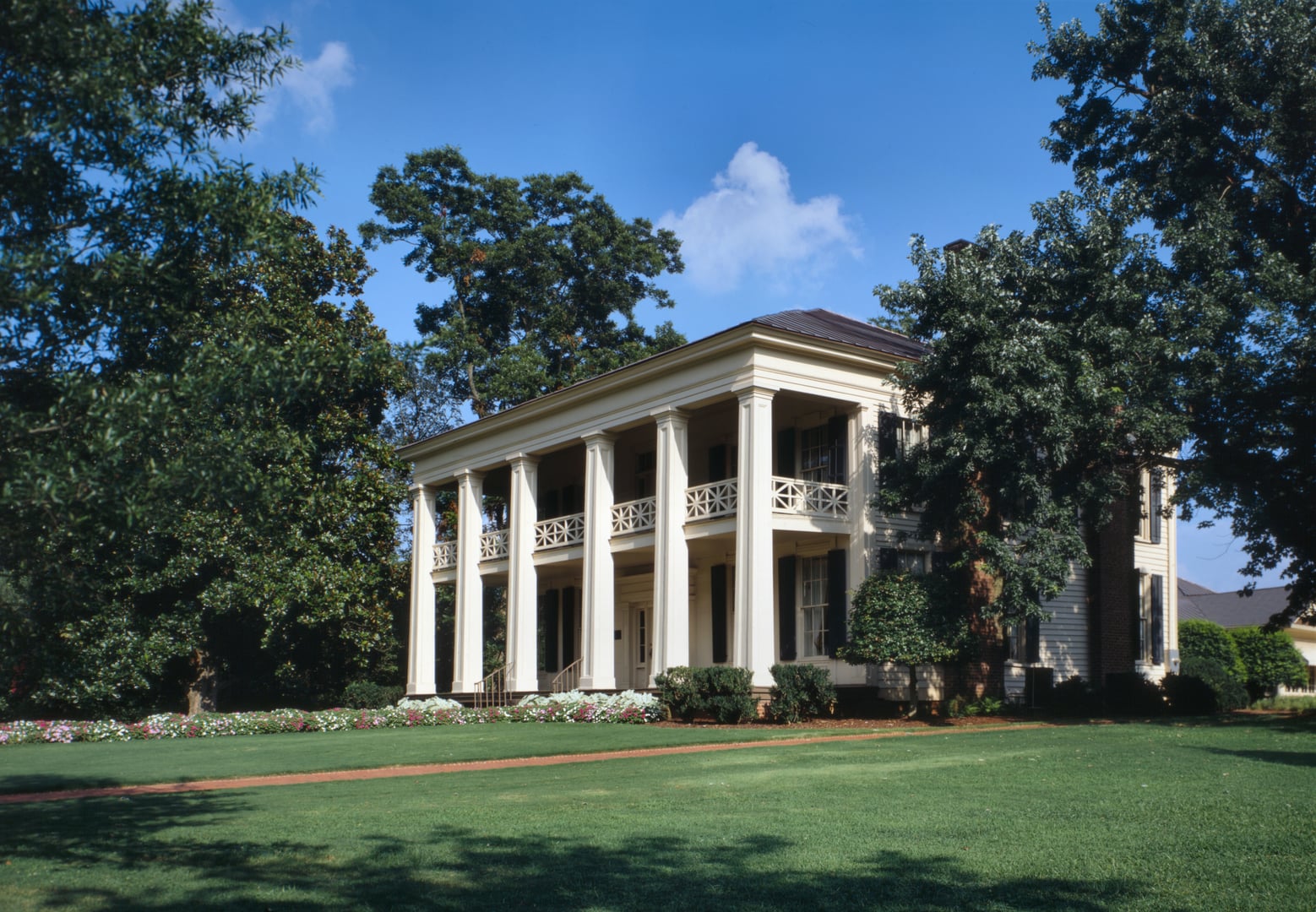
The Smith-McDowell House was built circa 1840 by James McConnell Smith, son of Revolutionary War veteran Colonel Daniel Smith and a wealthy Asheville businessman. The house is the oldest surviving brick structure in Buncombe County and an important regional example of Greek Revival with Federal-period elements.
The house was constructed by enslaved laborers and maintained by them throughout its early decades. James McConnell Smith was one of Buncombe County's largest enslavers; available records indicate he held at least 70 enslaved people around the time of the house's construction. After Smith's death in 1856, his son John inherited 13 enslaved individuals. The McDowell family purchased the property in 1859 and enslaved roughly 40 additional people during their tenure. Together the Smith and McDowell families held more than 100 enslaved individuals over the property's pre-Civil War history.
The building was listed on the National Register of Historic Places on August 1, 1975. Today the Western North Carolina Historical Association owns and operates the property as the Asheville Museum of History. Permanent exhibits reopened in October 2023 cover the history of 23 western North Carolina counties, including the lives of both free and enslaved people in the region. The museum's interpretation treats the property's slavery history directly rather than as background — a deliberate departure from earlier antebellum-romance framings common in Southern historic-house museums.
Sources
- https://en.wikipedia.org/wiki/Smith-McDowell_House
- https://mountainx.com/opinion/wnc-scary-stories-heavy-history-haunts-the-smith-mcdowell-house-museum/
- https://ashevilleterrors.com/the-haunted-smith-mcdowell-house/
- https://www.northcarolinahauntedhouses.com/real-haunt/smithmcdowell-house.html
Apparitions of two young girls (Carrie and Sarah, traditional names)Presence described as 'the Dark One' in basement and lower floorsCold spots throughout the houseVisitors touched in the basementHearing one's name called
Asheville Terrors, Mountain Xpress, and the North Carolina Haunted Houses directory all report a consistent set of legends associated with the Smith-McDowell House. The most-named spirits are two girls, identified in tour-operator tradition as 'Carrie' and 'Sarah,' said to have died at the home. Their specific identities have not been independently documented; their names are drawn from house-tradition rather than verified vital records.
A more troubling presence, called 'the Dark One' in regional ghost lore, is associated with the property's slaveholding history. Sources describe this figure as the remnant of a cruel overseer or enslaver — a folkloric framing that places responsibility for the property's hauntedness on the perpetrators of slavery rather than on the people they enslaved.
In 2006 the museum invited the League of Energy Materialization and Unexplained Phenomena Research (LEMUR), a local paranormal investigation group, to study the building. According to the museum's account and regional press, LEMUR reported identifying four spirits and two additional unidentified entities. Visitors and staff have described cold spots, the sensation of being touched in the basement, and hearing their names called.
The museum's current interpretive program addresses the slavery history of the property directly and frames the ghost lore in that context. The Mountain Xpress treatment notes that 'heavy history haunts' the museum — placing the paranormal tradition within the moral weight of what occurred on the grounds rather than romanticizing the antebellum period.
Notable Entities
'Carrie' and 'Sarah' (child spirits, names from tradition)'The Dark One' (folklore figure tied to slaveholding history)
Media Appearances
- Mountain Xpress — WNC Scary Stories series
- Asheville Terrors walking tour
- Southern Spirit Guide — Asheville's Haunted Five
- LEMUR (League of Energy Materialization and Unexplained Phenomena Research) 2006 investigation