Est. 1904 · Polish Catholic Heritage · Largest Dalle-de-Verre Stained Glass in the World · Archer Avenue Corridor
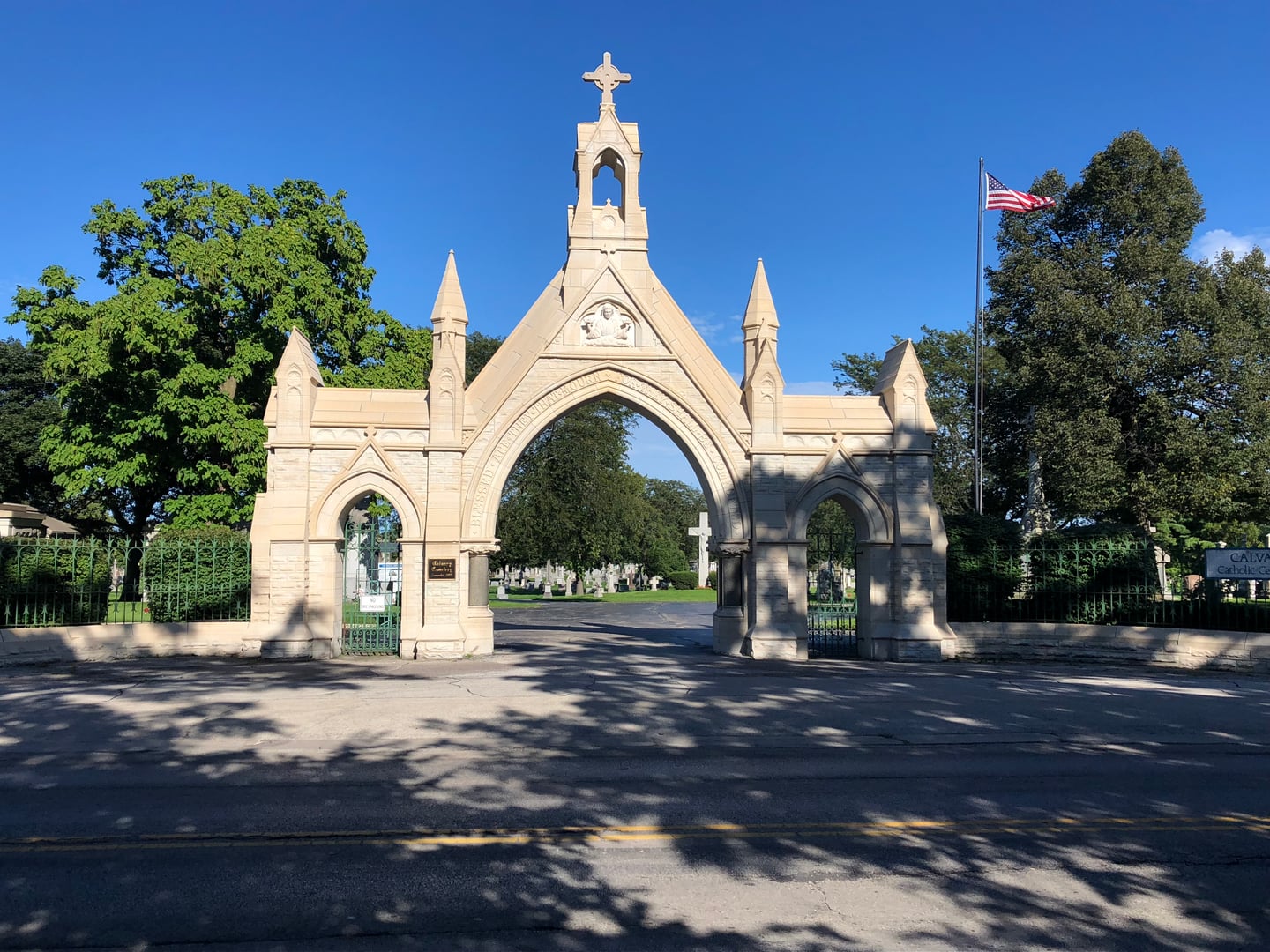
Resurrection Catholic Cemetery sits on Archer Avenue in Justice, Illinois, fourteen miles southwest of the Chicago Loop. The Archdiocese of Chicago consecrated the cemetery in 1904 to serve the growing Catholic population, particularly Polish and Eastern European immigrant communities, that had moved into the southwest suburbs along the Archer Avenue corridor. The cemetery is operated today by Catholic Cemeteries of the Archdiocese of Chicago.
The grounds extend across 397 acres and contain more than 225,000 interments. In 1969 the archdiocese began construction of the Resurrection Mausoleum within the cemetery. The mausoleum's 22,378-square-foot stained glass, completed in 1971, was recognized by Guinness World Records as the largest dalle-de-verre stained glass in the world. The stained glass depicts scenes from the Resurrection and biblical themes in a continuous interior installation.
The cemetery's reputation in Chicago folklore is inseparable from the long-running Resurrection Mary story, a vanishing-hitchhiker legend documented since the 1930s along Archer Avenue between the former Willowbrook Ballroom and the cemetery gates. The Chicago History Museum preserves an archive of the various reported encounters.
Sources
- https://en.wikipedia.org/wiki/Resurrection_Cemetery_(Justice,_Illinois)
- https://www.catholiccemeterieschicago.org/locations/resurrection/
- https://www.chicagohistory.org/resurrection-mary/
- https://en.wikipedia.org/wiki/Resurrection_Mary
ApparitionsObject movementPhantom voices
Resurrection Mary is unusually well-documented for a vanishing-hitchhiker legend. The Chicago History Museum maintains a record of the principal accounts. The basic narrative holds that since the 1930s, drivers traveling northeast along Archer Avenue between the former Willowbrook Ballroom (originally the Oh Henry Ballroom) and Resurrection Cemetery have picked up a young woman in a white party dress, light blonde hair, and blue eyes. She asks for a ride home along the route; she disappears, sometimes from a moving car, as the driver approaches the cemetery gates.
The traditional origin story holds that Mary spent an evening dancing at the Oh Henry Ballroom in the 1930s, quarreled with her boyfriend, and was struck and killed by a hit-and-run driver while walking home along Archer Avenue. She was reportedly buried in Resurrection Cemetery in her white dancing dress. Several specific historical figures, including a young woman named Mary Bregovy who died in a 1934 traffic accident, have been proposed as the historical Mary; none has been definitively confirmed.
The most striking physical detail associated with the legend is a set of handprints reportedly burned or pressed into the bars of the Resurrection Cemetery main gate, discovered in the late 1970s. The archdiocese eventually replaced the affected gate bars. Photographs of the marks were widely reproduced in Chicago newspapers at the time and are preserved in the Chicago History Museum collection.
The Resurrection Mary story has appeared on Unsolved Mysteries, in regional documentaries, and in scholarly folkloric studies as a defining example of the vanishing-hitchhiker type. Visitors to the cemetery should treat it as a working Catholic cemetery first; the folklore is a layer over a continuing place of mourning for the families interred there.
Notable Entities
Resurrection Mary
Media Appearances
- Unsolved Mysteries
- Chicago History Museum archive
- Mysteries at the Museum: Resurrection Mary, Nightclub Blaze Whodunit and Wedding Sting (S22E9) (2019)
- The Ghosts of Chicago: The Windy City's Most Famous Haunts — Adam Selzer (Llewellyn) (2013)