Est. 1855 · Transcendentalist Literary Burials · Rural Cemetery Movement · Daniel Chester French Sculpture
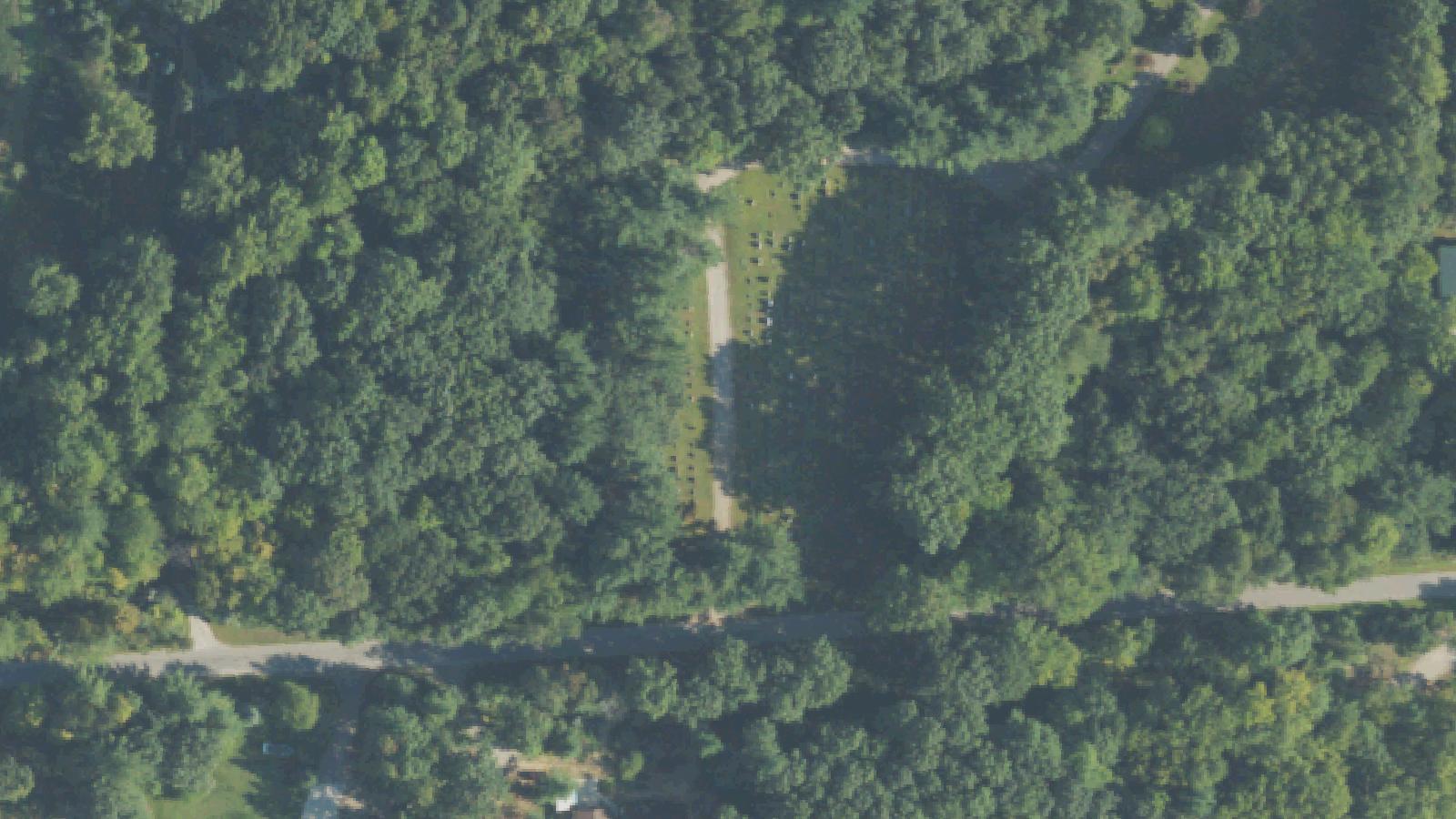
Sleepy Hollow Cemetery occupies a wooded glen on Bedford Street, a short walk northeast of Concord center. The Town of Concord engaged the landscape architects Horace Cleveland and Robert Copeland to lay out the cemetery in 1855, following principles drawn from Mount Auburn outside Cambridge and other rural-cemetery-movement designs. The cemetery was dedicated on September 29, 1855, with a dedication address by Ralph Waldo Emerson.
Author's Ridge is a rise in the southeastern section of the cemetery that holds the family plots of the four major Concord writers of the mid-19th century. Ralph Waldo Emerson (1803-1882) is buried beneath a rough marble boulder. Henry David Thoreau (1817-1862) lies in the Thoreau family plot, marked by a simple stone that visitors often decorate with pencils and small stones. Nathaniel Hawthorne (1804-1864) is buried with his wife Sophia Peabody Hawthorne. Louisa May Alcott (1832-1888) and the rest of the Alcott family — including her father, the Transcendentalist educator Amos Bronson Alcott — occupy a nearby plot.
The Melvin Memorial, sculpted by Daniel Chester French (better known for the Lincoln Memorial), stands on the south side of the cemetery. The work was commissioned by James Melvin to honor his three brothers — Asa, John, and Samuel — all of whom died serving the Union Army during the Civil War. French completed the sculpture in 1908, and it was dedicated in 1909. It is one of the most-photographed funerary sculptures in Massachusetts.
The cemetery is owned and operated by the Town of Concord and remains an active burying ground. The National Park Service recognizes Sleepy Hollow as part of the broader Minute Man National Historical Park interpretive area.
Sources
- https://en.wikipedia.org/wiki/Sleepy_Hollow_Cemetery_(Concord,_Massachusetts)
- https://concordma.gov/1956/Sleepy-Hollow-Cemetery
- https://www.atlasobscura.com/places/authors-ridge
- https://www.nps.gov/places/sleepy-hollow-cemetery.htm
Cold spots
Unlike its better-known namesake in Westchester County, New York, Concord's Sleepy Hollow Cemetery is not the subject of significant paranormal lore. The cemetery's reputation rests on its literary content, the architectural quality of its design, and the funerary sculpture.
The practice of leaving small objects at the graves of Author's Ridge has produced its own folk tradition: pencils stacked on Henry David Thoreau's stone, small stones and pinecones piled on Ralph Waldo Emerson's boulder, and pressed leaves left at Louisa May Alcott's marker. The town periodically clears these offerings, and they accumulate again within days.
Daniel Chester French's Melvin Memorial draws photographers and casts a strong atmospheric presence in late afternoon light. The sculpture depicts an allegorical figure of Mourning Victory emerging from a stone block, a visual approach French refined before his Lincoln Memorial commission.
Visitors looking for paranormal activity will find more material a short drive west at the Concord-area battlefields of the American Revolution. Sleepy Hollow's appeal is contemplative rather than atmospheric in the ghost-tour sense.