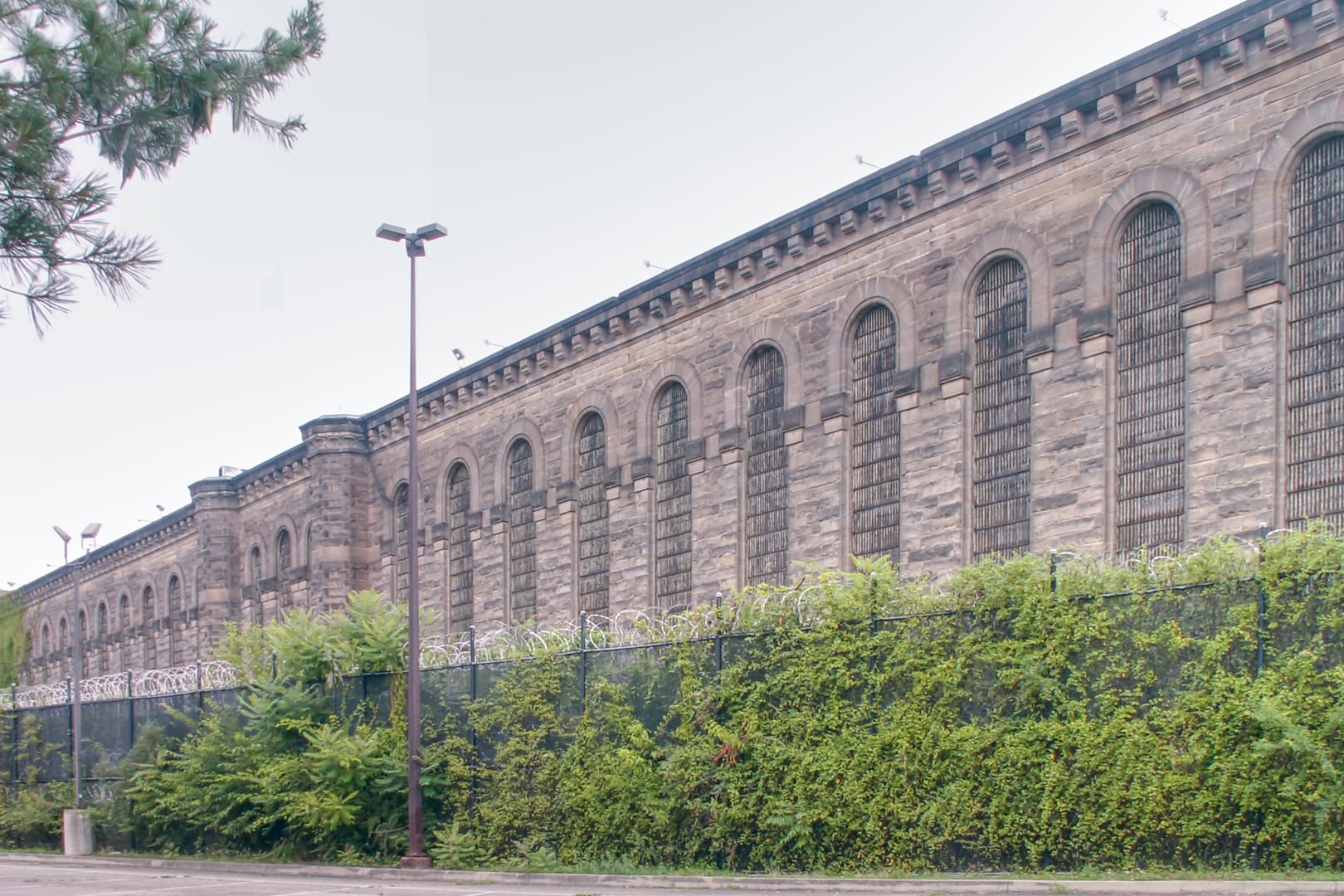
Est. 1851 · 19th-Century Penal Architecture · Public Execution Site · Norman Revival Architecture
Lancaster County Prison occupies a square city block at 625 East King Street, in what is now central Lancaster, Pennsylvania. Built in 1851 to replace an earlier county jail, the prison was designed in the Norman Revival style with crenellated towers, a faux portcullis above the central entrance, and rough-faced limestone exterior walls. The building deliberately echoed Lancaster Castle in northwest England, after which the Pennsylvania city was named in 1729.
From its opening through 1912, the prison was the site of public hangings for capital sentences in Lancaster County. Among the more historically prominent of those executions was the 1858 hanging of Henry Richards, a Lancaster County murderer whose case received state-wide newspaper coverage. The original execution yard remains within the walls; the gallows were dismantled after Pennsylvania moved capital punishment exclusively to state penitentiaries in the early 20th century.
The prison has continued in operation as Lancaster County's primary correctional facility for the entire 174-year span since its construction. The interior has been repeatedly modernized, but the original cell blocks, including a section sometimes informally called the Castle for its early 19th-century cell construction, remain in use. Lancaster County voters approved planning for a replacement facility in 2021, with the long-term future of the King Street building still under negotiation as of 2026. The building is among the most architecturally distinctive operating jails in the United States.
Sources
- https://en.wikipedia.org/wiki/Lancaster_County_Prison
- https://www.co.lancaster.pa.us/DocumentCenter/View/330/History-of-the-Prison
- https://lancasteronline.com/opinion/editorials/county-prison-with-its-faux-castle-facade-may-be-leaving-lancaster-city-its-neighbors-deserve/article_67561246-2266-11ec-bf3c-ff769e8c213a.html
Phantom voicesPhantom sounds
Because Lancaster County Prison is an operating jail, its paranormal tradition does not benefit from the kind of accumulated visitor reporting that drives the haunted reputations of decommissioned sites like Eastern State Penitentiary or the Old Idaho Penitentiary. What survives is correctional-officer folklore, intermittently passed to local newspapers and ghost-tour operators, and kept alive by the building's own atmosphere.
The section informally known as the Castle, the older cell blocks where prisoners serving life sentences were chained to walls in the 19th century, is the most frequently cited area in staff accounts. Reports collected by hauntedplaces.org and the Outta the Way blog describe whistling from empty corridors and whispering when no other person is present. The original execution yard is the second-most-mentioned site; the prison conducted public hangings there until 1912.
No published paranormal investigation of the interior has been undertaken in the 21st century by a major team or program; the operating status of the facility precludes that. The legends remain quiet, in the way that legends attached to working institutions tend to be. Visitors can engage with the building's atmosphere from the sidewalk, where the castle-like exterior anchors East King Street.