Est. 1875 · National Register of Historic Places (1981) · 47-Year Robinson Keepership · Michigan's Last Female Lighthouse Keeper
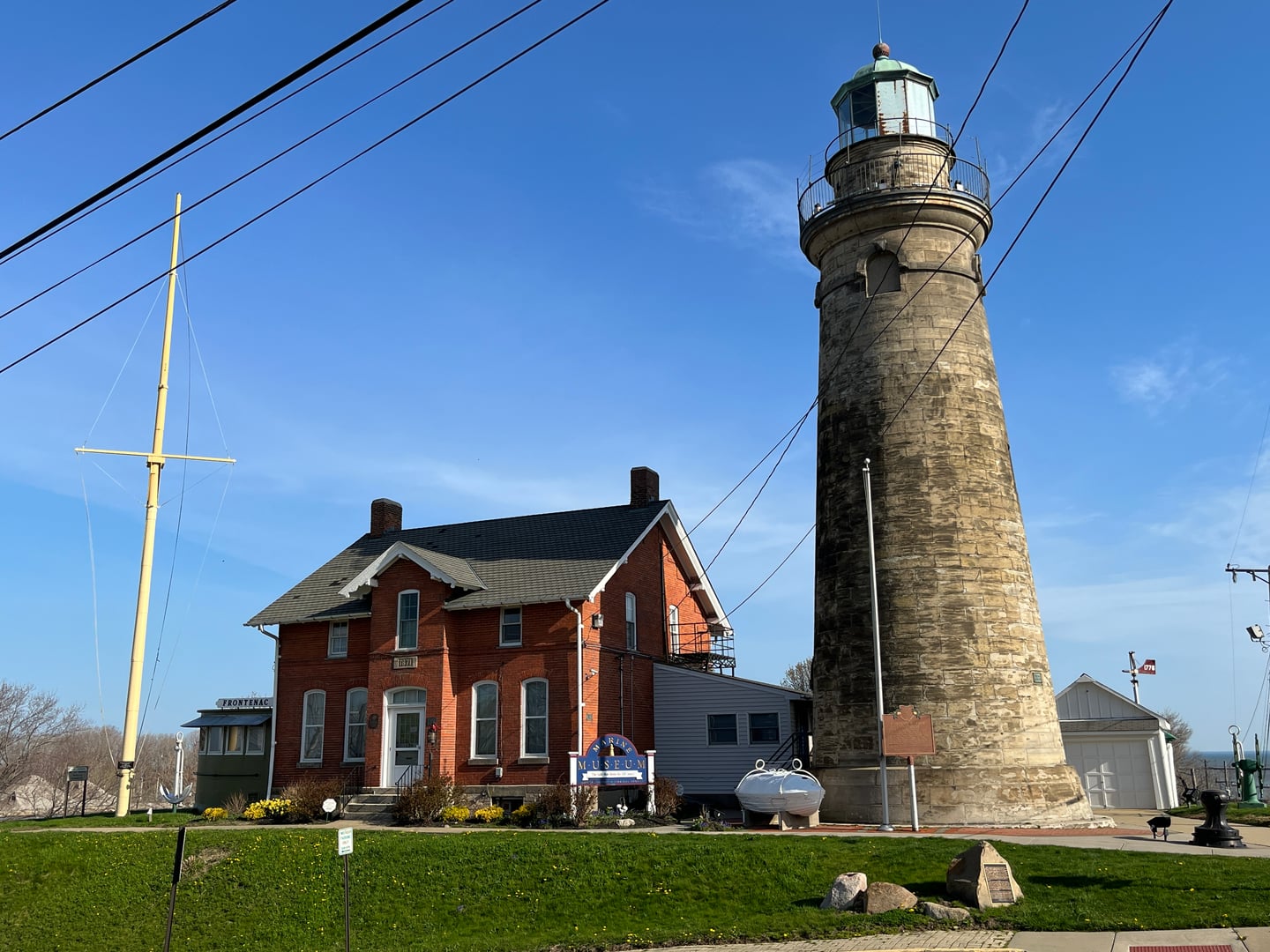
The U.S. Lighthouse Service constructed the White River Light Station in 1875, on a thin sand peninsula separating White Lake from Lake Michigan near the lumber port of Whitehall. The structure combines a one-and-a-half-story keeper's dwelling with an attached 38-foot octagonal tower, built from cream-colored limestone quarried at Marblehead, Ohio.
Captain William Robinson became the first keeper in 1872 — initially tending the pierhead light — and remained for 47 years, raising 13 children in the keeper's quarters with his wife Sarah. Robinson died on April 2, 1919 at the age of 87, shortly after being told he would have to retire. His grandson, William Bush, succeeded him as keeper. Later, Frances Marshall managed the station as Michigan's last female lighthouse keeper before the light was decommissioned.
The U.S. Coast Guard automated and then decommissioned the station in 1960. In 1970, after restoration work, the building opened as the White River Light Station Museum under the management of Sara Lange Bullis and later the Sable Points Lighthouse Keepers Association, now Lakeshore Keepers. The museum interprets late-19th and early-20th century Great Lakes maritime life and houses Robinson family artifacts, ship-wreck materials, and the original Fourth Order Fresnel lens.
The building was added to the National Register of Historic Places in 1981. It operates seasonally, typically from May through October, with tower climbs included in admission.
Sources
- https://en.wikipedia.org/wiki/White_River_Light
- https://www.lighthousefriends.com/light.asp?ID=192
- https://lakeshorekeepers.org/white-river-light-station/
- https://www.findagrave.com/memorial/21842148/william-robinson
Phantom soundsObject movementPhantom footsteps
Sara Lange Bullis served as the first museum curator beginning in 1970, and over more than three decades she catalogued reports of unexplained activity in the building. The most consistent account involves the tap of a wooden cane on the limestone steps of the lighthouse, occurring at hours when the building was closed and locked. Visitors and volunteers have reported the same sound across multiple subsequent decades.
Bullis attributed the tapping to former keeper William Robinson, who served 47 years and used a cane in his later years. A second set of accounts describes a woman's presence on the upper floor, sometimes associated with Robinson's wife Sarah. Glass display cases have been found dusted and rearranged after hours, an account documented in published interviews with Bullis.
The Lakeshore Keepers, who now manage the museum, include these accounts in interpretive tours alongside the documented Robinson family history. The lighthouse has not been the subject of major paranormal television investigations, and the reports remain primarily local and museum-based rather than nationally amplified. The tapping account's appeal lies in its specificity: a single repeating sound, attached to a documented 47-year resident, in a small limestone building on a sand peninsula in Lake Michigan.
Notable Entities
William Robinson, former keeperSarah Robinson